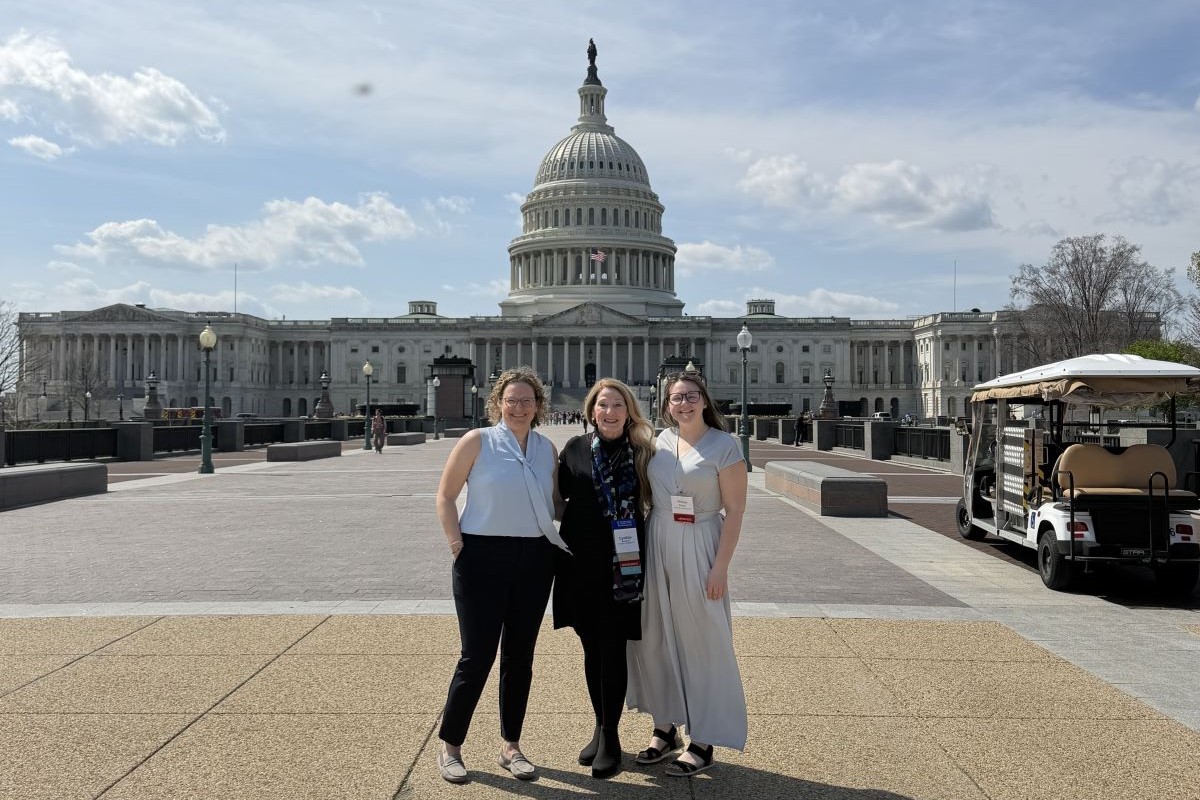
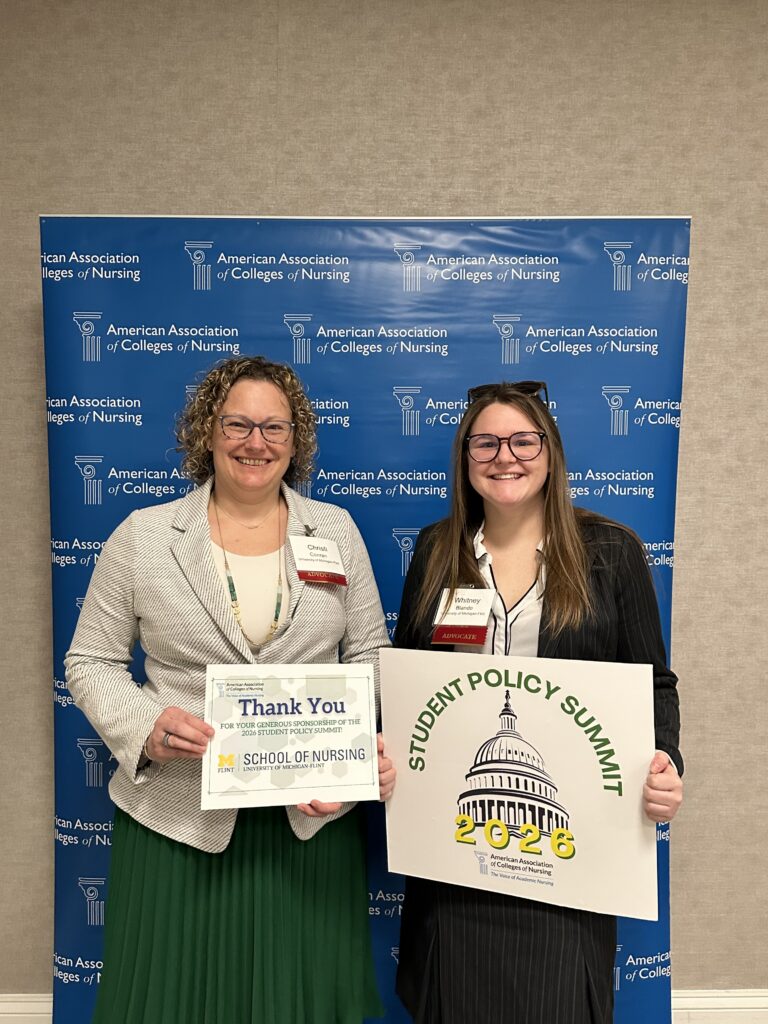
The University of Michigan-Flint School of Nursing recently sent two students to Washington, D.C., to attend the 2026 American Association of Colleges of Nursing Student Policy Summit. Open to baccalaureate and graduate nursing students from AACN member institutions, the two-day conference introduces attendees to the federal policymaking process and the nursing profession’s essential role in advocacy.
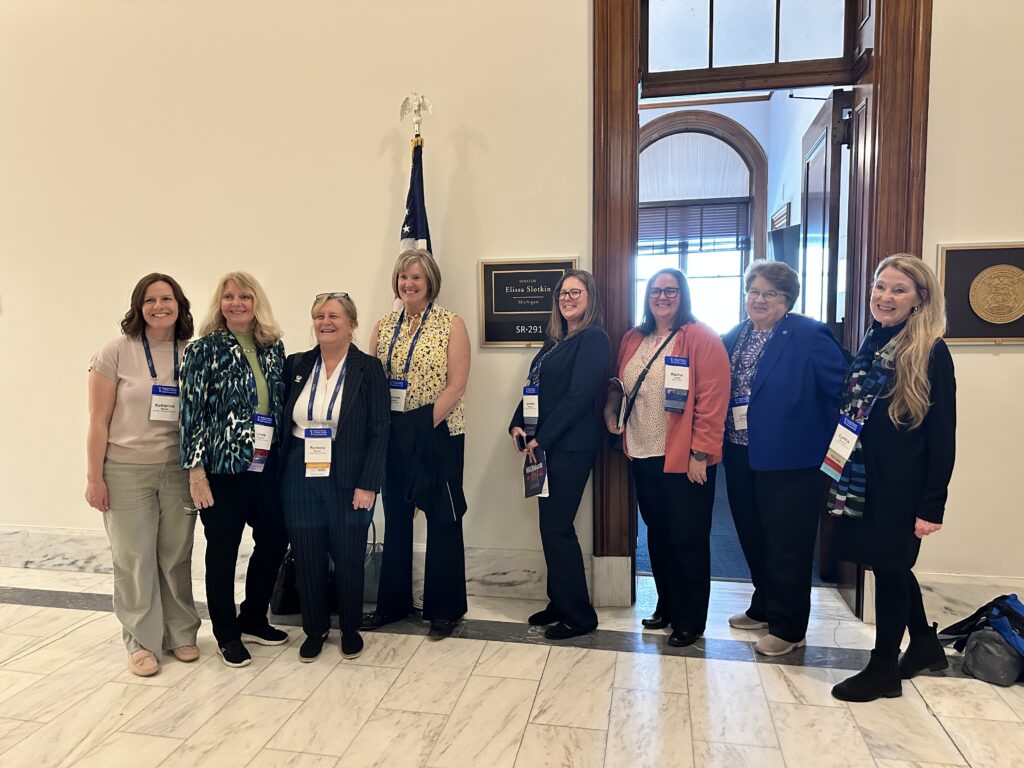
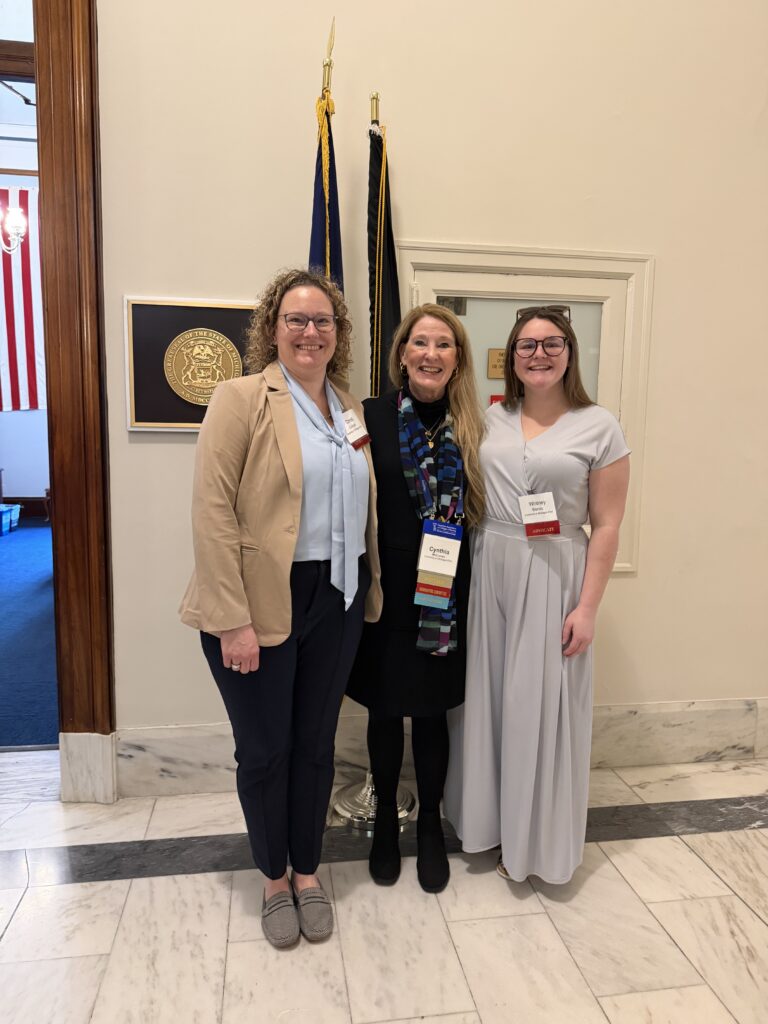
Students had the opportunity to engage with leading policy experts, gain the tools to advocate for large-scale issues and connect with senators. This year, Whitney Blando, a class of 2026 Bachelor of Science in Nursing student from Jackson, and Christi Conran, a Doctor of Nursing Practice student from Grand Rapids, traveled to the D.C. area alongside SON Dean Cynthia McCurren to take part in a series of didactic program sessions designed to immerse students in health policy and strengthen their advocacy skills.
Leveraging Experience
For Conran, advocacy is a natural extension of nursing leadership. Although she initially considered a career in teaching, she shifted to nursing and has remained in the profession since earning her bachelor’s degree, spending much of her career in leadership roles where she’s seen how nurses can influence systems and improve patient care. Now enrolled in the DNP Executive Leadership track with a dual MBA, Conran is focused on strengthening her ability to lead at the system level and expand her policy influence. She believes nurses can “change the world,” particularly through health care policy, but that the profession too often underuses its collective voice. “It was important for me to build the confidence to show up as a trusted resource for legislators – it just takes one story, and our stories are what really put the people behind what we’re asking for,” Conran said.
Conran’s interest in advocacy grew through experiences like the Michigan Organization of Nursing Leadership & American Nursing Association-Michigan Advocacy Day in Lansing, involvement with the Graduate Nurses Student Academy and a policy course with Rachel Hetzner, assistant professor of nursing. Each experience reinforced that policy decisions directly shape her daily practice and her patients’ outcomes. She’s also recognized a critical gap: many policymakers have limited health care backgrounds, yet vote on complex issues like Medicaid, budgets and 340B. “Nurses can bring essential stories, data and real-world context to those decisions, so I was eager to translate that perspective to the federal level by learning Capitol Hill best practices and understanding AACN priorities and talking points,” said Conran.
Letting Nursing Voices be Heard
With nursing being the nation’s largest health care profession, “there’s a responsibility to use your voice to make a difference,” Conran said. Blando added that the everyday challenges nurses face, and the roadblocks that limit their ability to provide care, can directly shape the future of the profession, yet those crafting policies may not see the downstream impact, especially without a health care background. “I’m relying on future preceptors in my placements to help shape me as an advanced provider. Issues like the shortage of preceptors in certain nursing specialties are exactly why nurses need to help narrow the divide between frontline care and decision-making on Capitol Hill,” said Blando.
Sparking Change in Your Own Community
The policy summit was just the tip of the iceberg for Blando and Conran, as both plan to apply what they learned on Capitol Hill to continue advocating for the nursing profession. Conran emphasized that getting involved does not have to mean taking a huge leap. “It can be as simple as sending those emails or letters to our legislators – small actions that can still have an impact,” she said. “Recognize that you have experiences that our legislators often do not have, and they’re relying on us to help bridge that gap.”
Blando emphasized that creating change often starts close to home – and that taking even a first step is better than not starting at all. “There are things we can help make a difference with right here at home,” she said. After returning from Washington, D.C., Blando said many of her peers were eager to hear about the experience, sparking awareness among fellow nurses. She added that the summit was a worthwhile experience that connected her and Conran with people across the nursing spectrum and refueled the fire to advocate for change. “From a nursing perspective, we are doing some pretty awesome things on the federal level,” said Conran. “The number of nurses who were in federal positions, serving as legislative aides or in Congress themselves is inspiring, and I’d love to see more.”
Getting Involved and Staying Informed
For many, the “starting point” Conran and Blando described can feel daunting – when there’s so much information out there, it’s hard to know where to begin. One way Conran plans to stay informed is by following AACN’s regular legislative updates. She also encouraged students to get involved with local professional organizations. Blando said that following speakers on LinkedIn is another simple, effective way to stay connected and continue learning.
For students interested in attending, up to two students per AACN member school may register for the summit. AACN member deans must approve students prior to registration, and only students who have not previously attended an in-person Student Policy Summit are eligible. For more information on nursing policy and advocacy, visit the American Association of Colleges of Nursing.