UM-Flint student veteran brings military discipline to Michigan's tech sector
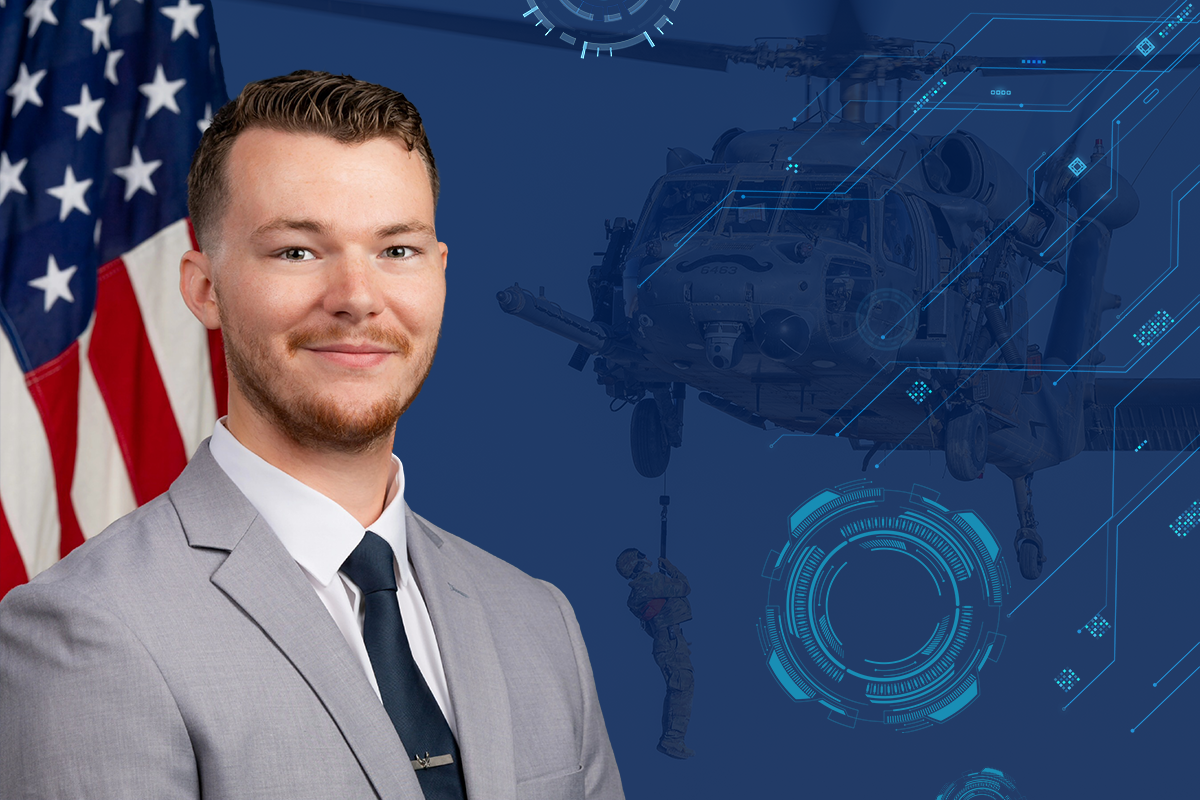
It all started with a handheld, electronic game of "20 Questions." That's what sparked Dallas Watkins's lifelong fascination with technology.
The toy used a basic artificial intelligence decision tree, and while the young Watkins didn't realize it as a child, his experience put him on a path that would place him at the center of AI policy for the entire state of Michigan.
"I fell in love with AI as a kid, and I never even knew it," Watkins said. "All this buzz about AI in the news — I just knew this is exactly what I wanted to do."
The Goodrich native followed his interests to the military, across two continents, and back home to pursue his education at the University of Michigan-Flint. He served five years in the Air Force, from 2017 to 2022, working as a helicopter crew chief and mechanic. While on active duty, he enrolled at UM-Flint and completed three years of online coursework. After returning home, he finished his Bachelor of Business Administration in international business management and human resources management.
Soon after completing his undergraduate work, UM-Flint's College of Innovation & Technology announced a new master's program in artificial intelligence, and something in Watkins stirred.
"The moment I heard about it, I knew right away I wanted to learn more," Watkins said. "The next morning, I reached out for information, attended an open house, and submitted my application the following day. I was thrilled to be among the first students accepted into the new program."
While his undergraduate background was in business, not computer science, the new program was designed with that in mind. Watkins completed two bridge certificate courses to build his technical foundation before diving into the graduate curriculum, a pathway he said made the program feel genuinely accessible.
"I was really thrilled that a person with an educational background that wasn't well-versed in tech was able to do this program," he said. "Of course, I did tech and engineering my whole life — I just didn't get the bachelor's degree for it."
That life experience ran deep. As a high school junior, Watkins enrolled in the nonprofit robotics education program known as FIRST, which stands for "For Inspiration and Recognition of Science and Technology." He competed in several robotics competitions and later mentored younger students in FIRST Tech Challenge and FIRST Lego League. In the Air Force, Watkins applied that same mechanical instinct to his work with rotary-wing aircraft. By the time he arrived at CIT, he was already thinking in terms of systems, a habit that served him well in the graduate program.
Faculty took notice. John Hart, lecturer II in computer science, observed Watkins's impact not just as an individual student but as a collaborator.
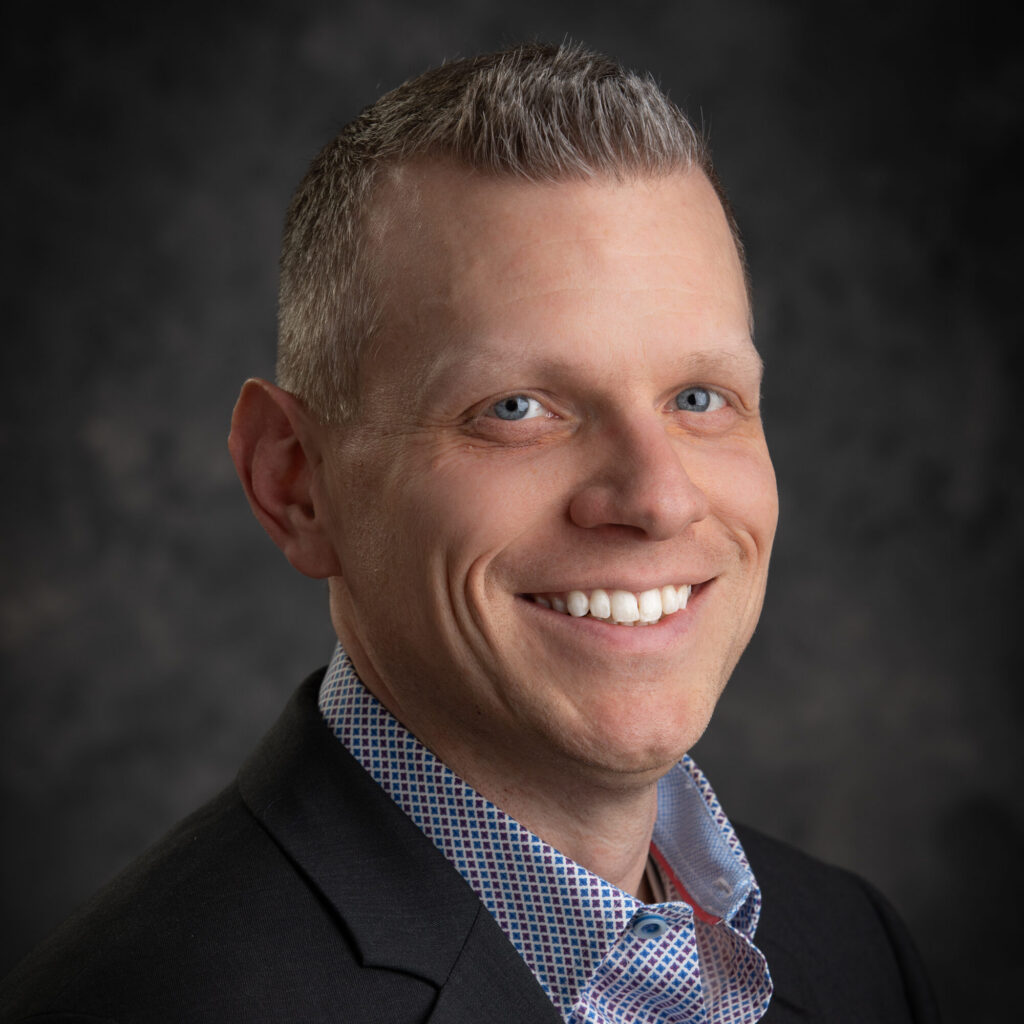
"Dallas stood out in my software engineering graduate course for the way he worked with and motivated his project team," Hart said. "He was consistently thoughtful, organized and supportive, and had a real talent for helping his group stay aligned when they were tackling complex coursework. His steady, collaborative approach made the team stronger, and it was clear he had the mindset needed to thrive in any technical setting."
Steven Wilson, assistant professor of computer science, echoed that assessment, with a particular appreciation for how Watkins approached his own learning.

"It was always great to have Dallas in class," Wilson said. "It was clear to me that he took ownership of his educational development: he was there to learn, develop his technical skills, and make the most of his experience. In addition to doing well on his hands-on assignments and projects, his written reports demonstrated careful reflection on his learning experiences, full of honesty and even humor."
Watkins also volunteered with Wilson's lab for a semester, contributing to research projects alongside doctoral students — an experience he credits with bridging the gap between classroom theory and professional practice.
"It was unpaid, and I was completely happy," he said. "It was just that experience, getting in the door, learning, and working with all of his PhDs to see the projects he had going on."
Shortly after that semester ended, Watkins was hired by the state's Department of Technology, Management and Budget as an IT governance and policy analyst. Today, he works directly with the state's IT Strategy Council — collaborating with the chief technology officer, chief information officer, and agency directors across state government — to shape how the state approaches AI.
"I'm very thrilled because I work directly with the IT Strategy Council, which governs IT strategy for the whole state," Watkins said. "We have an AI core team specifically for artificial intelligence. We talk about AI strategy and policy decisions for the state. I'm just thrilled that in my role, I'm able to affect and touch so many different things."
Among the tasks he helps manage are setting guidelines for which AI tools state employees can use, overseeing data classification policies for large language models, and delivering training presentations on AI across state agencies. In a fitting turn, Hart — his former professor — also works with the department.
"A lot of that is just thanks to the education I received at CIT," Watkins said. "The amazing professors that I've had. UM-Flint has really helped me get to where I am today."
Throughout his time at UM-Flint, Watkins was supported by the university's Student Veterans Resource Center. As a GI Bill recipient, he used his Chapter 33 Montgomery GI Bill benefits to cover the cost of both his bachelor's and master's degrees. He credits the veteran services staff with making the process seamless.
"The staff at the Veterans Resource Center is incredible," he said. "They've been my one-stop shop for all sorts of related questions with the university. They really want to help you out and watch you succeed."
For Watkins, the case for UM-Flint came down to something straightforward: access. The U-M name carried global recognition, the location was close to home, and the student-to-faculty ratio meant he could actually get the attention he needed to learn.
"In my M.S. classes, I think there were no more than 10 students to every professor," he said. "Having that one-on-one time available is just amazing. It connects the dots from lectures to real application."
That grounding in real application is what Watkins now brings to work every day, helping Michigan's government navigate one of the most consequential technology shifts of the modern era. It's a long way from playing a handheld game of "20 Questions," but according to him, the underlying curiosity has never changed.
"AI is the biggest technological leap since the internet," Watkins said. "The implications, the things that you can do with it — it's just incredible. I'm just glad to be a part of shaping how it will benefit my home state."
For more information on UM-Flint's Master of Science in Artificial Intelligence, visit the university's website.

- College of Innovation & Technology
- Computer Science
- Graduate Programs
- Student Veterans Center
- Technology
- University News

Jeff Jones
Jeff Jones is the communications & marketing manager for the College of Innovation & Technology.