A year-long collaborative research project led by University of Michigan-Flint dance faculty member Emma Davis brought together three distinct groups — Detroit Dance Collective, UM-Flint student dancers, and incarcerated youth served by Youth Arts: Unlocked — to create a single, evolving work of choreography rooted in themes of identity, self-acceptance and what it means to carry — and release — your past.
The project, “Sharing Our Stories Through Dance,” was funded by U-M’s Arts Initiative and coordinated through the Department of Fine and Performing Arts. It aligned with two of the University of Michigan’s Vision 2034 focus areas: life-changing arts education and democracy, civic and global engagement.
Each of the three partner organizations entered the collaboration facing real uncertainty. Youth Arts: Unlocked, a Genesee County nonprofit dedicated to bringing arts programming to justice-involved youth, was at risk of downsizing due to federal funding cuts; Arts Initiative funding directly ensured the dance program could continue through the 2025-26 school year; and UM-Flint’s Spring Dance Concert was returning after a two-year hiatus. And DDC, like arts organizations broadly, faced ongoing pressure as public arts funding continued to erode.
The project unfolded throughout two semesters. Last fall, Davis led 12 youth dance workshops at the Genesee County Juvenile Justice Center in Flint, teaching foundational skills in modern and contemporary dance before guiding participants to create original movement phrases rooted in their lived experiences. Simultaneously, she conducted six rehearsals with DDC, translating the youth’s movement work into a developing choreographic piece. In the winter 2026 semester, UM-Flint student dancers joined the process, adding their own layer of artistry to the work before performing the final piece at the Spring Dance Concert in April. The final performance of the full-length work, which included three dance films featuring incarcerated youth, was performed by DDC, May 2-3.
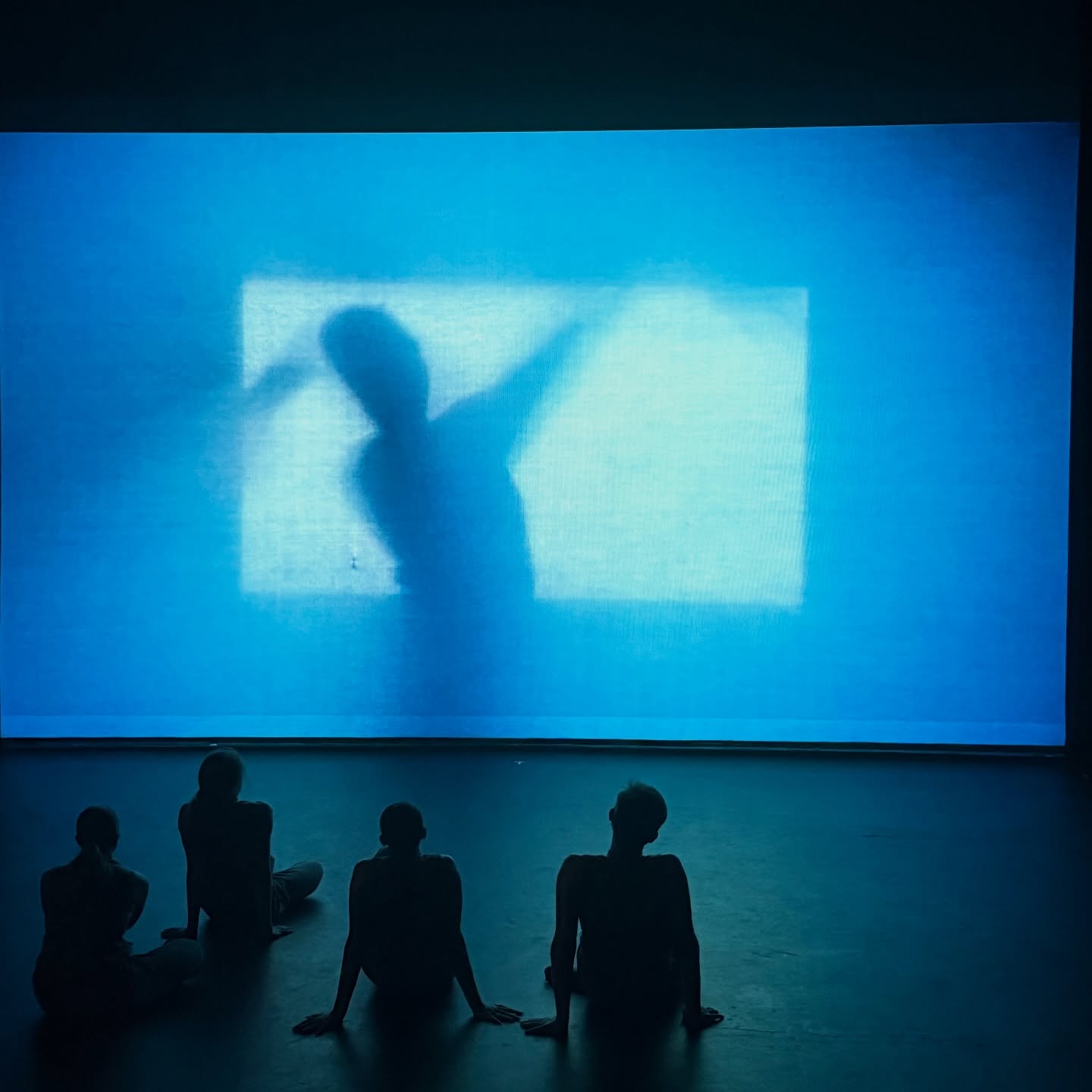
The conceptual thread running through the work drew on Jungian psychology — specifically the idea of the “shadow self,” the parts of a person they carry but may wish to leave behind. Davis introduced the framework through a video she had previously created, and participants responded to it with movement and reflection. The central message that emerged: light casts shadows, and you cannot have one without the other. Making peace with your shadow self means accepting yourself as a whole person.
Because the youth at the Juvenile Justice Center and the dancers of DDC could not communicate directly, Davis served as a bridge between the groups — sharing movement, relaying feedback, and allowing the choreography to develop through exchange rather than proximity.
Grace Kitching, a third-season company member with DDC and its marketing coordinator, said the project’s unusual structure did not diminish its sense of connection.
“Even though we weren’t working in person with them, it still felt so collaborative,” Kitching said. “One of my favorite parts was that DDC came up with a section of the piece, and the incarcerated kids discussed what that movement meant to them. They came up with characters and stories for each of us that they could relate to. That was so special, knowing they could see our movement and find a relationship with each other from it.”
DDC presented a work-in-progress version of the piece during two nights in December 2025 at the Marlene Boll Theatre in Detroit — the first public iteration of the project, incorporating both the choreographic work and video elements developed with the youth. Following the performances, audience members were invited to engage in a dialogue about the dance and its themes.
Kitching said she did not learn until the day of the performance that Davis had also built a written feedback mechanism that allowed audience members to send messages directly to the incarcerated youth.
“I loved that Emma got the audience involved with the collaboration as well,” Kitching said. “If I did get a chance to write a message, I would say thank you to the kids for sharing their story and their message. They are so brave and strong, and we have all enjoyed connecting with them. We are so grateful to be their voice when they may not have the outlet to share it.”
Kitching said the project reinforced her belief in the connective power of collaborative art.
“These kinds of projects really do show how connected we all are,” she said. “Even though we don’t know each other, we can all relate to one another and share similar journeys.”
During the winter 2026 semester, Davis brought UM-Flint student dancers into the process, and DDC members worked directly with them to teach and develop the choreography. The final work, incorporating all three groups’ contributions, was performed at UM-Flint’s Spring Dance Concert in April.
Victoria Aubry, a junior theater major with a dance minor from Flint, said she felt the weight of that responsibility from the moment Davis explained the project’s origins during the dance concert auditions.
“I knew that I had to make sure that I’m doing this dance justice, and that I bring this story to life,” Aubry said. “Out of the few dances that I was in, I took this dance very, very seriously. Because I wanted their stories to be told, to be seen, and to be felt by the community.”
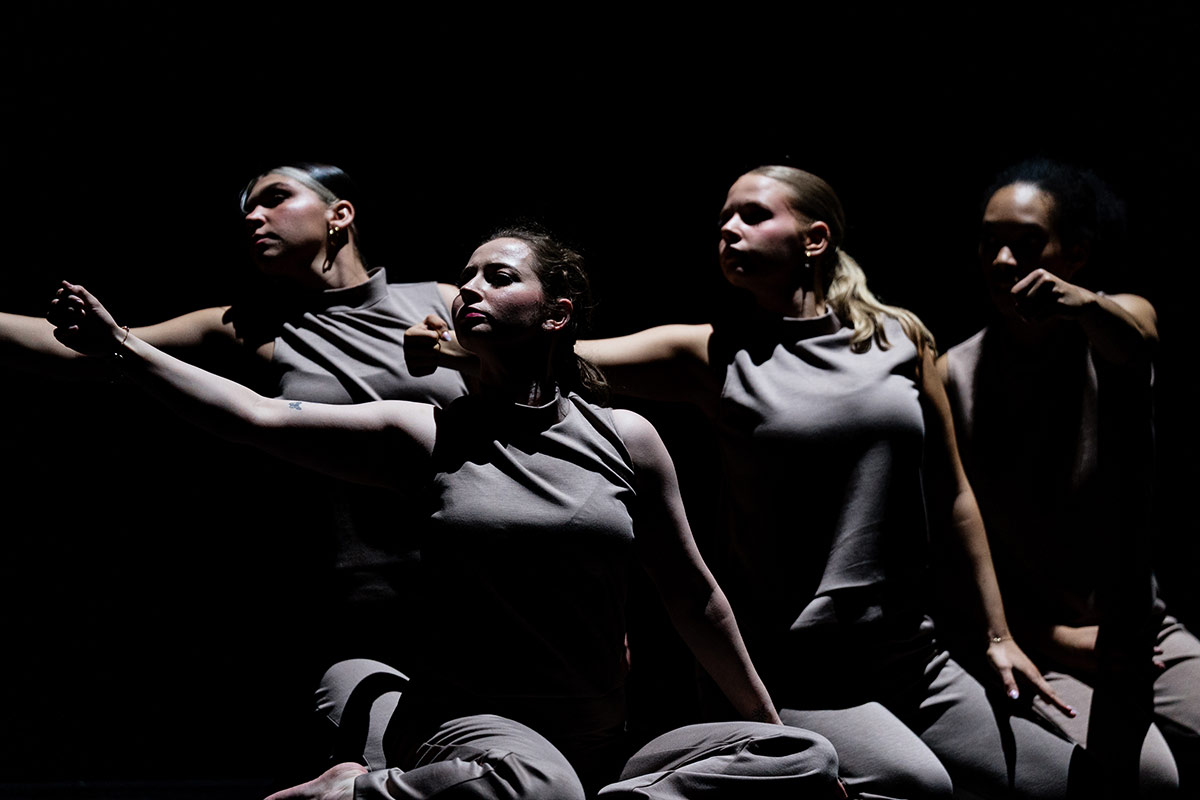
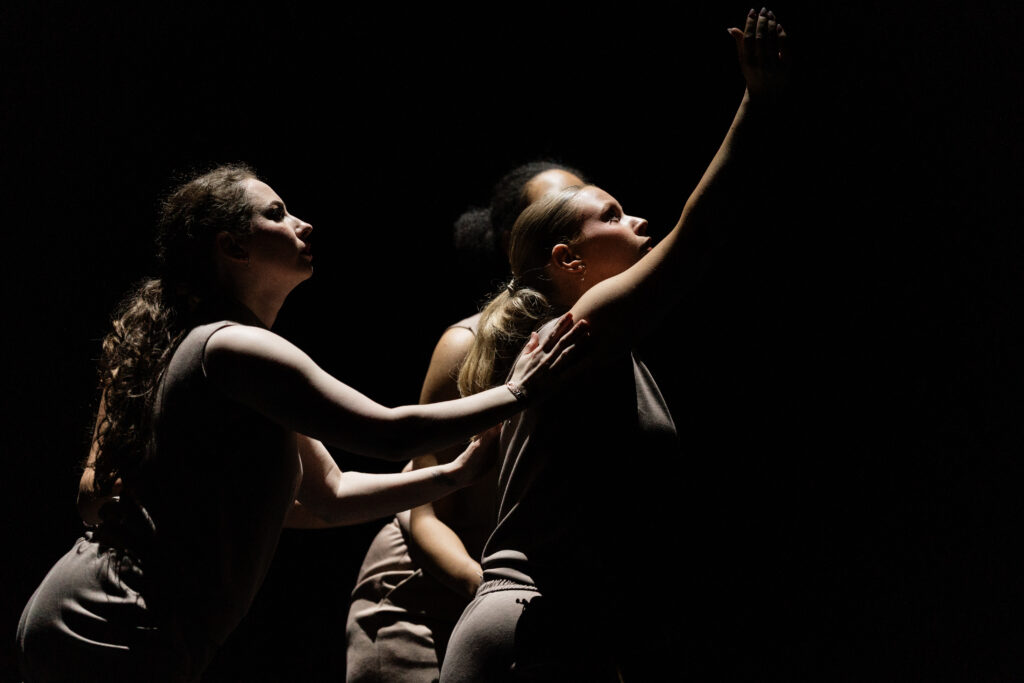
Aubry described the piece’s structure: dancers began in silhouette, moved into a shared pool of light, broke apart individually, and culminated in a projected video of the youth themselves — also in silhouette — dancing to the same song.
“Something about including that video is so touching,” Aubry said.
For Aubry, the project reinforced her strong belief that youth in the justice system need more access to creative outlets — not as a luxury, but as a necessity.
“There should be more outlets, whether it be with music, dance, drawing, painting, acting, woodwork — anything they can have as an outlet,” she said. “At the end of the day, they’re kids. They might not always have a good place to feel comfortable, or a positive place where they can let go and just be free. So these creative experiences can provide that for them.”
Makalah Martin, a sophomore theater major and Flint native, auditioned for the project with no expectation of what it would give her. She said the experience opened something she hadn’t previously found.
“I enjoyed finding a new part of myself, being able to be free, being one with the music,” Martin said. “I learned I’m stronger than I thought.”
Martin said she hoped audiences left the performance with a more nuanced view of the youth whose stories animated the piece.
“I just hope that it reminds the community that these kids are still kids at the end of the day, and that they’ve gone through a lot,” Martin said. “They might have done something that’s landed them in juvenile detention, but they’re still learning and growing, with emotions and feelings, just like us. They make mistakes, just as we do. It’s important that they’re given opportunities like this to reflect, grow, and develop so that they can be strong members of our community.”