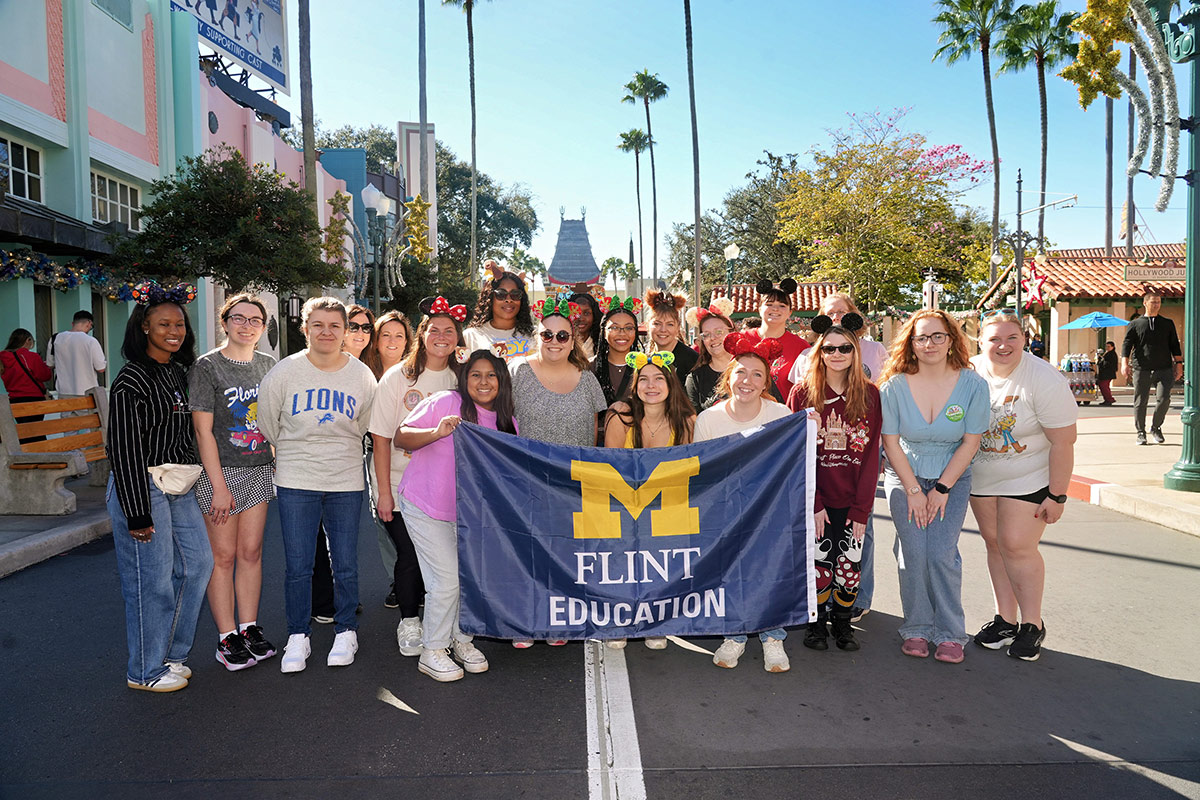
When most people think of Disney World, they imagine children meeting beloved characters or thrilling rides through fantastical worlds. But for a group of K-12 education students from the University of Michigan-Flint, the Magic Kingdom became something else entirely: a masterclass in transforming ordinary spaces into extraordinary learning environments.
Led by Tracy Foster, UM-Flint education field experience coordinator, and Jenelle Allen, lecturer I in education, this innovative professional development program took future teachers to Florida for three days of intensive, hands-on workshops across three Disney parks—learning directly from the Disney Imagineers and facilitators who turn imagination into reality every day.
Foster wanted to partner with the Imagination Campus because she wanted UM-Flint preservice teachers to be inspired by Walt Disney’s “blue sky thinking”, which views every idea as an opportunity for innovation.
“The professional development team at Disney created what I consider to be a once-in-a-lifetime opportunity for our preservice teachers to grow as educators, empowering them to bring a sense of wonder, purpose and lasting impact to all the students they’ll serve,” she said. “Walt Disney operated on the philosophy that you can educate people, but don’t tell them you are doing it. He felt that learning should be fun and engaging, igniting students’ imaginations and curiosity. Disney’s Imagination Campus modeled the importance of diverse thought in creating a safe space for diversity in the classroom. Every person is uniquely valuable and celebrated.”
The idea for the professional development program emerged from a recognition that future teachers need more than textbook knowledge and traditional coursework. In an era when students crave connection and relevance, educators must learn to teach through joy, creativity and engagement.
“Disney’s Imagination Campus showed us the power of intentional design,” said Jenelle Allen. “We explored how to plan with purpose for teamwork, thoughtfully design classroom environments, and create spaces that tell the story of the learning happening every day in our classrooms.”
The initiative reflects UM-Flint’s commitment to preparing highly effective, reflective and innovative educators who are ready to make an impact from day one. Rather than learning about engaging classrooms in theory, students experience it firsthand—then work with faculty to connect those experiences directly to teaching strategies and student outcomes through guided debriefs after each session.
“This trip is not your typical college class or education conference,” Foster said. “It’s a world-class professional development opportunity where education theory meets Disney-level innovation—immersing future teachers in experiential learning designed by some of the best storytellers, designers and collaborators on the planet.”
The program centered on three signature workshops, each held in a different Disney park and designed to address critical teaching competencies:
- Theme Park Design: Blueprint for Learning at Magic Kingdom taught students to design classrooms the way Imagineers design attractions—with purpose, flow and emotional impact. The goal: make classrooms more than rooms, but learning adventures.
- Immersive Storytelling: Bringing Content to Life at Animal Kingdom showed how narrative can engage all learners across all subjects, sparking imagination and connecting students to the world around them.
- Teamwork the Disney Way: Collaboration with Purpose at Hollywood Studios developed strategies for co-teaching, collaboration and feedback—the skills needed to bring out the best in colleagues and students.
Between these workshops, students didn’t just sit in classrooms. They walked through the parks themselves, experiencing firsthand how Disney creates environments that engage all the senses.
“I was shocked at the setting of the Imagination Campus,” said Imari Allen, a junior from Flint majoring in secondary education mathematics. “I thought we would just be in a classroom, but we were walking through the parks—seeing things in action and then talking about it. Discussing different theories as we were seeing them in practice.”
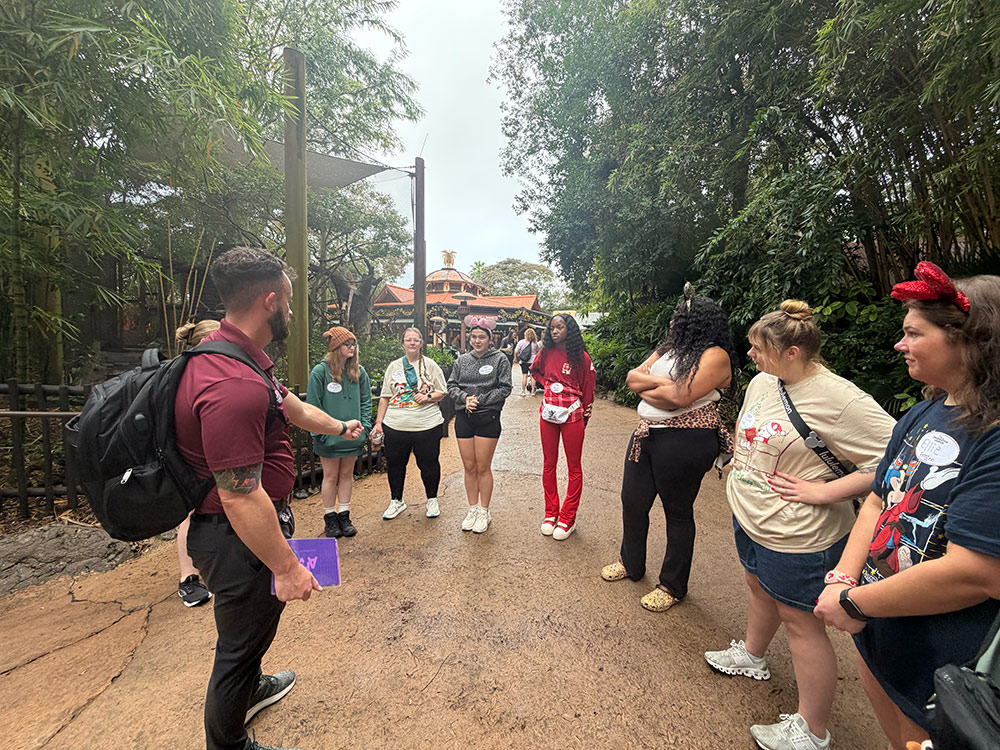
For Ireland Vorhies, a junior in elementary education living in Grand Blanc, one session stood out above all others. On their final day, a cast member named Billy led them through Animal Kingdom, demonstrating immersive storytelling techniques.
“He took us through everything—smells, costumes, small details to keep people in the experience,” Vorhies said. “We heard Walt Disney’s story from the beginning to today, how one man opened up all these different opportunities. It was the most impactful part for me.”
The experience resonated so deeply because Vorhies had worked for Walt Disney World through the Disney College Program in 2023-24. “It was the best time in my life,” she said. “I always wanted to do that. Working with kids was what I loved, so of course I wanted to meld the two together.”
One concept emerged repeatedly from different sessions: intentionality. Whether designing a theme park or a classroom, nothing should be arbitrary—everything must serve a purpose.
“At Disney, things are very intentional,” said Lauren Brewer, a 2025 graduate with a bachelor’s degree in elementary education who is now substitute teaching. “I learned to take that into the classroom. Everything in my classroom needs to have a purpose for our class to be productive.”
Brewer, who focuses on teaching grades 3-6, plans to apply this to every detail. “The books that I have will all be meaningful, fun and entertaining. I want to find messages and purposes in stories. Even the furniture—I want it to have a purpose and be useful throughout the day.”
For Vorhies, the lesson went even deeper. “The intention of everything—every routine, everything you put up on your wall, how you structure things, how you handle yourself,” she said. “We represent something bigger. Same with teaching. It’s a selfless thing. We have a huge responsibility to give these kids the best experience, to enhance their curiosity, light up their lives, and inspire them to do amazing things in the world.”
This focus on intentionality truly came to life during the theme park design sessions, where students worked in groups to reimagine classroom spaces using the same principles Disney applies to park layout.
Abigayle Fraley, a 2025 elementary education graduate who is now working as an associate teacher in preschool classes, admitted she was initially skeptical. “I thought, ‘Theme park design—how will that help me with a class?’ I understood teamwork and immersive storytelling, but this?”
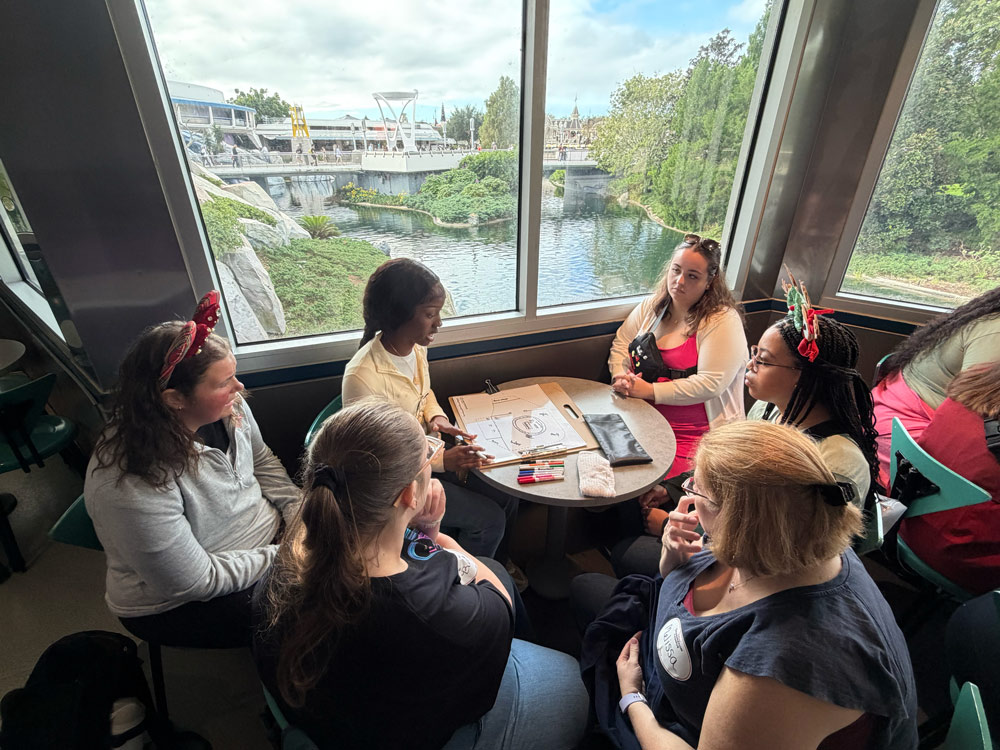
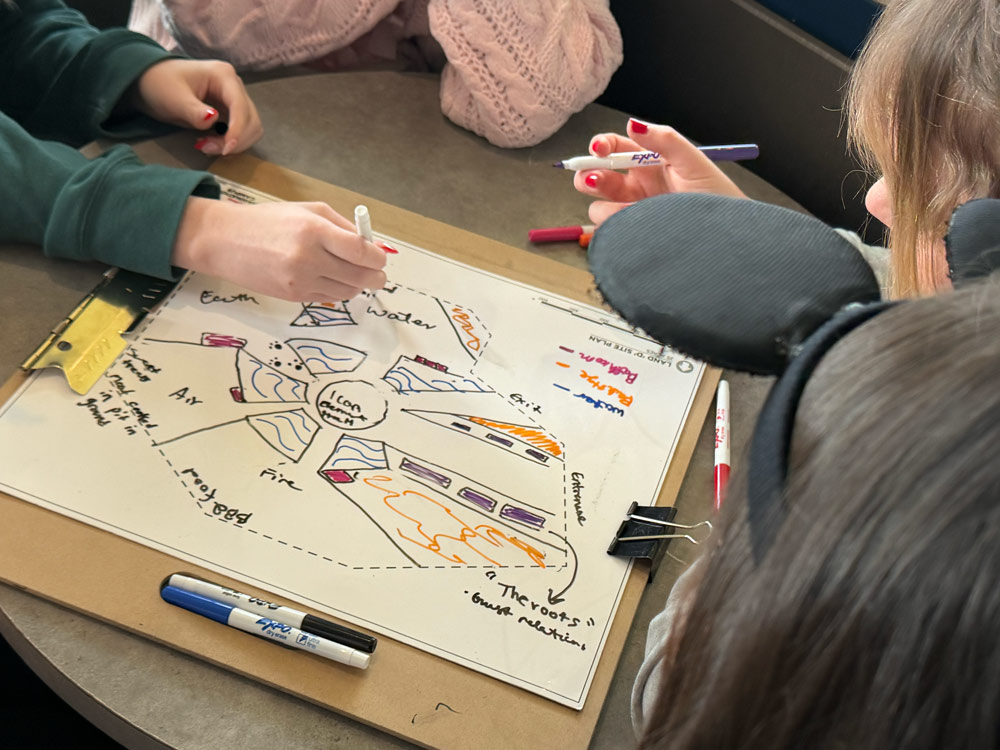
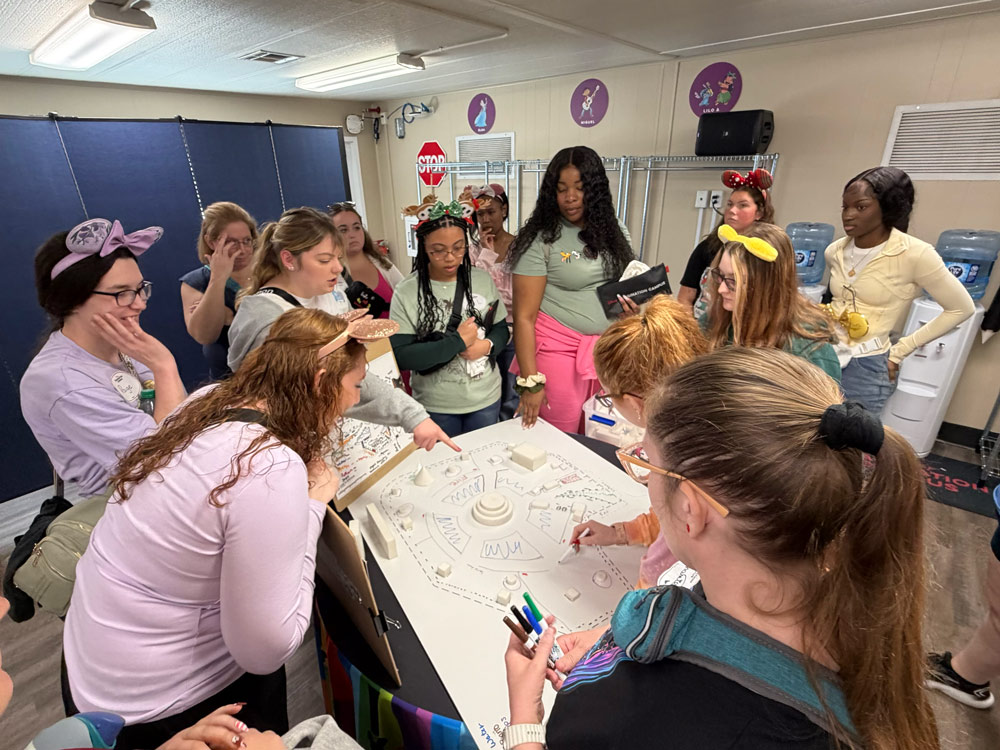
Education students collaborating on an intentional design project.
Then the connections clicked. “We had to think about how to solve problems using space—what do we need to include, what can we put on the walls to meet the needs of the kids, how can we incorporate different things in every area? They did a really good job connecting it to teaching,” she said.
The hands-on approach was extended to team-building activities that students can directly replicate in their own classrooms.
Fraley described an exercise from the first day. “We all stood in a circle and tossed a ball without talking. It taught us about communication and building classroom community right off the bat through games. What should we be looking out for? How can you support your classmates?”
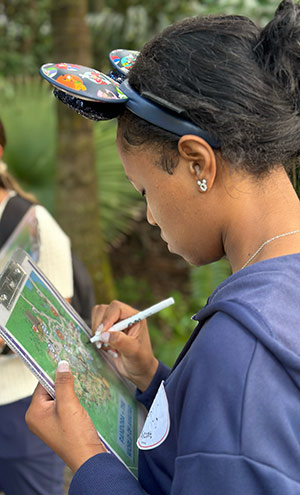
Imari Allen appreciated how the program challenged the assumption that play is just for young children. “One of the main reasons I wanted to go was to see if the Imagination Campus could potentially have opportunities for secondary ed majors—we’re often overlooked,” she said. “But play is for everyone. It’s part of the educational experience that every student should always have.”
She sees the collaborative nature of the theme park design project. “We were talking and collaborating with other students, manipulating the classrooms and thinking about how it could benefit faculty, students, and parents,” she said. “The biggest thing I learned was teamwork—working with others even when the feedback you receive is challenging.”
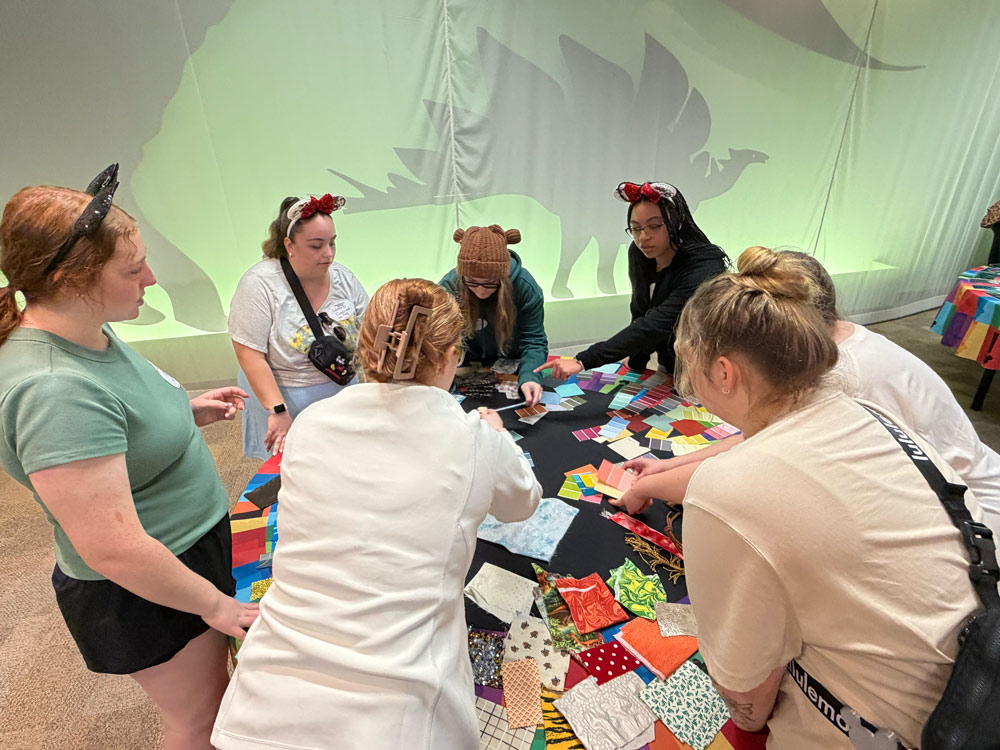
For Vorhies, the immersive storytelling session sparked the most creative thinking. “We did activities I wouldn’t have thought about doing. One day, they said, ‘Let’s create a vision board for your story!’ We had to think about colors, plants, texture of clothes—visually I could see it come together.”
Foster watched the students’ transformation with pride. “My favorite part of this experience was sharing so many magical moments with our UM-Flint education students and watching all of them grow, learn, collaborate, and become inspired,” she said. “Disney’s Imagination Campus brought education to life in a way that left a lasting impression.”
One surprise for Foster was discovering that most Disney presenters were former K-12 educators themselves. “The presenters did a remarkable job of relating all of the content back to the K-12 classroom using student-centered strategies,” she said. “Disney’s Imagination Campus empowered our UM-Flint preservice teachers to create classrooms with immersive environments where learning is imaginative and an exploratory process, where critical thinking is valued, and student engagement is central to every activity.”
The inspiration is already spreading. “Participants have since expressed interest in pursuing the Disney College Program over the summer,” Foster said. “This professional development experience serves to distinguish our students from other candidates applying for future teaching positions.”
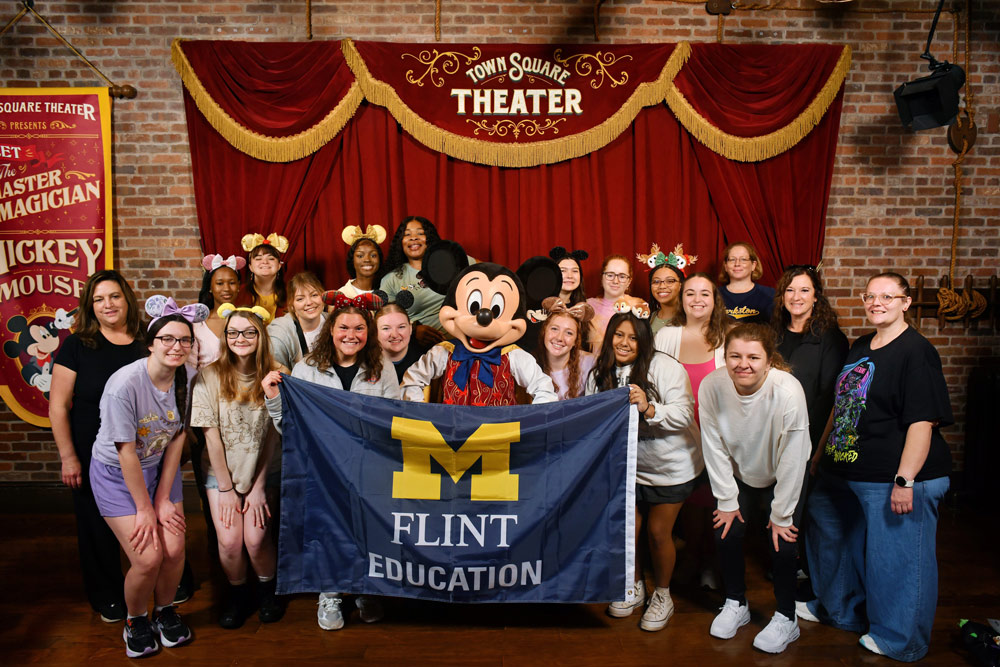
UM-Flint faculty leaders are already planning future trips, recognizing the program’s profound impact on teacher preparation. This once-in-a-lifetime experiential learning opportunity gives students marketable credentials they can include on their resumes, concrete strategies for inclusive, engaging instruction, and standout stories to share in job interviews.
“It demonstrates their capacity for innovation, blue sky thinking, the ability to think beyond traditional approaches, commitment to the importance of diversity of thought, and continuously improving instructional practices and spaces to meet the needs of all students,” said Foster.
The program represents UM-Flint’s broader commitment to practical, hands-on learning that prepares teachers for 21st-century classrooms. By bringing pre-service educators to one of the world’s most innovative learning environments, the university ensures its graduates don’t just know about engaging instruction—they’ve lived it.