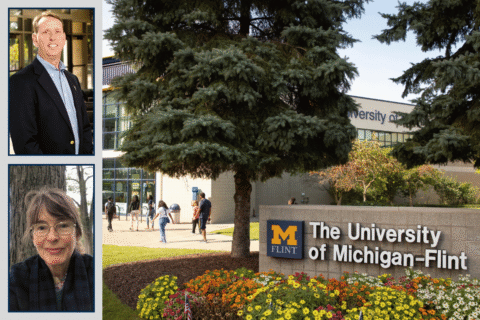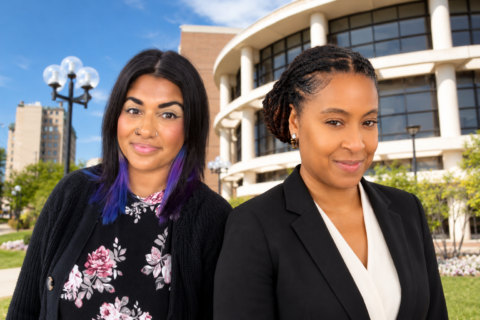
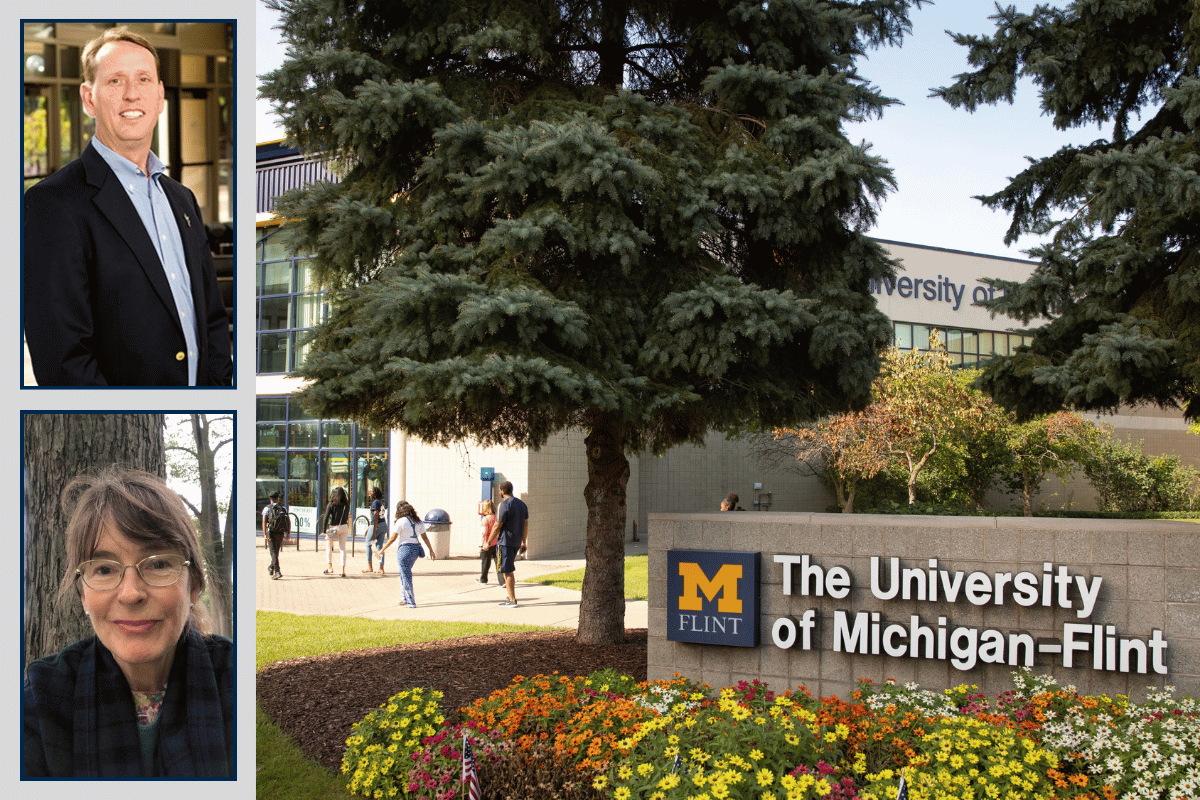
Two University of Michigan-Flint professors have been honored by the Historical Society of Michigan for work that connects the past to the people living with it today.
Thomas Henthorn, the Wyatt Endowed Professor of Public History, received the 2026 State History Award for Distinguished Professional Service, while Mary Jo Kietzman, professor of English, and co-editor Paul Gifford received a 2026 State History Award in the Books: University & Commercial Press category for “Exploring Mid-Michigan: A Guide to Flint, the Saginaw Valley, and the Thumb.”
The society presented the awards Sept. 25-27 at its 152nd Annual Meeting and Michigan History Conference in Grand Rapids.
Henthorn: scholarship rooted in the community
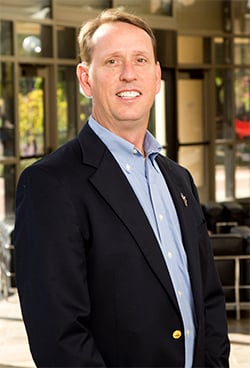
The Society lauded Henthorn for his scholarship and advocacy for Flint’s history and community, noting that he shares his passion for research with students and shows how history bears on current social issues.
Henthorn has built relationships with the Sloan Museum of Discovery, the Genesee County Historical Society and the Flint Public Library. He also serves on the boards of the Sloan Museum, the Whaley House and Glenwood Cemetery. His community-based scholarship and push to help students prepare for professional careers embody professional service.
“I’m honored to receive this award because it recognizes the importance of preserving and sharing Flint’s history,” Henthorn said. “It also reflects the work of the many community organizations and individuals I’ve been fortunate to collaborate with over the years.”
Henthorn is well known for his cemetery preservation work with students. It began at Flint’s oldest cemetery, Old Calvary, after his pastor asked if he could do anything about the site. After seeing the results, Glenwood Cemetery later asked him to help restore it.
Each summer, UM-Flint history students can intern with Henthorn to restore headstones at both cemeteries. He also leads walking tours of Glenwood and offers public preservation workshops. In 2024, the Michigan Historic Preservation Network gave him its Citizen Award for preserving Flint’s history.
“I want students to understand that history isn’t just something we study in a classroom, but something they can actively participate in,” he said. “Working with community organizations gives them opportunities to develop practical skills, gain professional experience, and make meaningful contributions to the places where they live.”
Henthorn earned his doctorate in urban history at Michigan State University and joined UM-Flint in 2009. The Wyatt endowment supports a program that sends students on fully funded study trips. In March 2025, 14 UM-Flint students traveled to Cuba on a trip Henthorn selected and helped to coordinate.
He is currently producing a web series, Built for Belief, that explores sacred and faith-based places and their impact on Flint’s history and community.
Kietzman: a regional guide, written by the region
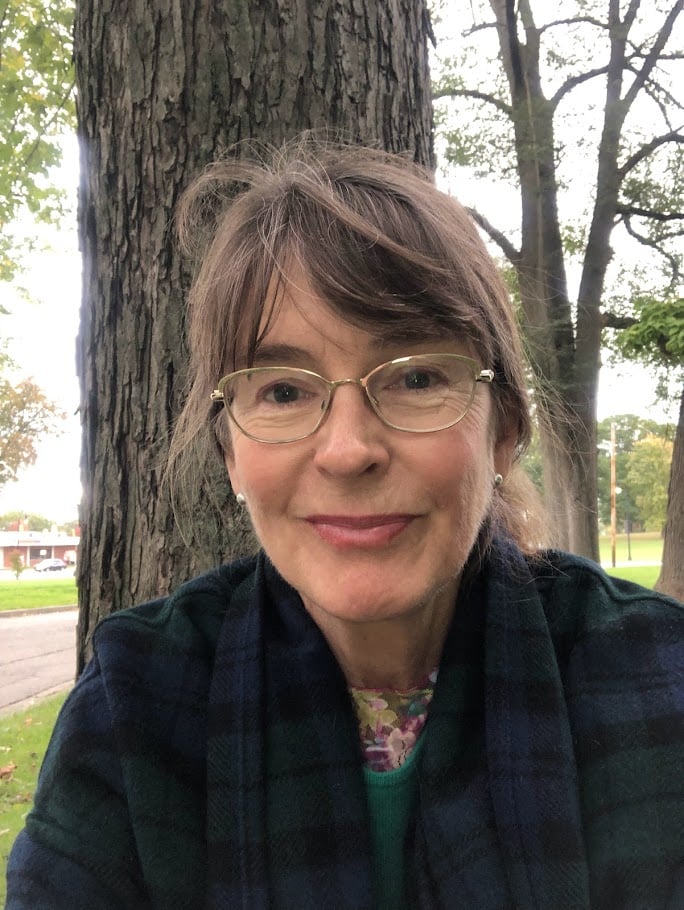
“Exploring Mid-Michigan,” published by Michigan State University Press, grew out of a project Kietzman began in 2021, after the Flint water crisis. Rather than write about Flint in isolation, she and her collaborators linked the city to others along the Flint River system, as well as to small towns and rural lands in the watershed.
The result is a guide to Michigan’s industrial and agricultural heart. It covers the region’s history and offers suggestions for travelers today. The book blends background essays, city profiles, neighborhood studies, and portraits of rural communities with practical road and paddling guides. It is written for general readers, not an academic audience.
Kietzman, who has taught English at UM-Flint since 1996, modeled the project on the Federal Writers’ Project, a 1930s New Deal program that put writers to work documenting local history and culture. Michigan’s volume was published in 1941. The Society said the book offers a model for empowering local writers and experts to explore and celebrate their own communities.
“The award means more exposure for the book, which was written as a resource and an inspiration for regional communities. A 21st-Century Federal Writers’ Project Act has been reintroduced to the U.S. Congress, but it’s considered a legislative long shot,” said Kietzman. “I am proud that a team at UM-Flint had the idea, took the risk of doing a major project like this (without big financial backing), and got it done. The award also tells me that humanities degrees work. Focused on metaphor, narrative and original insights, they move easily from academy to community, where they can change how we see familiar worlds and challenges.”
Kietzman assembled a team of faculty, alumni, a handful of professional writers and a few undergraduates. A Michigan Humanities Council grant, matched by the university, paid stipends so younger writers could travel and gather material, in the spirit of the original Federal Writers’ Project.
Gifford, a retired UM-Flint archivist, served as co-editor and contributor. The project also includes a website of digital story maps, wepokealong.umich.edu, and a phone app, MiPilgrimage, with quests around Flint. Kietzman’s work on this project previously earned the Regents’ Award for Public Service.
“Working in Kazakhstan as a Fulbright Scholar, I had the insight that my only way into the culture was through my students, and I found that teaching there was truly an anthropological experience,” Kietzman said. “When I returned to Flint in 2010, I was determined to find ways to learn about the culture of Mid-Michigan through expert guides. I’ve also wanted to give students internship experiences, so I used my grant money to pay them stipends to travel and write about places in the region, turning them into professional writers — and 10 of these UM-Flint graduates now have their work published.”
UM-Flint hosted a book launch event on campus earlier this month. The book is available through Michigan State University Press and at the UM-Flint bookstore.