"Exploring Mid-Michigan" book launch set for Oct. 1 at UM-Flint
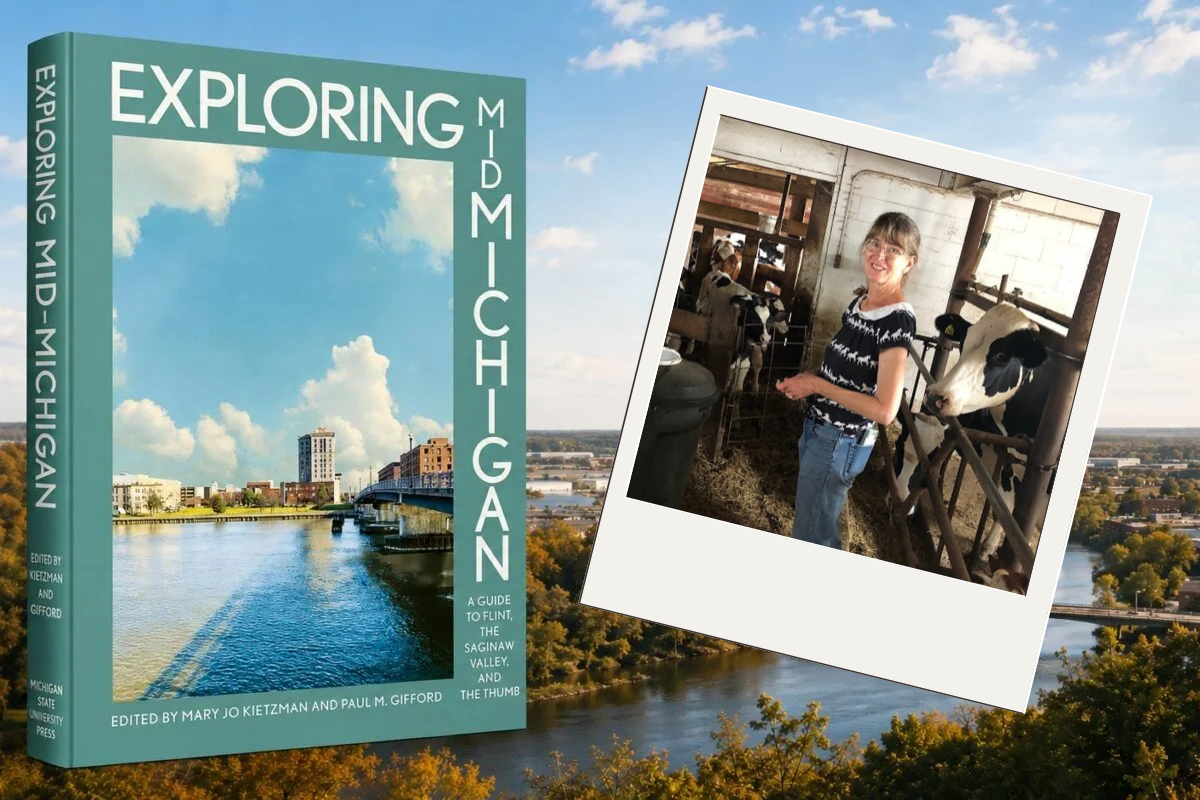
The University of Michigan-Flint will host "Watershed Moments: A Book & Travel Presentation of Exploring Mid-Michigan" at 4 p.m., Oct. 1, in Room 107 of the Murchie Science Building, celebrating the release of a new regional guidebook that places Flint's story within the wider landscape of the Saginaw Valley and the Thumb.
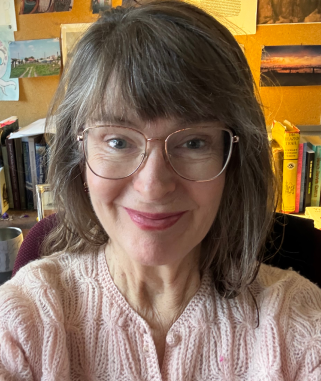
Mary Jo Kietzman, professor of English at UM-Flint, with co-editor and contributor Paul Gifford, retired archivist, will host the free, public event. Copies of "Exploring Mid-Michigan" will be available on site for purchase.
The book, published by Michigan State University Press, grew out of a project Kietzman began in 2021 after the Flint Water Crisis. Rather than write about Flint in isolation, Kietzman and her collaborators connected Flint to other cities in the Flint River system, as well as the small towns and rural lands within the watershed. According to Kietzman, this approach helps the public see and build those relationships, while also countering the tendency to reduce Flint to its crises and pathologies. The project draws inspiration from the American Guide series, a set of state guidebooks produced during the Great Depression by the Federal Writers' Project, a New Deal program that employed writers to document local history and culture across the country. Michigan's edition appeared in 1941.
"We couldn't take on the whole state, so we took on the region instead — and that meant putting Flint into a larger geographical context," Kietzman said. "Our hope is that the book inspires our community to take local places seriously, to think them worthy of love and study and careful work. This will inevitably generate new questions, research, public knowledge, and new kinds of work with local communities."
The result is part resource and part working travel guide, blending general background essays, city profiles, neighborhood studies, and portraits of rural lands and small towns with practical road- and river-paddling guides. The book is written for general readers rather than an academic audience, and it aims to help locals and visitors alike see the depth and dimensions of places too often overlooked.
A diverse group of faculty, alumni, a handful of professional writers, and a few undergraduates collaborated to create the guide.
"It was challenging work, because it often required the contributors to move beyond their usual specialties," said Kietzman. "Writers, poets and historians had the opportunity to engage seriously with agriculture, industry and ecology, with the humanities tying those threads into a larger vision."
Younger writers also played a significant role, contributing rich, experientially scaled pieces to the mix, as well as histories and ethnographies. UM-Flint alumni involved with the project include Breanna Moore, Amanda Seney, Zachary Scott, Kelsey Ronan, Megan Moore, Jaqui Donaldson, Rob McCullough, Jina Bhagat, and Brit Wilcox. Eric Girgenti, Tony Groulx, Sam Fitzpatrick, and Artist Relford were also recent graduates of nearby institutions. Each received stipends to cover travel and time spent working on the project, in the spirit of the Federal Writers' Project.
The guidebook has an accompanying website of digital story maps and an app for iPhone and Android. Work on the website, wepokealong.umich.edu, continues, and it contains material not found in the print guide. The app, MiPilgrimage, is currently under Apple review. It includes more than 100 quests that participants can take around the city of Flint from the UM-Flint campus.
Kietzman also hopes this public humanities work will serve as a template for future large-scale projects that showcase the capabilities of English majors and the need for a robust Humanities curriculum at institutions like UM-Flint.

Kat Oak
Kat Oak is the communications specialist for the College of Arts, Sciences, and Education. She can be reached via email at katheroa@umich.edu.