UM-Flint's Hristova is reimagining choral music education
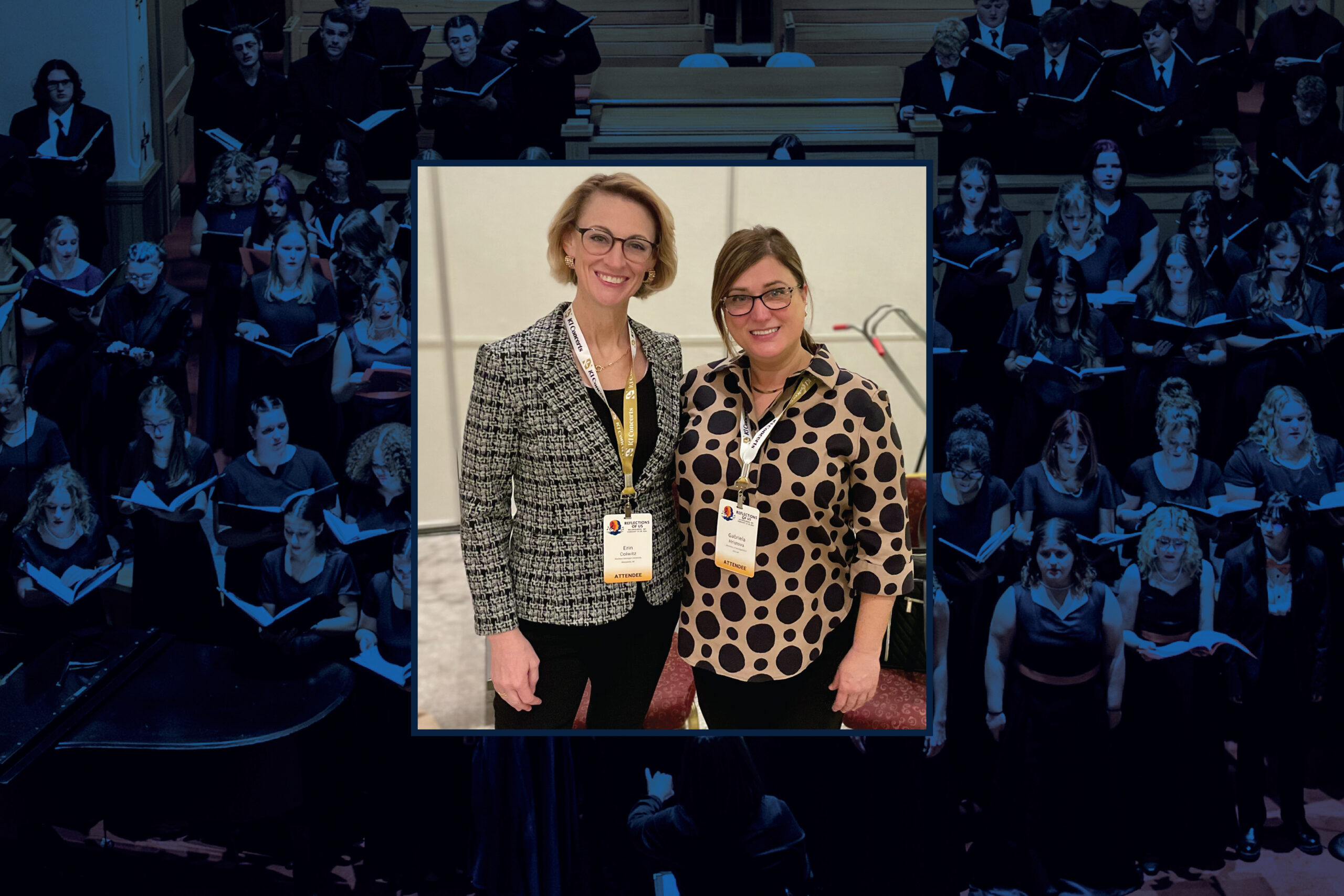
When Gabriela Hristova, associate professor of music at the University of Michigan-Flint, and Erin Colwitz, director of choirs at Northern Michigan University, took the stage at the American Choral Directors Association Midwestern Conference in February, they brought with them something more than rehearsed talking points — they brought a decade of friendship, experience and collaboration, shared frustration, and a genuine passion for meeting today's music students where they are.
The two professors, who first connected through the Michigan ACDA board, have built a collaborative relationship that spans continents. They have presented together at the Michigan Music Conference and even traveled to the Athens Institute of Performing Arts in Greece. But for both women, earning a spot in the ACDA Midwestern conference program was particularly meaningful.
Founded in 1959 by a group of 35 choral conductors who gathered in Kansas City, Missouri, the ACDA has grown into one of the most respected professional organizations in choral music. Its mission — to inspire excellence and nurture lifelong involvement in choral music for everyone through education, performance, composition, and advocacy — is one that Colwitz and Hristova embody in their daily work. Organized into seven geographic divisions and 50 state chapters, the ACDA offers members access to conventions, festivals, clinics, and a national network of fellow choral directors. Presenting at a divisional conference, then, is an opportunity to speak to a serious, invested audience of peers.
Their panel discussion focused on one of the most pressing challenges facing higher-education music programs today: how to serve a student population that arrives with wildly varying levels of preparation while still maintaining the rigor the profession demands.
"The students' preparation for college and music in particular post-pandemic is quite different," said Hristova. "In underserved areas like Flint, students come to us with very different levels of preparation, skills and ability to adapt to college rigor." She said that external factors — time management, life circumstances, the ever-present pull of social media and AI — have fundamentally changed how students engage with learning. "Adapting to these changes as we teach music is truly important for the success of our students," she said. "It is a process of constantly reinventing our teaching methods, while keeping the principles of choral music education and the expectations of music students high."
Colwitz echoed that sentiment, acknowledging that the landscape has shifted dramatically since she and Hristova were students themselves. "The way we were doing things is no longer working," she said. "We desire to create an encouraging and rigorous experience in college, while also making it attractive to those who do not always have access to elite music lessons and/or ensemble experiences." Her own institution tends to draw students from rural areas where music education has historically been underfunded or inaccessible; Hristova's student population reflects a mix of urban and rural backgrounds. Recruitment against larger schools offering more scholarship dollars is a challenge that both share.
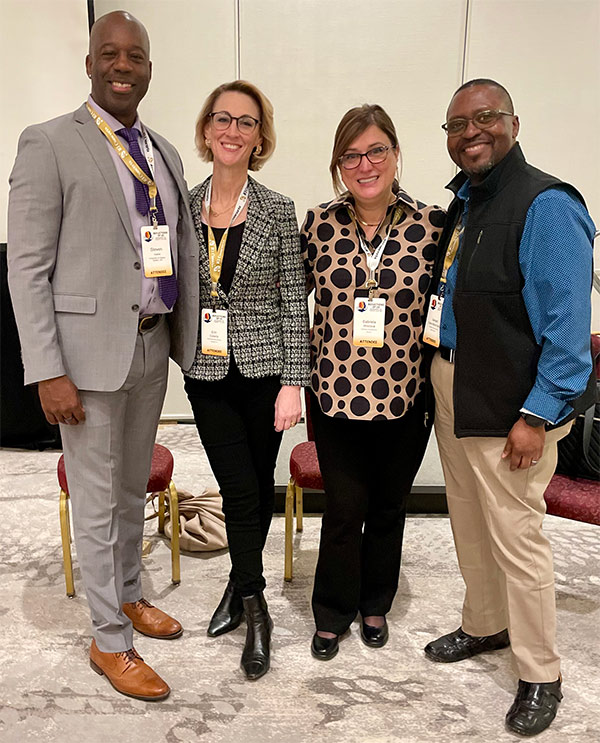
Rather than present a tidy set of solutions, the two educators chose a panel format specifically to invite more voices into the conversation. They expanded the session by bringing in Gerald Case-Blanchard, music program area coordinator at Battle Creek's Kellogg Community College, and Steven Hankle, associate professor of choral music and music education at the University of Dayton, colleagues who also work with music education students from diverse backgrounds. The result was a discussion that felt less like a lecture and more like a community reckoning with shared challenges.
For Colwitz, the most rewarding part of the experience was unexpected in its simplicity: "Learning the struggles and successes of my colleagues in their own programs." Hristova shared a similar takeaway. "Learning from others, and realizing that so many of our colleagues are invested in this topic, is important for our combined efforts to educate and develop students to the best of our and their abilities."
Beyond the panel itself, both educators found the broader conference to be a source of renewal. Hristova appreciated the organization's commitment to its members. "Their focus on fostering inclusivity and excellence on so many different levels — from the planning behind the scenes to the robust offerings of interest sessions and the stage performances — is inspiring." Colwitz, for her part, was energized by the artistry on display. "I loved hearing fantastic choirs and learning new repertoire."
At its heart, the work Colwitz and Hristova are doing reflects exactly what ACDA has championed for more than six decades: That choral music is for everyone, and that those who teach it must continually grow alongside the students they serve. "As a music professor, it is my responsibility to cultivate and nurture a student's growth and musical development," said Hristova. "Erin and I stay committed to meeting this need — one student and one conference at a time."


Kat Oak
Kat Oak is the communications specialist for the College of Arts, Sciences, and Education. She can be reached via email at katheroa@umich.edu.