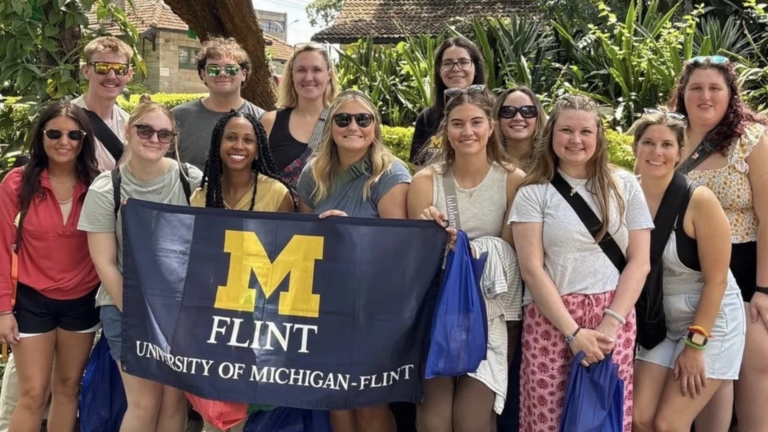
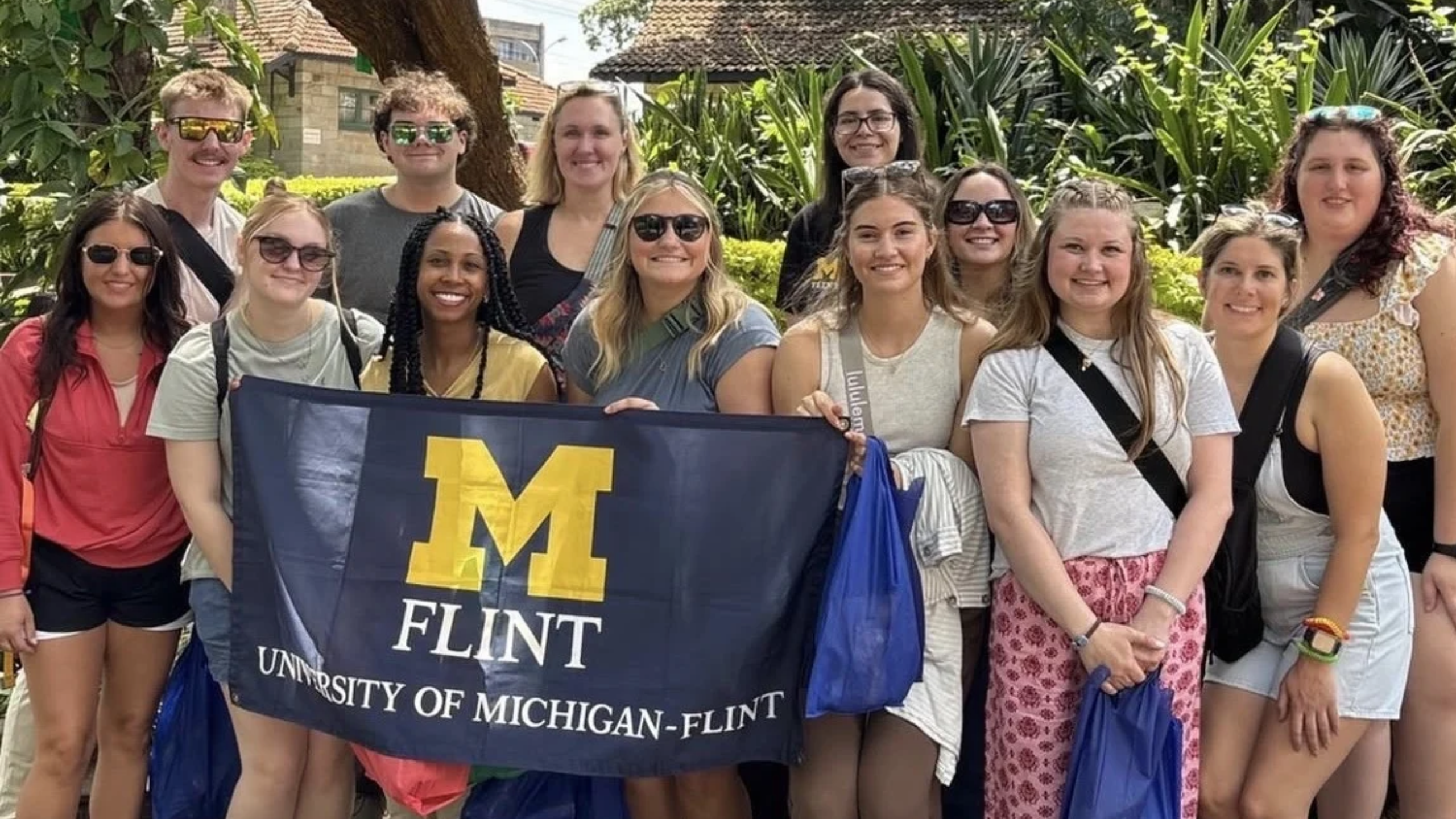
More than 7,000 miles from Flint, University of Michigan-Flint students found themselves in unfamiliar classrooms, hospital wards and community clinics. But as they worked alongside Kenyan health care professionals and educators, they discovered that some of their most valuable lessons came not from what they could teach, but from what they could learn.
The nearly three-week study abroad experience, which took place earlier this year, brought students from multiple disciplines together to explore the connections among health care, education and culture while building on partnerships that have linked UM-Flint with communities in Kenya for nearly two decades.
The history of UM-Flint’s partnership in Kenya
The program began in 2007 through the work of School of Nursing emerita faculty Maureen Tippen and Linda Knecht, and continues today under the stewardship of Suzanne Lugger, associate professor of nursing, who has maintained the program’s longstanding partnerships.
Following a pause during the COVID-19 pandemic, the program returned in 2023 with an alumni trip. Among those returning was Amy Wulke, a nurse practitioner who first participated as a graduate student in 2019. Wulke became the co-leader in 2024 and has continued in that role each year since, bringing clinical expertise and personal connections with Kenyan partners.
Under their leadership, the course has welcomed students beyond nursing while maintaining its foundation in health and education. “My goal from the beginning has been to make it more interdisciplinary,” Lugger said. Participants from outside nursing have included public health students and an honors student from the College of Arts, Sciences & Education studying biology with a pre-med focus.
Preparing students for the experience
Learning begins long before students board the plane. Applicants explain why they want to participate, helping faculty understand their interests and preparation needs. Before departure, students attend several meetings, including full-day sessions addressing the academic, cultural and practical aspects of the trip.
Through readings, research and presentations, students explore Kenyan culture, health care and education systems, geography and the socioeconomic conditions that influence health and opportunity. Pre-trip assessments and reflection activities encourage students to consider what they already know and examine assumptions they may bring to the experience. Students also prepare teaching activities around topics identified by Kenyan partners, arriving ready to contribute while remaining flexible to local needs.
Practical preparation includes discussions on travel logistics, health precautions, safety, food, living arrangements and common infectious diseases. Students are encouraged to learn basic Swahili phrases. Although English is widely spoken, learning greetings and everyday expressions helps students connect with their hosts and demonstrates an interest in the language and culture.
“This isn’t a vacation; it is an educational immersive experience,” Lugger said. “Students should expect an active schedule that includes school and hospital visits, community activities, cultural excursions and travel between locations. Accommodations and daily routines vary throughout the trip, and familiar comforts may not always be available or what students are accustomed to at home.”
Lugger reminds students that their brief visit offers only a partial understanding of the communities they enter and encourages students to approach differences with humility and recognize that navigating unfamiliar routines and surroundings is part of learning. “Being comfortable in the discomfort is an adjustment in itself,” she said.
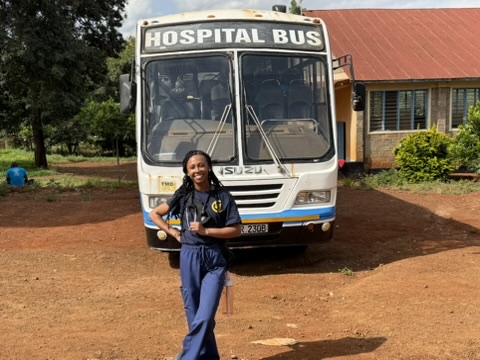
She also shares with students to be mindful of how they process culture shock and to remain respectful and open-minded when encountering cultural practices that differ from their own. That message stayed with Brianna Kline, a Doctor of Nursing Practice student from Detroit, throughout the trip. “This experience reminded me that despite our cultural differences, we often have much more in common than we realize. I hope to continue approaching people and experiences with curiosity, respect and a willingness to learn rather than making assumptions based solely on my own experiences or cultural perspective.”
Learning with and from one another
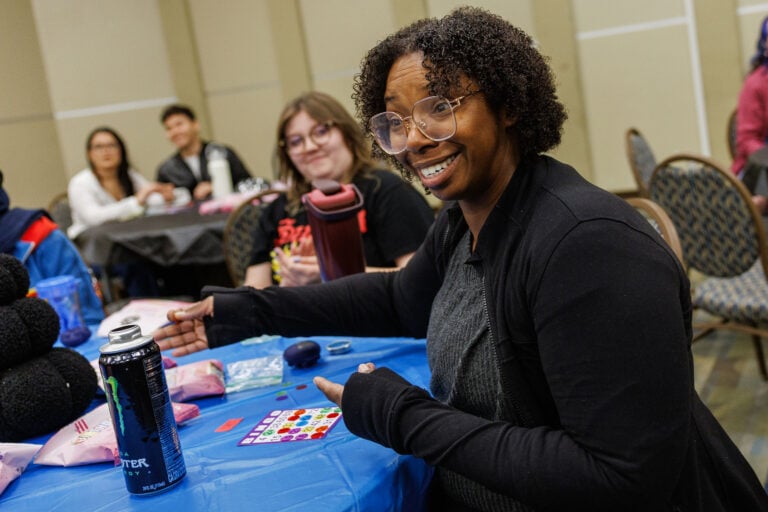
Beyond the hospitals and classrooms, students found opportunities to connect with one another, forming friendships through shared experiences, conversations and even late-night games.
“A lot of what you see will be unfamiliar for all of you,” said Kaitlyn Mulville, a Bachelor of Science in Nursing senior from Armada. “You’ll build bonds with people of all ages and backgrounds, and stay up until 2 a.m. playing games, talking and building friendships to carry with you through life.”
Learning from the community
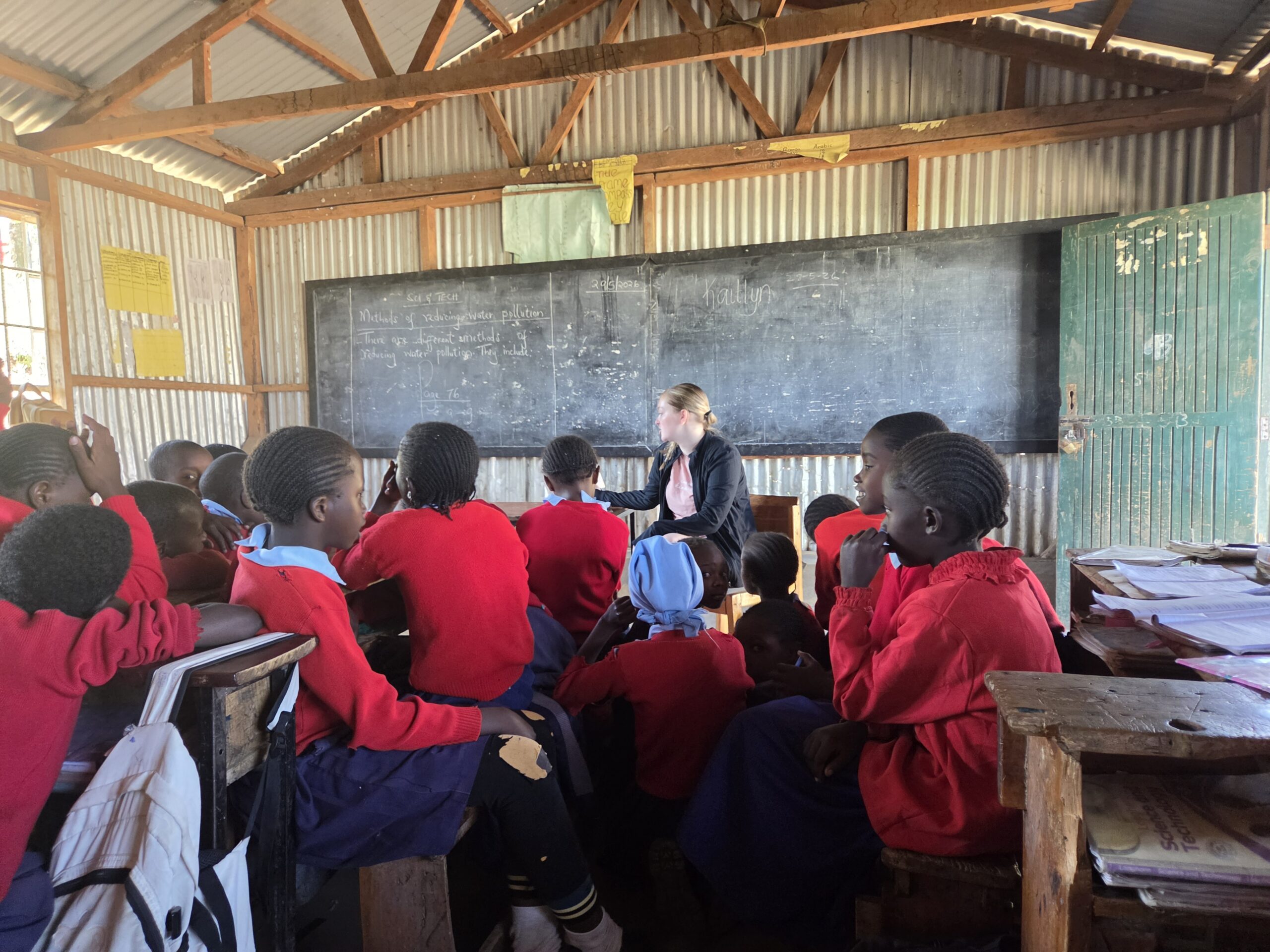
At St. Aloysius Gonzaga, a Catholic Jesuit high school near Nairobi, UM-Flint students built on a partnership established in 2018 by providing health education on topics identified by the school’s nurse. This year’s presentations addressed stress reduction, lifestyle disease prevention, digital security and hygiene.
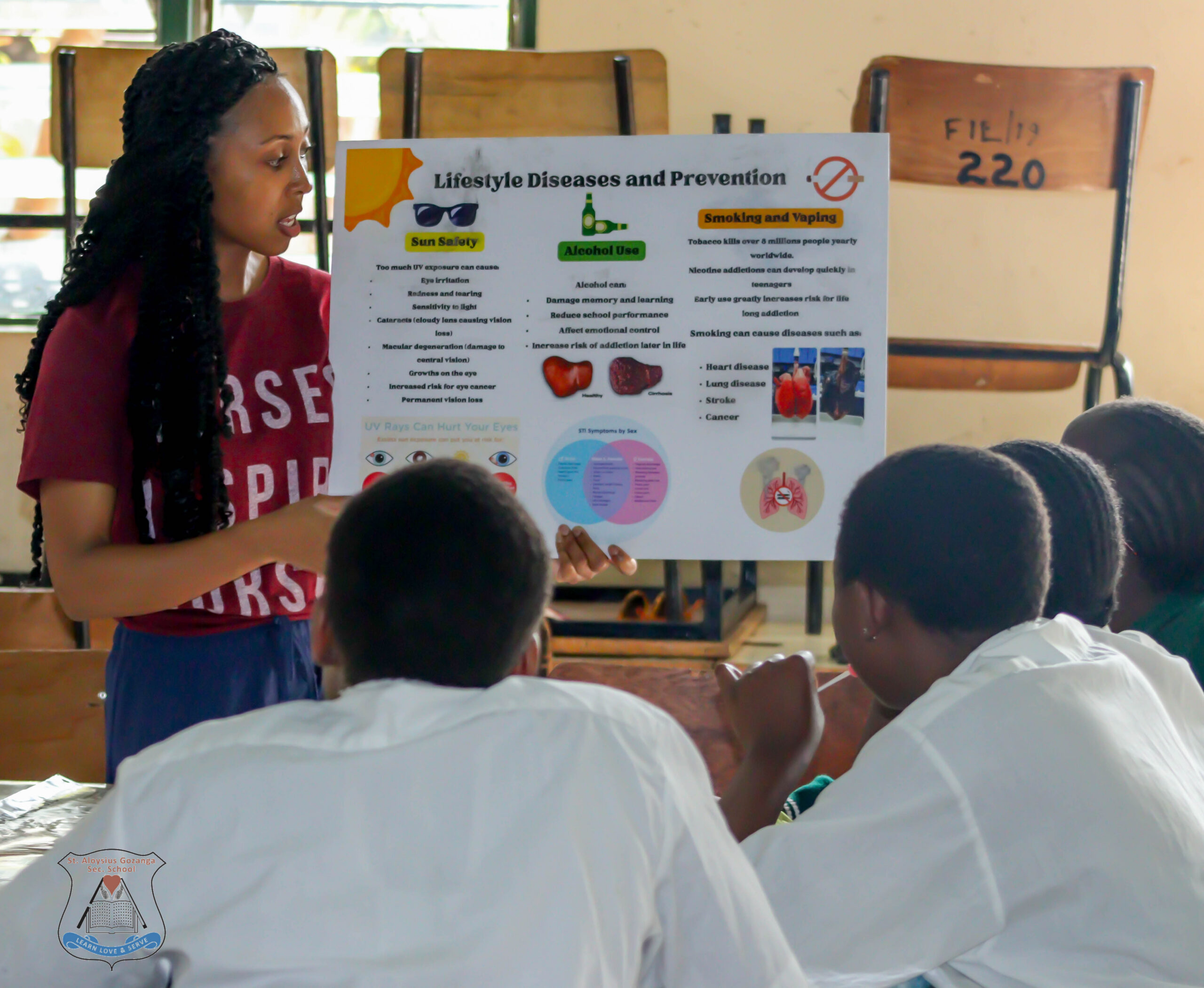
The group also conducted health assessments for students and staff who chose to participate. Health concerns identified through assessments and conversations were communicated to the school nurse for follow-up care, or referrals as needed. This coordination connects the group’s short-term participation with ongoing support at the school.
In Embu County, UM-Flint students worked alongside their Kenyan counterparts at Hunter College for Health Sciences. At Hunter’s request, students led sessions on patient mobility, infection prevention, CPR and basic first aid. The collaboration builds on a relationship established nearly two decades ago by Tippen.
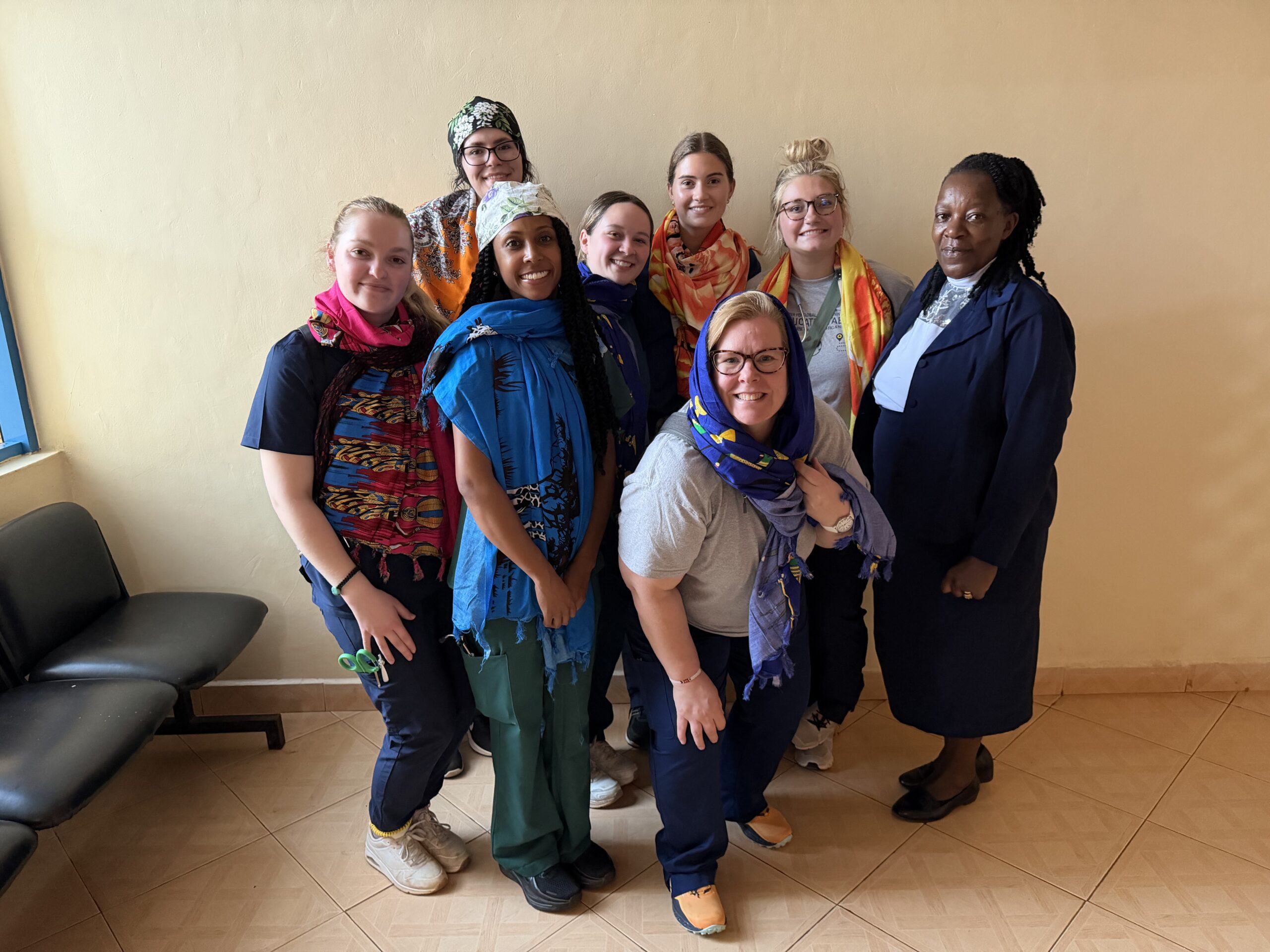
The group also partnered with Consolata Hospital Kyeni to support a community outreach clinic that served more than 200 residents in an area with limited access to health care. Working alongside the hospital’s medical team, students assisted with health assessments, pharmacy activities and clinical procedures.
At Consolata, the nursing manager requested a teaching session on neonatal resuscitation for nurses and nursing students. The UM-Flint group prepared in advance, with BSN senior Joseph Monroe, a paramedic with experience in neonatal resuscitation from Perry, and Kline taking the lead in teaching the session. “Our job is to help and not only share our knowledge but also learn from them. They’re able to do incredible things with some of the most limited supplies I have seen,” said Mulville.
Kline recalled a Kenyan nurse whose calm manner during interactions with patients left a lasting impression. “This stood out to me because it demonstrated how culture, faith and resilience can influence the delivery of patient care.”
Reflection in real rime
Reflection is an important component of the course, helping students move beyond describing what they did to examine what they learned. Guided observations, group discussions and individual and collaborative assignments encourage students to connect their experiences with academic concepts, question their assumptions and consider how their perspectives are changing.
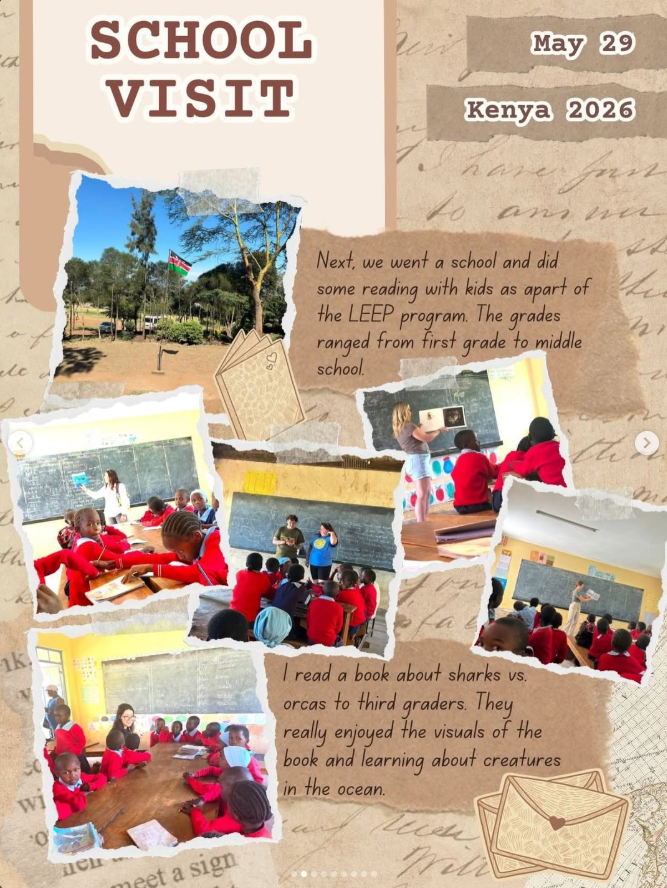
In previous years, students documented their learning through journals, collaborative projects and photo albums. This year, the group also shared the trip through a course Instagram account, posting in real time. Each student was responsible for documenting approximately two days of the trip through photographs, videos and written reflections.
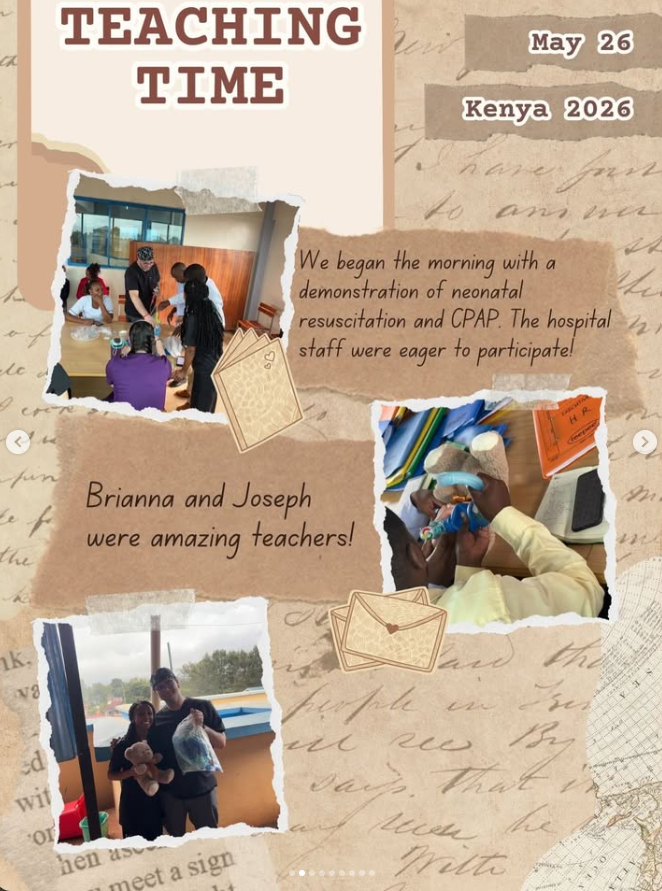
The shared account gave family and friends a window into the experience while allowing students to tell their own stories as the trip unfolded. After returning home, students continued reflecting through a final project and a debriefing session, bringing together their learning and considering how it might inform their future academic, professional and personal lives.
Making global learning accessible
Studying abroad requires an investment of time and money, and scholarships help make participation possible. The three-credit Kenya course is open to undergraduate and graduate students across disciplines and can count as a nursing elective. UM-Flint’s Center for Global Engagement offers study abroad scholarships, with awards varying each year. Additional support may be available through SON scholarships, including one established by Knecht in her mother’s name to support undergraduate nursing students participating in study abroad.
For Lugger, expanding access has personal meaning. As a college student, she wanted to study abroad but was unable to do so due to work and personal circumstances. Later, as a graduate student and research assistant at UM-Flint, she developed an interest in transcultural nursing. In 2019, she used professional development funds to join the trip to Kenya while considering a future leadership role.
“It truly changed my life and my world perspective,” Lugger said. “I want the trip to be accessible to any interested student.”
For Mulville, the experience offered lasting value. “What I found was an unforgettable experience that changed my perspective on health care, culture and the world. I can’t recommend this opportunity enough.”
Kline emphasized the importance of learning directly from others. “Cultural competence and cultural humility cannot be developed solely through textbooks or classroom discussions. Learning directly from people whose cultures, health care systems and lived experiences differ from our own can challenge our assumptions, broaden our perspectives and ultimately shape how we engage with and care for others,” she said.
To learn more about education abroad and global learning across UM-Flint, visit the Center for Global Engagement.