UM-Flint psychology interns develop creative tools to help kids at Camp Hope
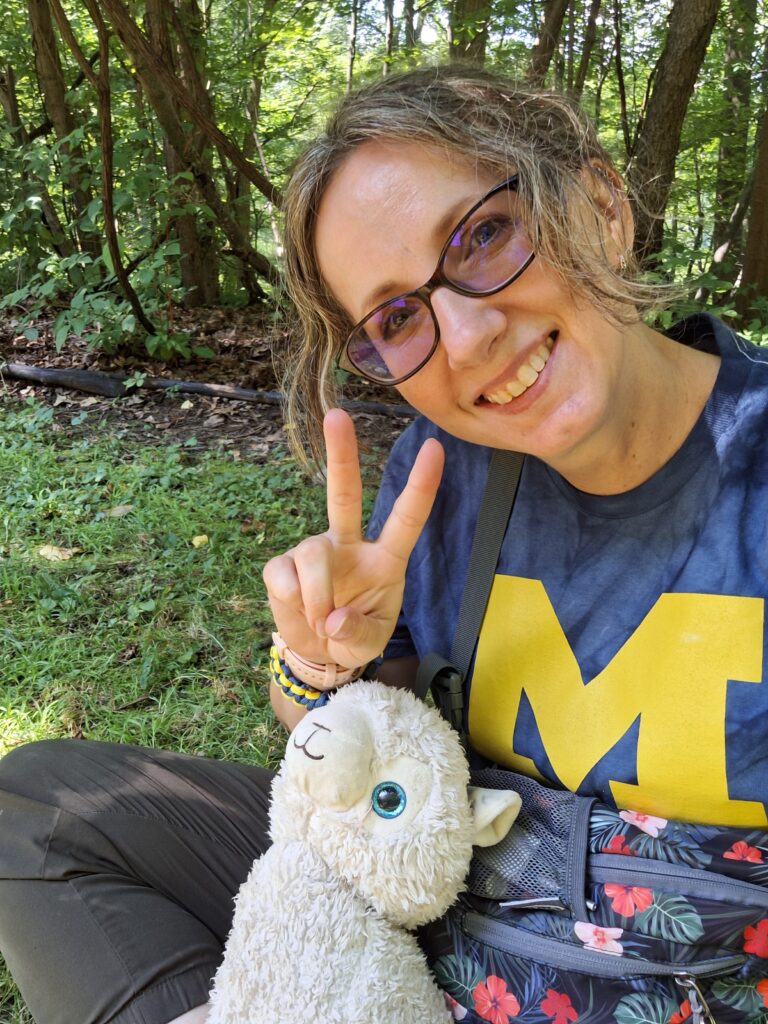
"Working with Wellspring is an opportunity for our students and department to serve our community — but it's a transformative experience for all of us," said Amanda Smith, a lecturer in the University of Michigan-Flint's Psychology Department, about the institution's ongoing partnership with Wellspring Lutheran Services' Camp Hope program. "Even if our students go into the experience with a bit of nervousness, it ends up having a huge impact on their confidence and ability to move forward in their degree or career with the knowledge that they have what it takes to really change people's lives."
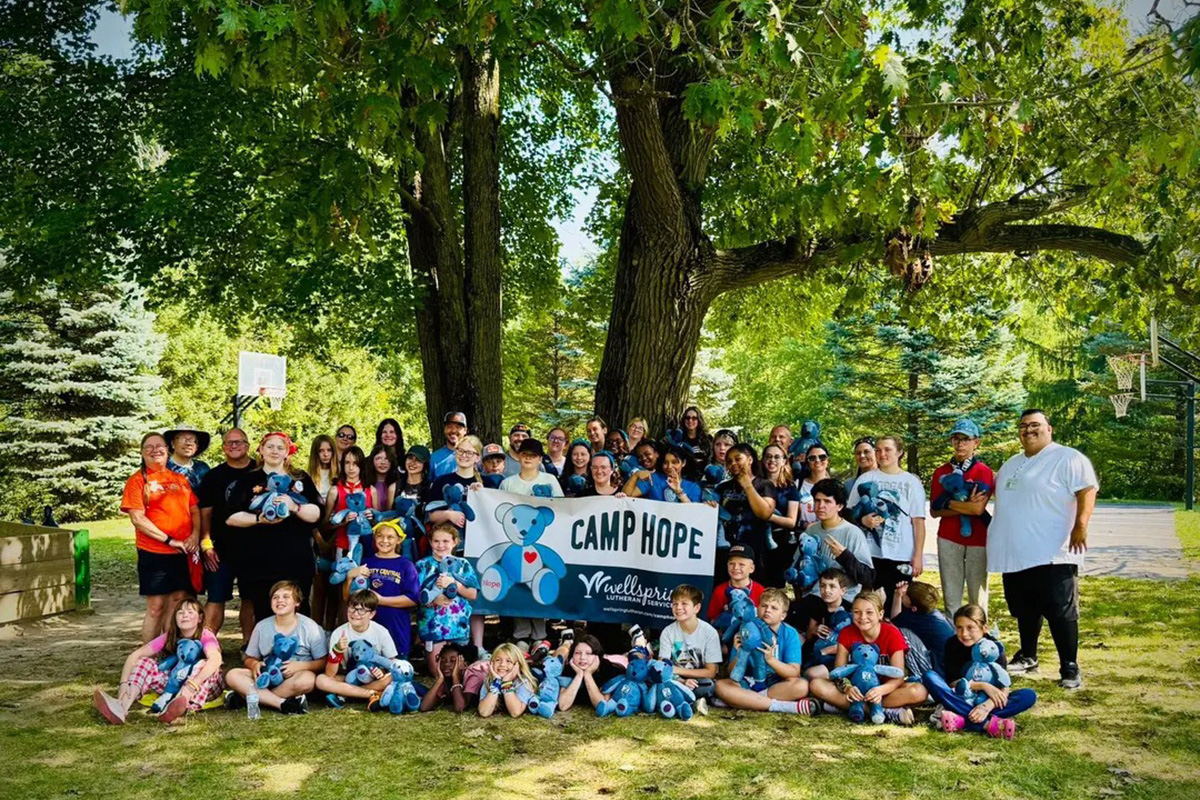
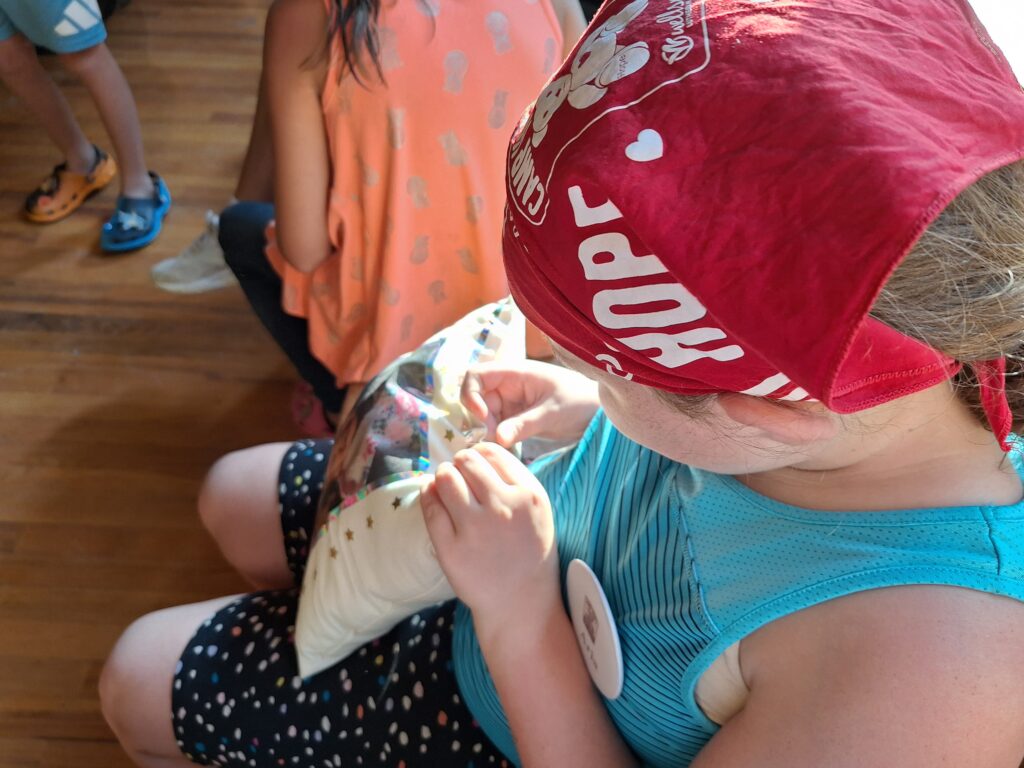
Now in its 22nd year, Camp Hope helps children ages 6 to 17 process the grief associated with the loss of a close loved one. Campers can always attend for free, as the camp is supported each year by community donations. For the second consecutive year, psychology students from UM-Flint joined the camp's volunteer ranks, bringing with them a unique focus on creative expression that complemented the camp's popular fishbowl of feelings and memory pillow activities.
"As part of the preparation course, the students developed an activity to pitch to Wellspring for inclusion in this year's camp activities," Smith said. "Three of our eight students' activities were incorporated into the schedule, and the other five were sent home with the kids for them to engage in later."
Jenifer Miller, a senior psychology major from Flint, designed one of the most popular activities for campers, a grief-themed giant Jenga game. On each game piece, she wrote questions designed to inspire the kids to share their experiences. "When they removed a piece, they would answer the question on it, and it created a low-risk way for some of the campers who had difficulty opening up," said Smith. "It was initially designed for the campers 13 and older, but all of them loved it. Several volunteers who had been working at the camp for years mentioned that their favorite new activity was the grief Jenga, because it started a lot of really awesome conversations that the volunteers hadn't seen campers engage in as animatedly before."
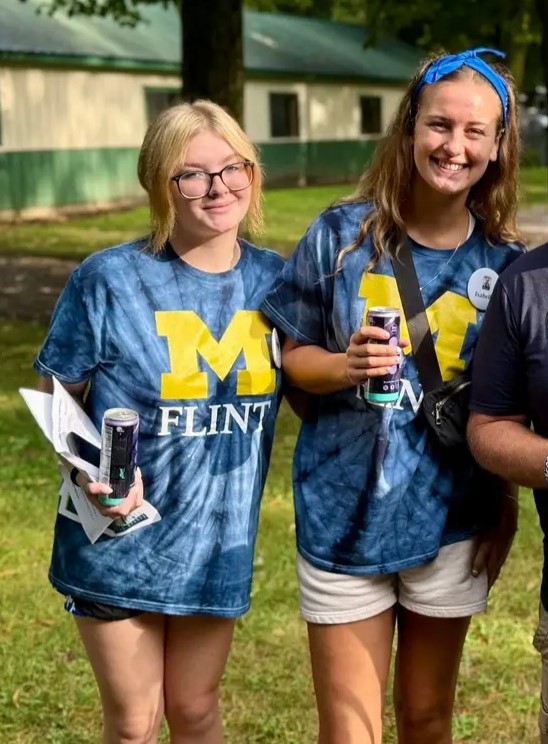
A nature bracelet activity developed by Isabelle Kline, a senior psychology major from Clarkston, also garnered surprisingly positive results.
"We put reversed tape on the wrists of the younger campers, and then led them through the forest, asking them to find things that reminded them of their loved ones and stick them to their bracelet," Smith said. "The kids were so creative — they'd focus on a favorite color or plant that they associated with their loved one, and then they would talk with each other about why they chose the materials. They loved walking through the forest and creating this unique memento; we expected it to be just a fun nature walk, but it turned out to be more impactful than we anticipated. We helped them preserve them so they could take them home, too."
Senior psychology major Kaitlin Cruppenink from Grand Blanc created one of the activities that the campers took home. "It was called 'Heart Set Sail,' and we made little kits for the campers to write or draw something on paper boats that represented their loved one, and then we included tea lights for them to place on the boats, light, and release them on the water," Cruppenink said. "I was inspired to participate in this internship because I also had experienced a significant loss at a young age. Not only do I wish to support children going through the same thing I did, but this internship also allowed me to apply what I have learned in the classroom, in a practical setting."
Ensuring that UM-Flint's psychology students would continue to have access to such an exceptional opportunity is the main reason that Smith stepped up to lead the group this year. The partnership with Wellspring was relaunched last year by psychology professor Susan Gano-Phillips, who is a Fulbright Scholar in Namibia this year. "What struck me was the universality of grief and how it touches all of our lives, but not many of us are prepared for that experience," said Gano-Phillips. "Our psychology students are trained for a wide range of careers, and I knew that this experience was something they could carry with them no matter which field they pursue."
Taking knowledge gained in the classroom and applying it in real-world situations was the primary reason Peyton Lajewski, a junior psychology major from Flint, joined the Camp Hope internship program. "I am very passionate about psychology, and I felt ready to take everything I've learned so far into a hands-on experience," said Lajewski. "Working with younger people was also a real attraction for me, as I hadn't had the opportunity to do that yet, and I learned so much from them as they were being incredibly courageous and sharing difficult feelings. I haven't had a significant loss in my life yet, so learning how to support someone from a place of empathy without bringing my personal lens to the situation was valuable. I also gained some coping tools myself that I know I can use when I do experience the loss of a loved one."
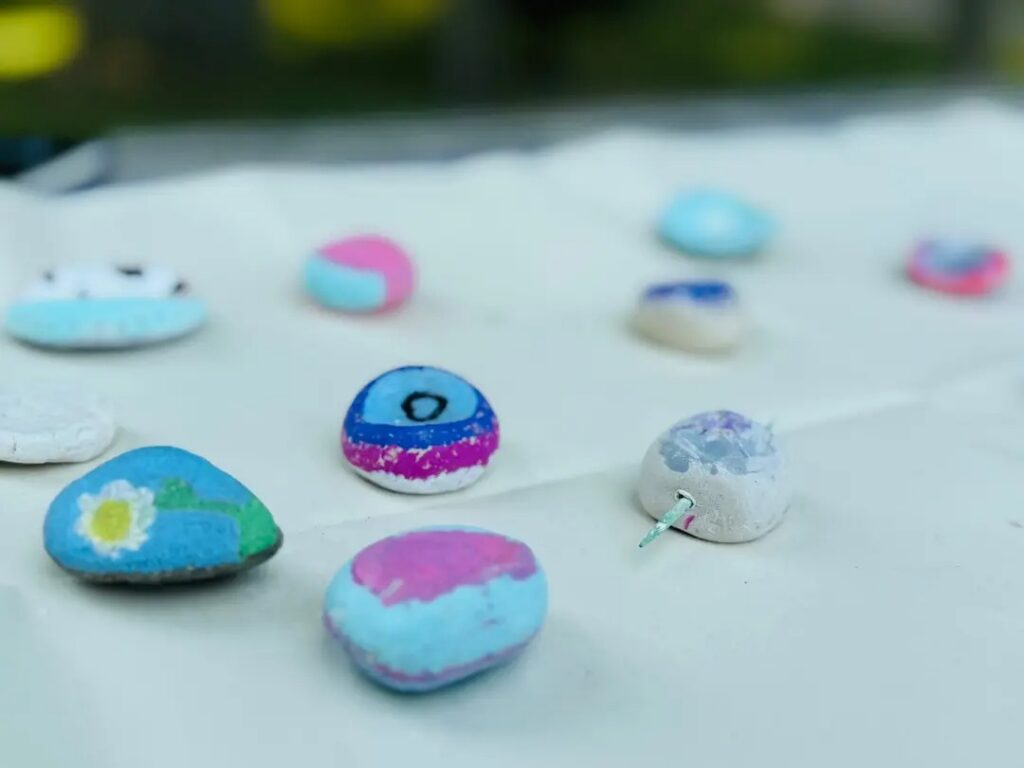
While researching potential projects, Lajewski discovered worry stones — small, handheld, polished stones that can help individuals experiencing anxiety relax, manage stress, and ground themselves. "I wanted to figure out a way for us to do that with the campers, and found that some people make them out of air-dried clay. In our coursework before the camp, we were learning about play therapy, and this seemed like a good fit — the kids could create their own shape, paint it however they wanted, and take it home. It ended up being really popular with the older campers," she said.
According to Ricco Ruiz, bereavement coordinator at Wellspring and this year's Camp Hope director, the creative element offered by the interns wasn't the only welcome addition. "They brought a lot of heart, plus their experience and knowledge of how to engage with grieving youth. They were emotionally sensitive, and both trauma aware and responsive; it was very impressive," he said. "Even though I had worked with the interns last year, too, I was struck this year by their commitment. It would have been easy for them to look at Camp Hope as just another class, but they really didn't; I was surprised by the level of openness and vulnerability they were willing to take on. Some of them struggled with it, but they didn't back away; they didn't avoid opportunities.
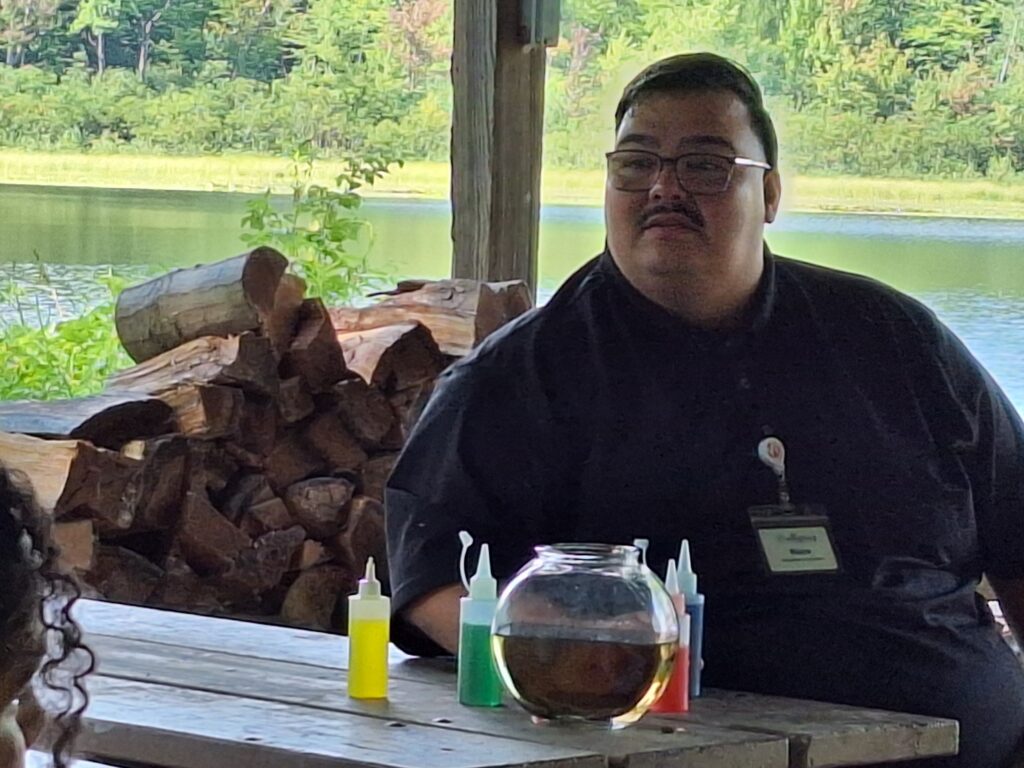
"It can be intimidating to work with kids at this age — they absolutely require a level of authenticity that we don't expect a lot from adults — and every single one of the UM-Flint interns embraced it," said Ruiz. "They really seem to understand that, ultimately, we are our first client, and they practiced that — if a situation was challenging, they would take a moment to address and connect with how they were feeling, and then return to the group. Not everyone is as willing to do that as they were."
Junior Courtney Bushard from Lansing is interested in working with youth in the future, particularly at the intersection between criminal justice and social work. "My internship has helped me develop the kind of skills I'll need to build trust with kids in the juvenile justice system. I had a particularly powerful experience during the camp when one of the campers felt rejected by the group and started isolating himself; I went over to him and just sat for a while, letting him know that I was there if he wanted to talk, but it was okay for us to sit in silence. I wanted him to know that I wasn't going to leave him alone. Eventually, I gave him a fidget toy I had in my pocket — one I use myself to help with my ADHD — and talked to him about how he could use that to help him cope with tough emotions instead of lashing out at others," she said.
"I empathized with him because it resonated with my own childhood feelings of anxiety and isolation, and it was beautiful to see him showing off the fidget toy later to other campers, creating a way for him to connect with them that was low-pressure. The whole experience validated the importance of listening and being present with someone as they process emotions."
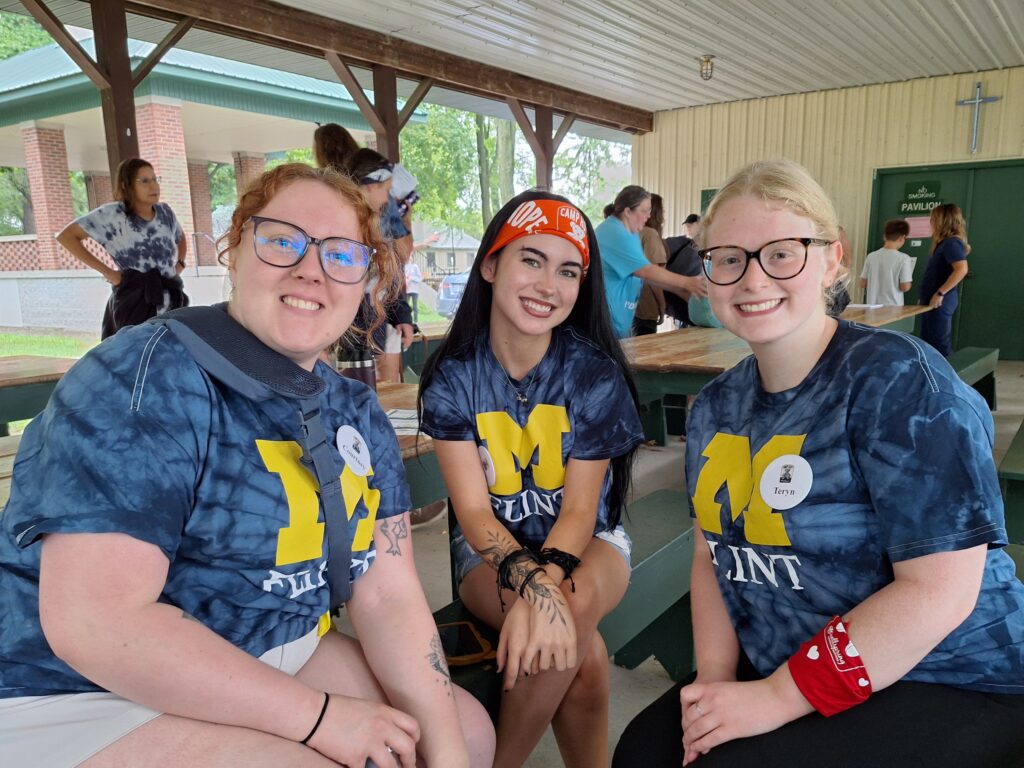
Bushard's activity involved blackout poetry, in which the campers took donated books and used black marker to cover words on the page, creating a poem with the remaining words. "It was incredibly popular with the campers — they really surprised me with their creativity! Some of them used it as a kind of fun, Mad Libs-style activity, while others went deeper — one camper wrote a two-page poem about their experience with grief. So the activity helped them open up and gave them a creative way to talk about things," she said.
Lajewski echoed Bushard's perspective, sharing that the experience helped her enhance her active listening and companionship skills. "We're often taught that we should console people when they're grieving or going through a tough time, but this experience taught me the importance of being present for others without offering unsolicited advice. I think we sometimes do that to ease our own discomfort," she said. "It was also helpful to learn that grief doesn't have to be a constant state of sadness, that it can ebb and flow. This perspective will help me in the future as I want to work with underserved populations, especially women who are victims of assault. Even though the origin of the emotions and grief is different for these campers than it will be for my future clients, the skills I honed at Camp Hope can be applied across the spectrum."
Ruiz said that the contributions of UM-Flint interns have inspired him to consider future developments to Camp Hope.
"In the past, the camp had a lot of focus on traditional camp activities — getting out into nature, hiking, canoes, that kind of stuff — but these interns showed us how transformative creative and sensory activities can be for these kids," said Ruiz. "I look forward to expanding this model to serve other populations, and I also hope to develop the relationship with UM-Flint and other community stakeholders. While the UM-Flint interns came to us from a psychology program, it's important to note that anyone can volunteer to be part of Camp Hope, and that kind of generosity helps us offer the experience to more and more kids each year."
To learn more about how you can be part of Camp Hope, visit the program's webpage.
UM-Flint students interested in participating in next year's camp should contact Amanda Smith by email at osbornea@umich.edu.
Kat Oak
Kat Oak is the communications specialist for the College of Arts, Sciences, and Education. She can be reached via email at katheroa@umich.edu.