When Cooper Brown arrived at the University of Michigan-Flint from Williamston to study entrepreneurship and innovation management, he had two years to make the most of his college experience. He wanted to get to know as many people as possible and engage deeply with campus life, but he never expected that working backstage in the university’s theatre would become, as he put it, “the best choice I made at UM-Flint.”
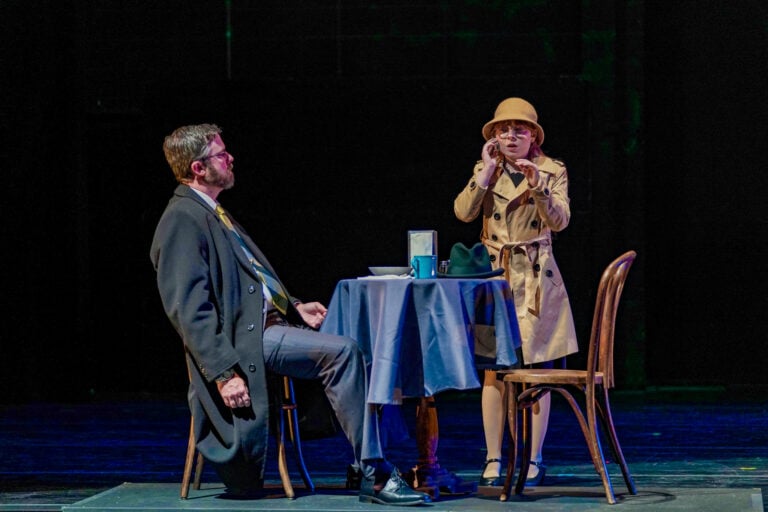
For three semesters, Brown worked in the Department of Fine and Performing Arts’ scene shop, building sets, running audio and lighting, and learning the intricate behind-the-scenes operations of live theatre.
The inspiration for pursuing a student worker position with FPA? His sister, Bailey.
“My sister was a theatre kid, and I followed in her footsteps, performing in plays all of my life, and when the position opened up at UM-Flint, I thought it would be interesting to learn how the back of house operates,” he said. “I had worked with audio stuff and live streaming before, but set design and building sets were new experiences.”
What started as a way to stay engaged on campus became an education in craftsmanship, business operations and community impact. In addition to learning nuts-and-bolts skills such as building basic structures or operating lighting equipment, Brown gained insight into how arts organizations sustain themselves in an economic landscape that often undervalues creative work.
“I learned how creative businesses and performance houses operate—how do they bring in money, pay employees, and sustain themselves in a capitalist economy?” Brown said. “I saw how they operated throughout the summer, renting spaces to the community. Arts programs are underfunded, so I started thinking: how can we get more funding? How can we grow and revamp and revive?”
It was a personal connection that resonated deeply. Through UM-Flint, Brown connected with the staff at the Flint Institute of Music’s Whiting Auditorium and eventually worked at one of their major events.
The experience complemented what he was learning in his entrepreneurship classes and informed his work as a student leader during new student orientation at UM-Flint. “In my talks with new students, I really focused on how important it is to go out and look for internships or opportunities to volunteer, and shared how much I had learned from my own experience,” he said.
Coming from a previous job with difficult management, Brown was struck by the supportive environment the UM-Flint staff created. “They were great bosses, really nice,” he said. “I thought, ‘I can’t believe I’m in such a good workplace.’ They were really understanding about school responsibilities. If I didn’t know something, it was okay—they would teach me.”
That positive workplace culture left a lasting impression, showing Brown the kind of leader he wanted to be in his own future ventures.
He also connected with faculty and students across disciplines. Brown elected to take an honors course on dance and community connection taught by Emma Davis, lecturer II in theatre and dance. Davis said that “Cooper was an involved and active student in the classroom. His contributions towards class conversations propelled discussion while helping to build a sense of camaraderie among students.”
In that class, Brown wrote one of his favorite papers—designing businesses to connect the arts to the community. “I felt that I built a real connection between creativity and business,” he said. “If I hadn’t taken that course or pushed myself in that direction, I might not have ever seen that possibility.”
Brown’s favorite part of his work with FPA was seeing everything come together on opening night. “You get to watch everyone come in and enjoy the play, see all of the cast after the set is fully built,” he said. “You think, ‘We’re glad we could make your day—that’s what we’re here for.’”
At the beginning, when the set was just scraps and plans, it was sometimes hard to envision the final product. “You think, ‘We’re going to do what?’” he said. “But it makes its way, and it becomes beautiful. It’s fun to make people’s day. That’s where I found enjoyment.”
Shelby Newport, professor of theatre and dance and the chair of the fine and performing arts department, worked with Brown in the UM-Flint theatre and on a 2023 study abroad trip to Japan, and witnessed his dedication across multiple contexts. “Cooper took full advantage of opportunities at UM-Flint and really embedded himself in a variety of ways,” she said. “As a student traveler, he was adventurous and ready to experience Japan. As an employee and student worker in the Theatre Scene Shop, he took pride in his work and supported a variety of FPA, university, and community events, where we could count on him to deliver professional-level work. When I witnessed his work as an orientation leader, I felt pride in all that he represented to new students—a UM-Flint student who made the most of his time pursuing his education.”
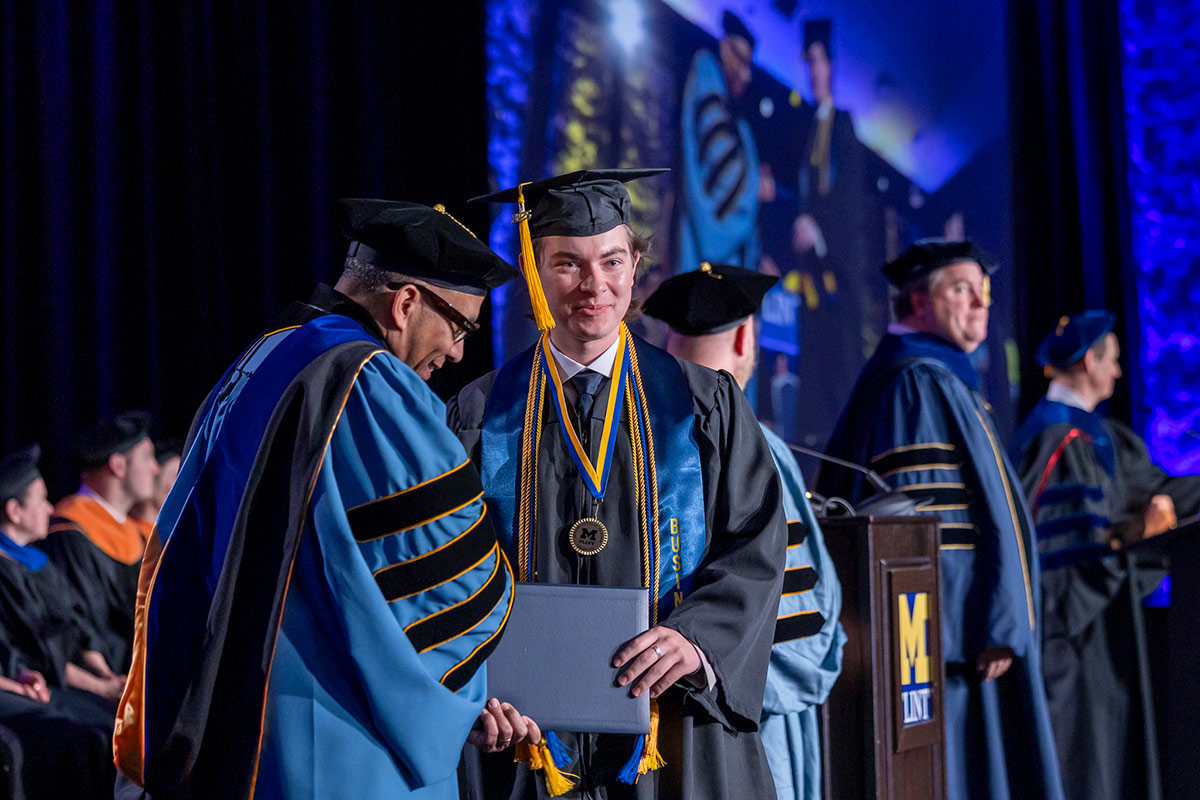
After graduating in the summer of 2025, Brown took a position as assistant food and beverage manager with the Traverse City Pit Spitters, a college summer league baseball team. The role drew on his hospitality experience, but it wasn’t the end goal.

“I want to design and make multiple businesses—businesses that make a difference in the communities around me and across the world,” he said. “I know it’s a tall thing, kind of crazy, but I’m making moves on one now.”
He’s currently working to launch a business in the summer of 2026, securing loans and developing the platform. He has since moved back to Flint—the city where his perspective on arts, business, and community impact first took shape.
Several of the business concepts he wants to pursue originated in honors program projects, directly informed by his experience connecting arts organizations with sustainable business models. That connection between creativity and entrepreneurship—between building sets and building enterprises—became central to his vision.
When asked if students outside the Fine and Performing Arts program should work in the department, Brown’s answer was enthusiastic. “Yes. Yes. Yes. It’s super important to learn about the arts. Sometimes kids don’t want to do things because they don’t see the connection until they do it.”
Looking back on his time at UM-Flint, Brown is clear about the impact his theatre work had. “My college experience would not have been nearly as awesome if I hadn’t done it,” he said. “The theatre department was fantastic—great people. Don’t be afraid to go out and work in different areas.”
For a business student who started out just wanting to see how the backstage world worked, Brown discovered something more valuable than technical skills or resume builders. He found a model for how creativity and commerce can work together, how good leadership looks in practice, and how the work of making something beautiful can also make good business sense.