Research partnership reimagines public safety at UM-Flint
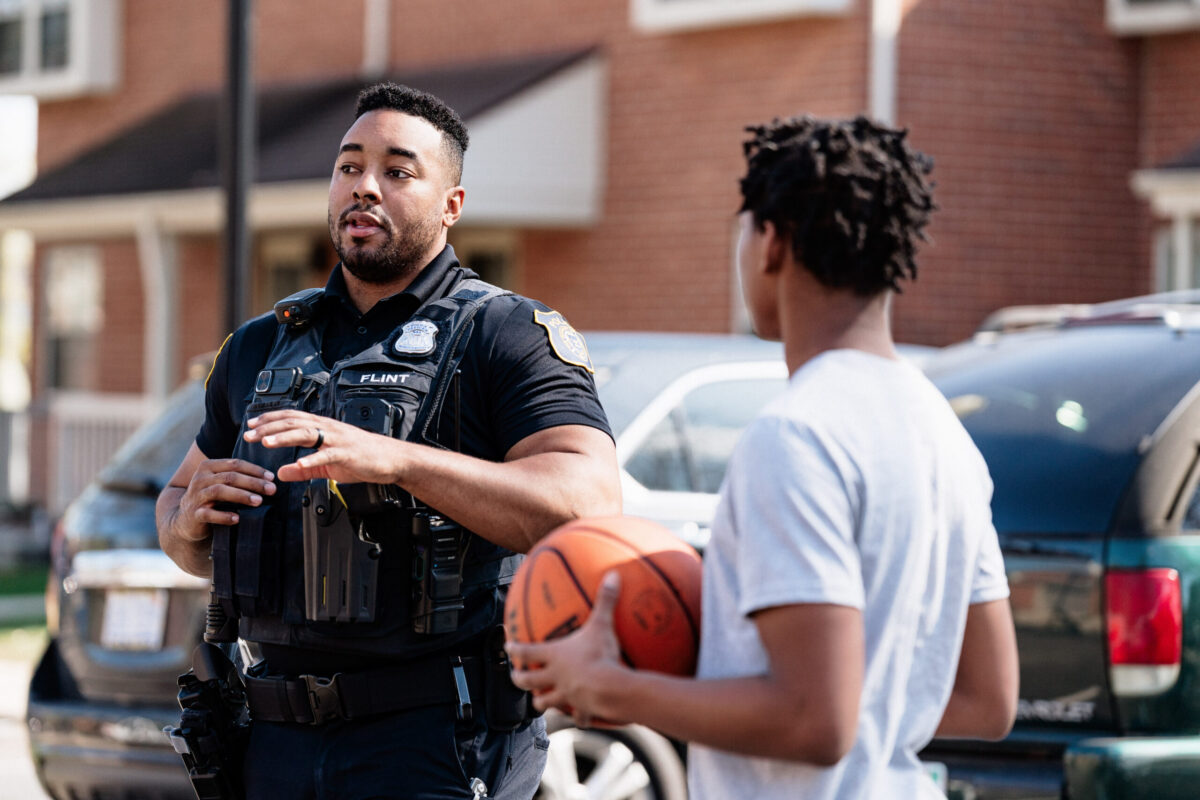
A collaborative effort between the University of Michigan-Flint Department of Public Safety and faculty researchers at the College of Arts, Sciences and Education is demonstrating how an evidence-based approach to policing can strengthen community relationships, reduce crime and provide a practical model for public safety agencies across Michigan and beyond.
Funded by a nearly $1 million grant from the Michigan Commission on Law Enforcement Standards, the multi-year initiative paired UM-Flint police officers with researchers from CASE to evaluate the department's implementation of Problem-Oriented Public Safety, or POPS, an approach that focuses on identifying and addressing the underlying causes of recurring public safety concerns rather than simply responding to individual incidents.
The result is a comprehensive implementation and evaluation report that documents measurable improvements in crime reduction, community engagement, and cross-sector collaboration, and serves as a practical guide for other public safety agencies interested in adopting similar strategies.
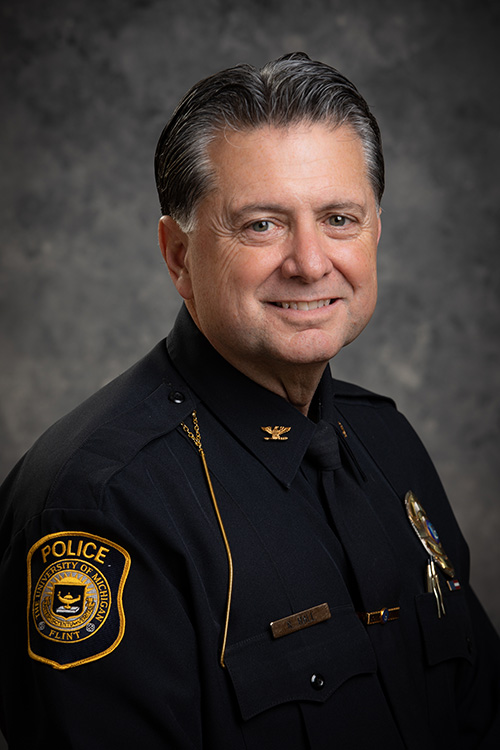
"Public safety challenges are far too complex to be solved through enforcement alone," said Ray Hall, UM-Flint chief of police and DPS director. "At UM-Flint, we don't take a broad-brush approach to people or problems; instead, we recognize that every individual and every situation is unique, requiring thoughtful, tailored responses rather than one-size-fits-all solutions.
"If we wanted to create lasting improvements, we needed to understand why problems were occurring, not simply respond after they happened. Partnering with our faculty researchers allowed us to evaluate our work with honesty and rigor, ensuring our strategies were guided by evidence rather than assumptions. This project demonstrates the unique power of a university to bring research and practice together in ways that directly benefit both our campus and the surrounding Flint community."
Unlike traditional policing models that often emphasize responding after incidents occur, POPS encourages officers to examine patterns, identify root causes and work alongside community organizations, behavioral health providers, local governments and residents to develop long-term solutions. The model combines proactive policing with prevention, community engagement and data-informed decision-making.
DPS adapted those principles through a three-tier framework commonly used in education and public health, organizing public safety efforts into universal community engagement, targeted interventions and intensive individualized support. The framework allowed the department to match resources to specific community needs, recognizing that enforcement remains an important tool when needed.
One of the initiative's defining features was the partnership between DPS and faculty researchers, who independently evaluated the program's effectiveness throughout its implementation.
"Research has the greatest impact when it moves beyond a report and informs practice," said Melissa Sreckovic, associate professor of education and lead researcher. "By evaluating public safety initiatives, we can identify what is working, where improvements are needed, and provide agencies with the evidence they need to make informed decisions that maximize their effectiveness and improve outcomes for the communities they serve."
According to the evaluation, the initiative was associated with meaningful reductions in crime, increased community engagement, and improved community perceptions of the police.
Following implementation of the POPS model, the department's combined patrol area experienced approximately a 33% reduction in Group A criminal offenses, excluding pandemic-related disruptions from the analysis. Clery Act reportable crimes also continued a downward trend, decreasing from 11 incidents in 2022 to seven in 2024.
Researchers also documented improvements in police-community relations across multiple community engagement initiatives, including more positive perceptions of police, greater trust in the police, increased comfort interacting with law enforcement, greater willingness to work with police, and, in some settings, improved perceptions of safety.
Researchers also found that the department substantially expanded its community engagement efforts, implementing at least 88 outreach initiatives since January 2025. Programs ranged from university-sponsored events such as Touch-a-Truck, Officer Friendly Day, and Inclusive Halloween to neighborhood meetings, crime prevention workshops, and youth programming, each designed to build relationships and prevent problems before they arise.
Equally important was the department's growing network of partnerships. Through its co-responder program and other collaborative initiatives, DPS worked alongside behavioral health providers, housing organizations, health care systems, nonprofit agencies, and other local law enforcement agencies to address complex issues such as homelessness, behavioral health crises, and repeat calls for service through coordinated interventions rather than enforcement alone.
The report concludes that integrating prevention, problem-solving, and community partnerships can improve public safety. Rather than relying solely on reactive responses, the POPS model complements enforcement by partnering with communities to identify underlying problems, develop collaborative solutions, and prevent recurring issues before they become chronic. For Hall, the initiative demonstrates what can happen when public safety professionals and university researchers approach the same challenge from different perspectives.
"One of the greatest strengths of a university is its ability to bring together practitioners and researchers to solve real-world problems," Hall said. "This partnership created a model that is both academically sound and operationally practical. Our goal was never to produce research that would sit on a shelf; it was to develop an approach that police leaders could actually implement to improve public safety, strengthen community trust, and better serve the people who depend on them."
As interest in the model continues to grow, department leaders hope the report serves not only as a record of UM-Flint's work but also as a roadmap for other agencies seeking evidence-based approaches to building safer, stronger communities.
"This report is more than a reflection of what we accomplished at UM-Flint; it is an invitation for other agencies to think differently about public safety," said Hall. "Every community is unique, but the principles of problem solving, collaboration, accountability, and prevention are universal.
"If this work helps another police department build stronger partnerships, strengthen community trust, or prevent crime before it occurs, then we have accomplished something that extends far beyond our campus. If people are asking what meaningful police reform looks like, this is it. Using evidence to guide decisions, building genuine partnerships with the community, holding ourselves accountable for results, and preventing problems before they become crises. That is how we create safer communities while preserving the core mission of professional policing."
Editor's Note: This project is supported by Michigan's Coronavirus State and Local Fiscal Recovery Funding Program #FRF5311, awarded by the United States Department of the Treasury and administered by the Michigan Commission on Law Enforcement Standards (the Commission). Points of view or opinions contained within this document do not necessarily represent the official position or policies of the U.S. Department of the Treasury or the Commission.


Robb King
Robb King is the director of marketing and communications at UM-Flint. He can be reached at rwking@umich.edu.