Fennell joins UM-Flint as director of exercise science program
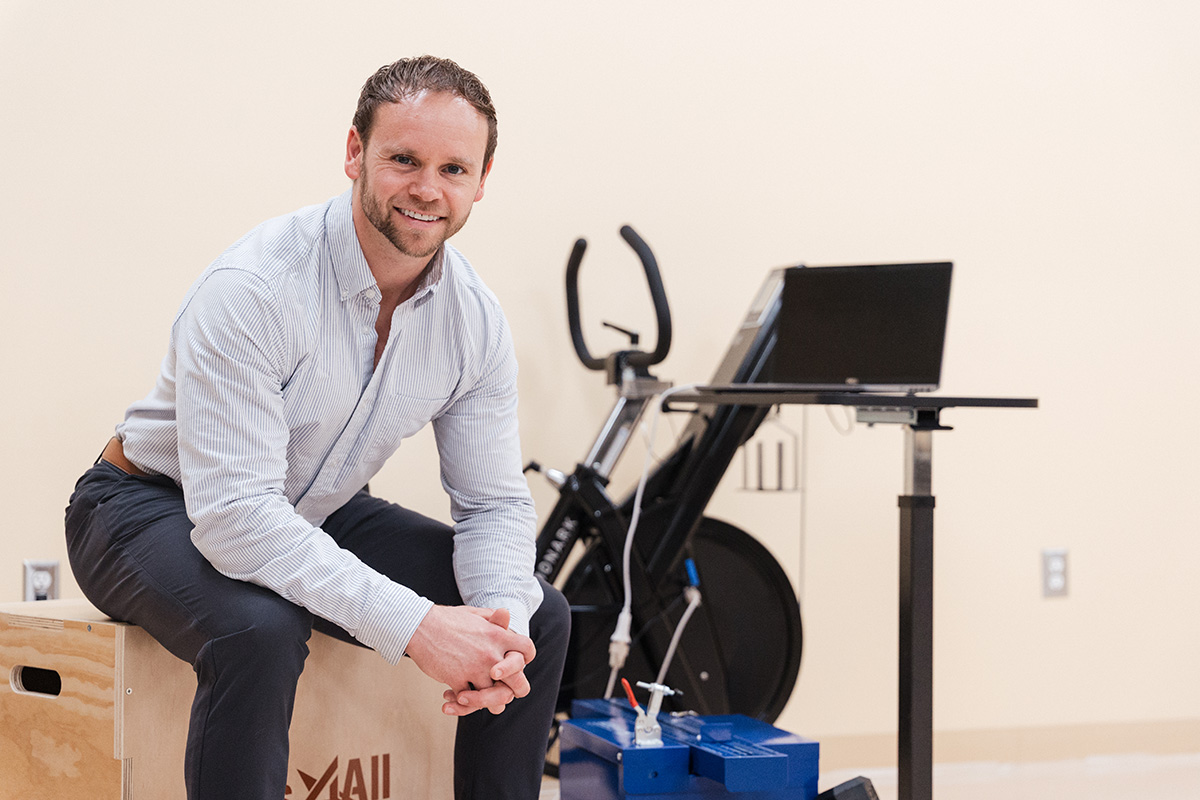
Curt Fennell, associate professor of exercise science, has been named director of the exercise science program in the Department of Public Health and Health Sciences at the University of Michigan-Flint, bringing years of experience as both an educator and researcher to the campus.
Fennell began his administrative role with the university remotely in June before starting on campus as an associate professor in August. He said he has appreciated a warm welcome from faculty, staff and students.
"My family is from an hour south of Flint, and my wife and I always wanted to make it back to Michigan," Fennell said. "The students are great. They're attentive, ask good questions, and have given me a positive reception."
Career path influenced by early interest
Fennell said his interest in exercise science and research started at a young age, when he read health publications and recorded data on his fellow students' athletic abilities. He earned his undergraduate degree in exercise science and later completed his master's at Western Michigan University and his Ph.D. in exercise physiology at Kent State University.
"I initially majored in psychology, but exercise science always intrigued me more," Fennell said. "I enjoyed teaching basic health and wellness classes as a graduate assistant, and my professors encouraged me to pursue research and a higher degree."
He emphasized the breadth of the exercise science discipline, noting its overlap with physiology, psychology, chemistry and genetics. "Exercise science isn't just about athletics or going to the gym. The field is multidisciplinary and involves rigorous academics," he said.
Much of Fennell's research has focused on examining different modalities of fitness (e.g., group exercise, walking, CrossFit) on health and human performance. Some of his other research included examining the associations of smartphone use, physical activity, and sedentary behavior. This work found the more people use their smartphones, the more sedentary they are. Sedentary behavior can lead to disease when it is participated in for extended periods of time for several years.
Field extends beyond traditional careers
Fennell said that exercise science continues to be a growing field. Individuals with careers in exercise science both help to prevent disease and disability and assist in the healing process of these conditions.
"In our major at UM-Flint, students will learn knowledge and skills for improving health and fitness, accelerating healing, and slowing down disease progression," said Fennell. "Students who complete the program will then be well-prepared to enter graduate programs for physical therapy, occupational therapy, athletic training, chiropractic, strength and conditioning, and dietetics. Students can also pursue graduate medical professions, such as physician assistant and medicine. Furthermore, students will be well equipped to pass credentialing examinations and begin careers as personal trainers, exercise physiologists and cardiac rehabilitation specialists, and fitness/corporate wellness directors."
Opportunities for students
Fennell's plan is to provide several career-building opportunities for students and greater access to physical activity options for the community.
"I'd like to see physical activity-based classes available to all students, so more people can improve strength, endurance, flexibility, and body composition," he said. In addition, Fennell said he is excited to begin research at UM-Flint where students can be involved. Moreover, he is establishing relationships with external organizations to improve the health, well being, and fitness of individuals in the Flint community.
Fennell encourages students interested in the subject to consider declaring a major or minor.
Trusted resources and ongoing research
For those seeking reliable information on exercise science, Fennell recommends podcasts hosted by credentialed experts. He also cautions students and community members to verify the credibility of information on social media.
"Reading scientific papers is great, though it is very time-consuming and difficult to understand at times. Reputable podcasts can be an excellent way to learn about the current research and reviews on exercise science topics," he said. "Regardless of the source, it's always important to question and critically assess health advice, because everyone responds to exercise differently."
Emphasis on genetics and lifestyle
Fennell noted that genetics play a significant role in individual fitness outcomes, but regular physical activity and a balanced diet improve overall health.
"You cannot out-train your genetics, but lifestyle changes can increase lifespan and quality of life," Fennell said. "Training and healthy habits are linked to reduced risk of disease and improved recovery after injury or illness."
Looking ahead
Fennell said he is focused on building the program's research capacity and developing new opportunities for students.
"I enjoy teaching, mentoring students and conducting research," he said. "With support from the university and engagement from students, the program is positioned to grow."

Helen Garbarino
Helen Garbarino is the communications specialist for the College of Health Sciences. Her role encompasses a broad scope of tasks including communications, outreach, marketing efforts, alumni engagement, graphic design, and much more. She can be reached at helund@umich.edu.