UM-Flint nursing students win top prize for IV innovation
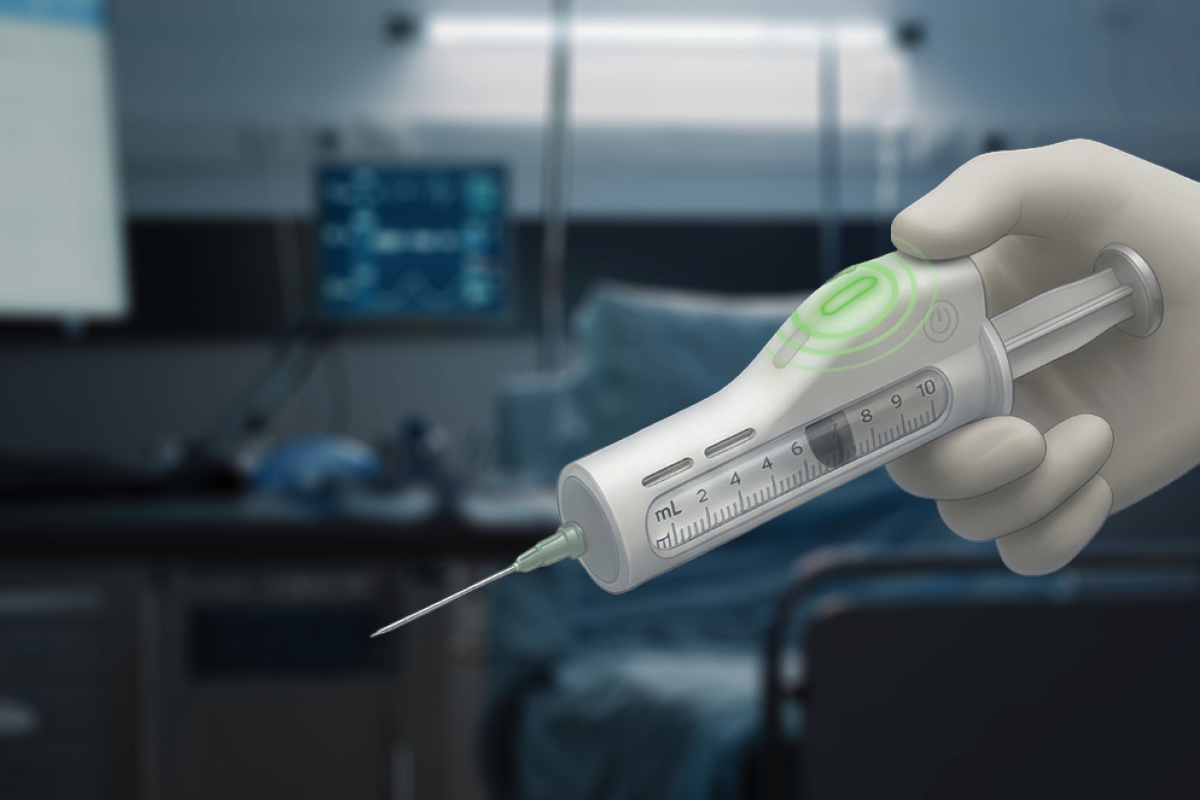
Two nursing students earned first place at the University of Michigan-Flint Zillion Solutions Competition for a device designed to stop one of health care's most common errors before it happens.
Bachelor of Science in Nursing students Joseph Monroe III and Gabrielle Redmond won $2,000 for their SMART Syringe, a device that gives clinicians real-time feedback to prevent incorrect IV push medication rates — errors that, according to Redmond, can lead to serious harm or death. The prize brings the pair one step closer to bringing the SMART Syringe into clinical settings and reducing the medical errors it was built to prevent.
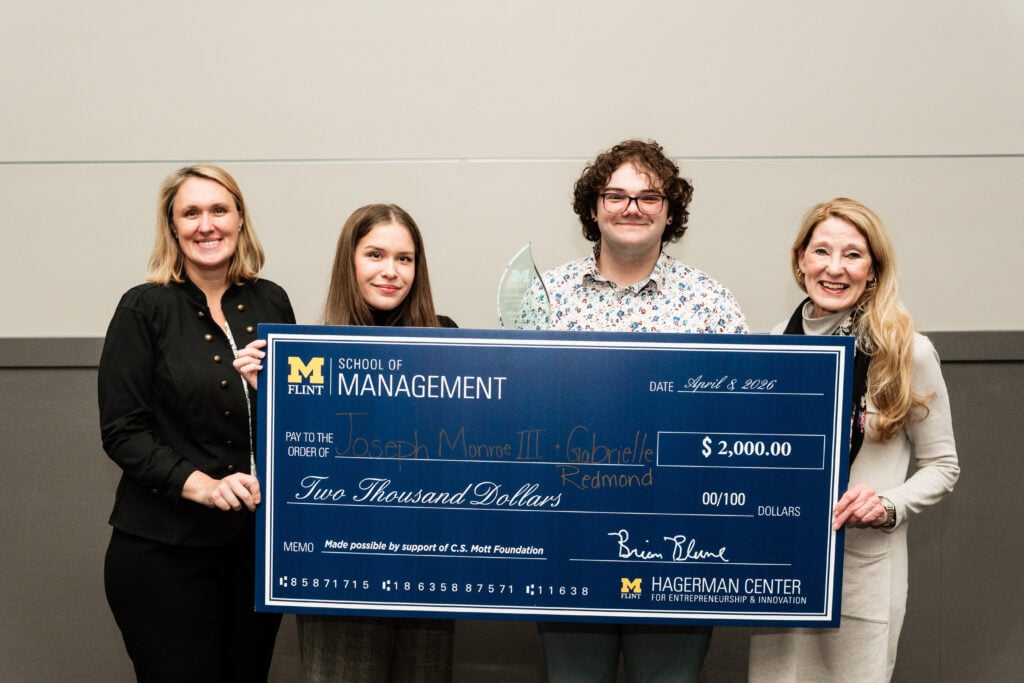
Sponsored by the C.S. Mott Foundation, The Hagerman Center for Entrepreneurship and Innovation hosts the Zillion Solutions Competition each year, giving students across UM-Flint a chance to show how entrepreneurship and innovation fit into any discipline. This year's competition drew more than 430 potential solutions from more than 700 students, with finalists representing every school and college at the university.
The win builds on a foundation the School of Nursing has emphasized for years, with quality and safety being among the 10 domains that guide the school's curriculum. National attention to the issue intensified after landmark reports on medical errors published around 2000 exposed how often preventable harm occurs in health care systems. Those findings pushed nurses to look beyond individual patient care and toward systemic solutions like better communication, lowering risk and continuous improvement. It was this systems approach that shaped Monroe and Redmond's project.
Inspiration behind the innovation
Incorrect IV push medication administration rates are a prominent medical error in health care and a critical threat to patient safety. "Administering medications faster or slower than prescribed is a medication error, and substantial evidence has shown that incorrect infusion rates can lead to serious patient harm, including life-threatening complications and death," said Redmond, who is a senior from Lapeer.
Monroe's experience as a paramedic gave him a firsthand look at what health care has come to accept as routine risk. He hopes the SMART Syringe changes that.
"This technology serves clinicians and health care organizations, but most importantly, it serves patients," said the senior from Perry. "It supports providers in delivering safe care, reduces institutional risk and cost associated with medication errors, and strengthens a culture of safety. Above all, it ensures that patients, especially in their most vulnerable moments, are protected from preventable harm."
How it works
Redmond described the SMART Syringe as setting "a new standard of safety by providing real-time accountability and error prevention during medication administration." Its integrated LED feedback system provides clinicians with immediate visual guidance, allowing them to catch and correct an infusion rate before it can harm a patient.
"That shifts medication administration from a retrospective process, where errors are identified after harm occurs, into a proactive and truly preventive approach to patient safety," said Redmond.
Monroe pointed to the added transparency the device provides through its direct transmission of performance data to the electronic health record.
"This capability creates a new level of accountability by allowing nurse leaders and health care administrators to monitor compliance with safe practice standards, identify patterns and implement targeted education or corrective interventions when necessary," he said.
Real-time insights are what set the SMART Syringe apart from conventional systems, which typically rely on delayed incident reports and self-disclosure to catch errors after the fact.
Overcoming hurdles
Building the SMART Syringe meant fitting it into fast-paced clinical workflows without adding to nurses' workload. Monroe and Redmond moved from an embedded-syringe concept to a sleeve model, looked at a docking station, built in institution-specific drug databases, and designed the device to work with hospitals' existing barcode-scanning systems — changes expected to add only about 10 seconds of prep time while improving medication safety.
Finding time to do that work was its own challenge.
"As full-time nursing students, particularly toward the end of the semester, finding free time has been difficult," Monroe said. "We overcame this through consistent communication and structured collaboration. We often aligned our schedules to meet in person on campus and, when that was not possible, utilized video conferencing to continue progress on key components such as our provisional patent, design modifications and outreach efforts."
To cover the costs of patenting, prototyping and marketing, the two built a financial plan, used their Zillion Solutions winnings to start a prior-art search and leaned on faculty mentors, including Suzanne Lugger, associate professor of nursing, whose "insight has been instrumental in navigating early development," Monroe said.
Creating an impact
Redmond and Monroe want the SMART Syringe to redefine the standard of care by shifting health care from reacting to medication errors to preventing them. Built-in safeguards, they say, could reduce adverse drug events, improve clinical outcomes and strengthen patients' confidence in the safety of their care. Their goal is simple: to ensure no patient is harmed by an avoidable medication error.
Looking ahead
Redmond and Monroe have spent the last few months balancing coursework with efforts to advance the SMART Syringe project. A prior art search conducted through Ward Law Office found that they have a strong basis to file for a non-provisional patent, and the team has since begun designing the device and selecting prototyping materials to keep development moving. They plan to continue pursuing funding to bring the SMART Syringe into production. To follow their progress, visit their webpage.
Students interested in next year's Zillion Solutions Competition should visit the Hagerman Center for Entrepreneurship and Innovation. The competition occurs each fall and winter semester, with roughly 30 prizes ranging from $100 to $3,000. Faculty looking to get involved with the Hagerman Center can fill out this quick form.

Kendal Davis
Kendal is a communications specialist with the School of Nursing. She can be reached at daviskmd@umich.edu.