The University of Michigan-Flint has taken a significant step toward making health and well-being a more intentional part of campus life, formally adopting an international framework designed to place people at the center of institutional policies, practices and environments.
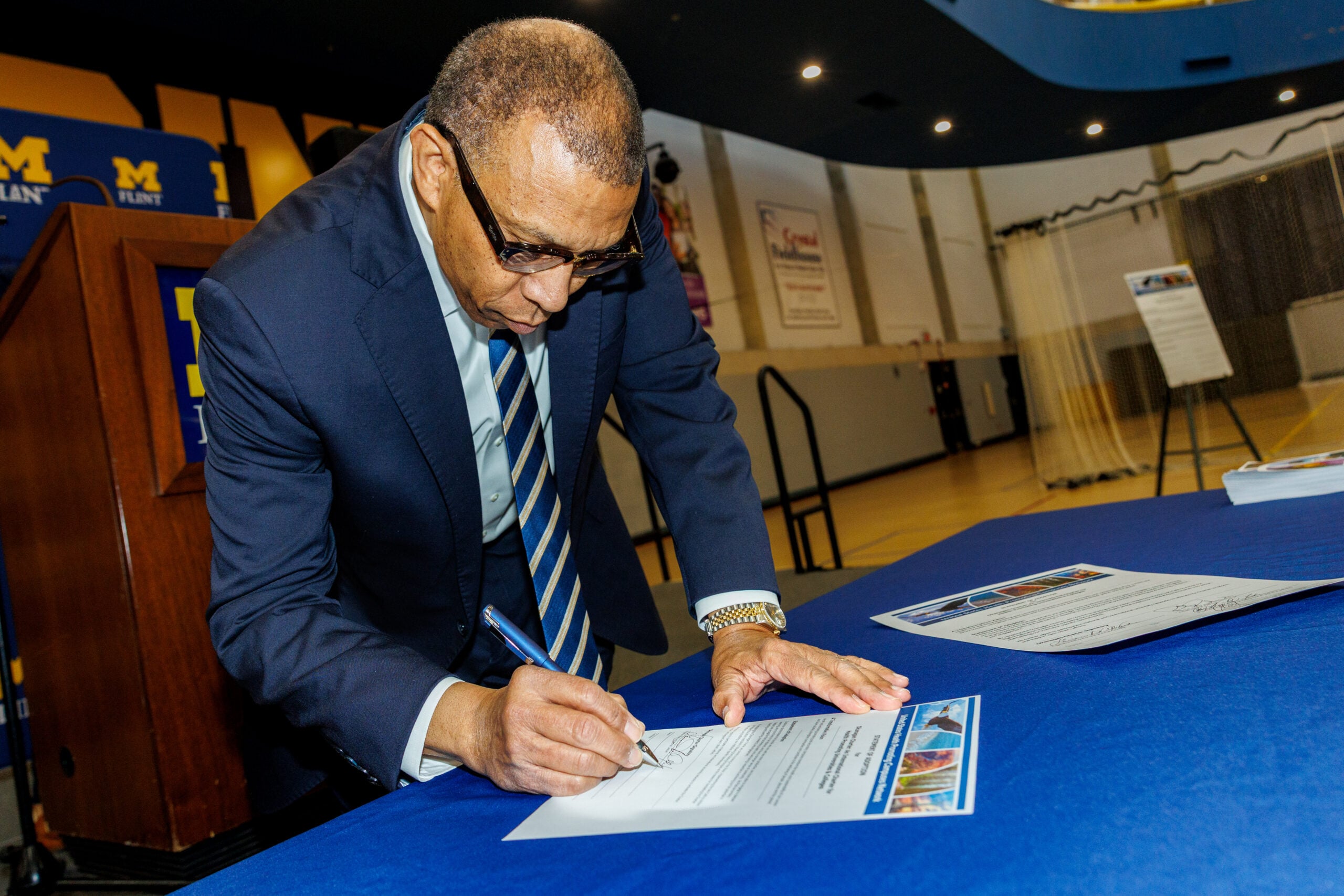
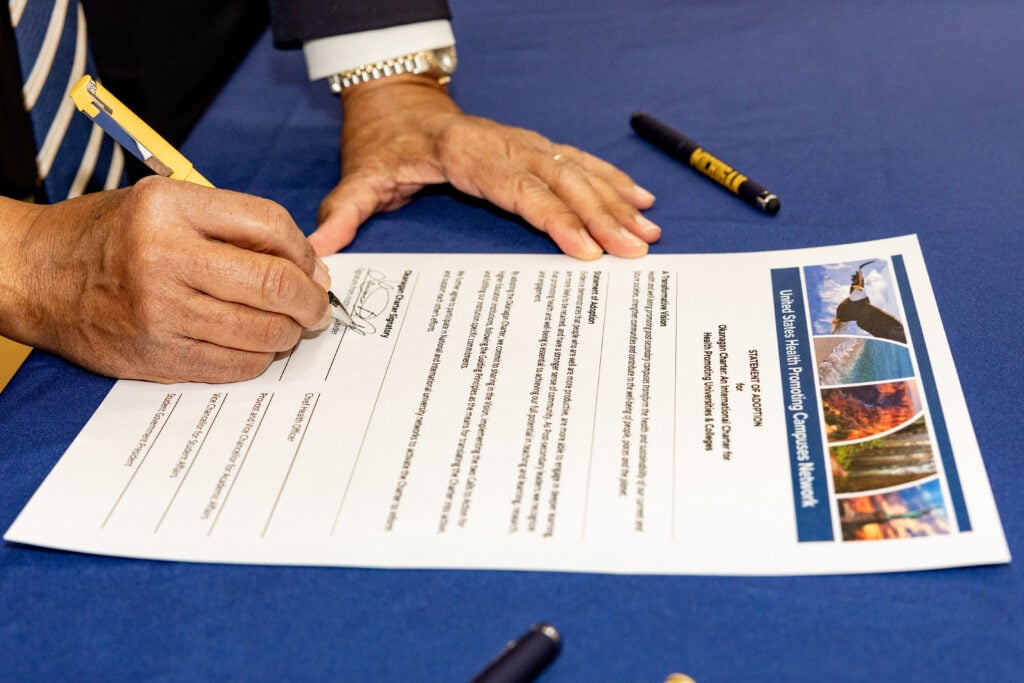
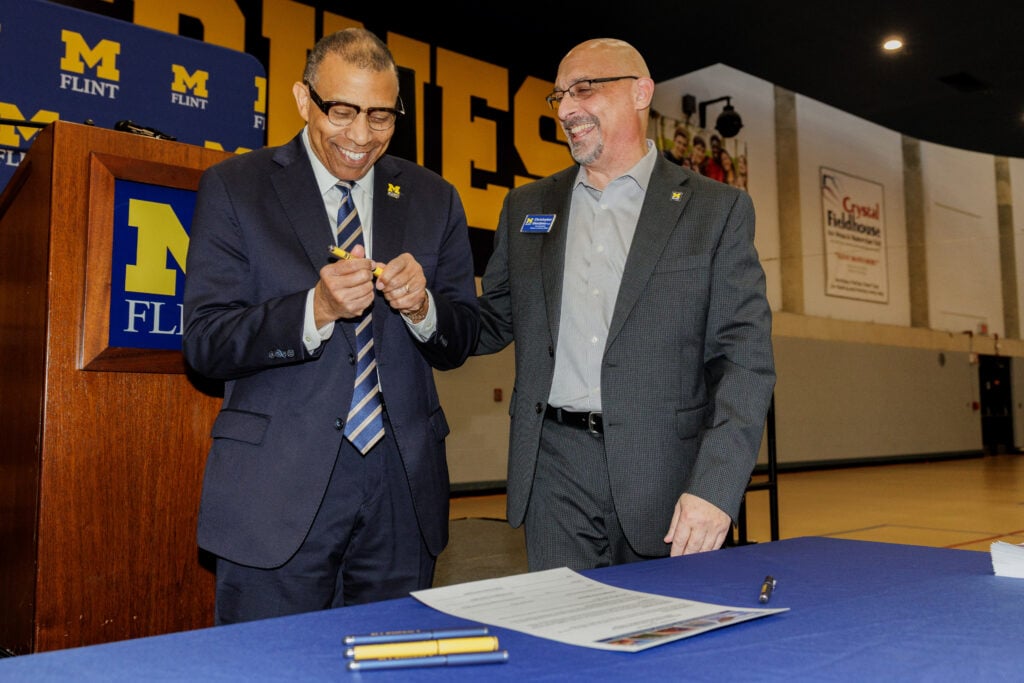
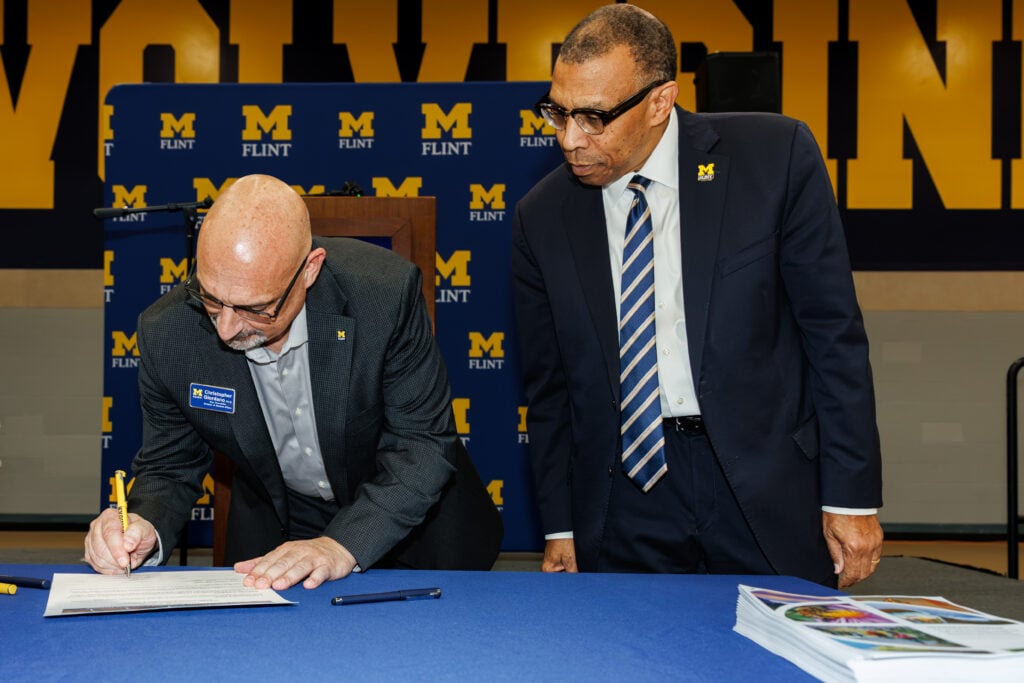
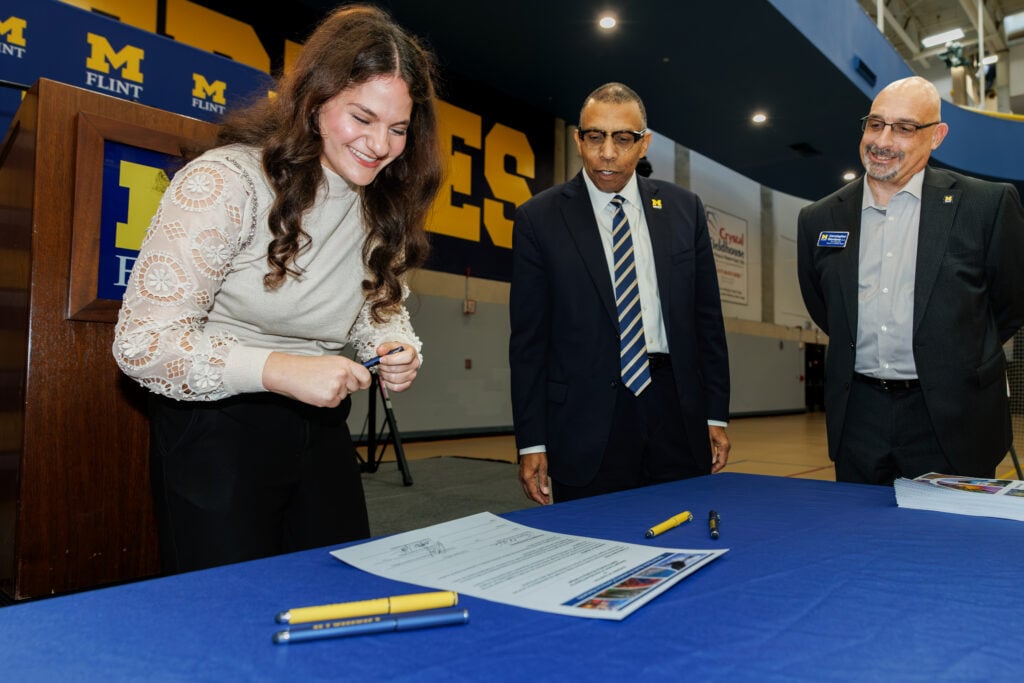
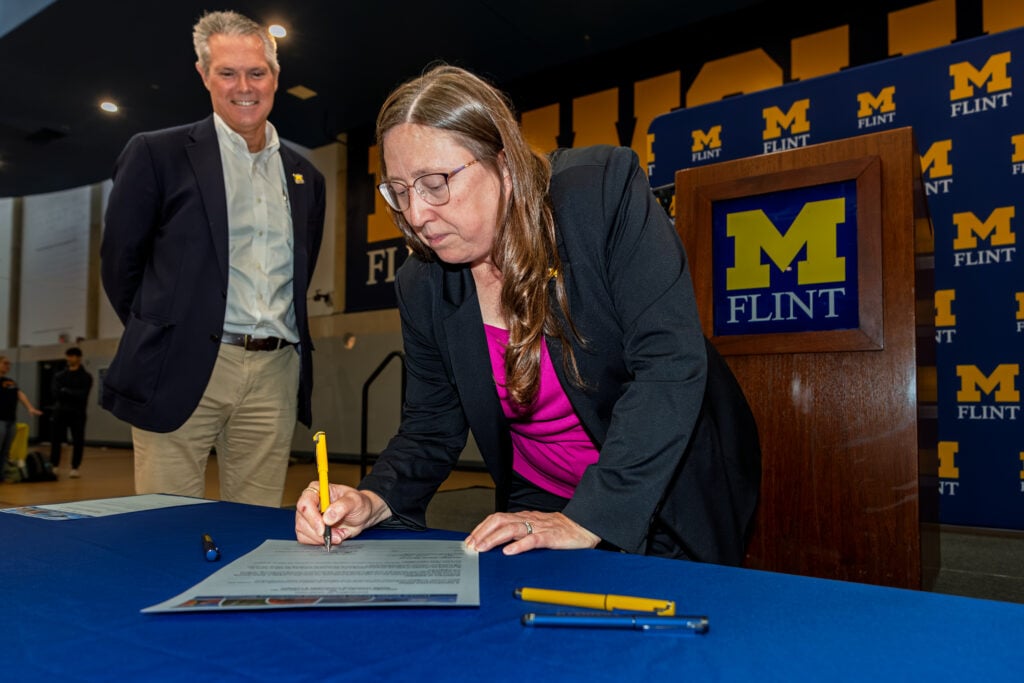
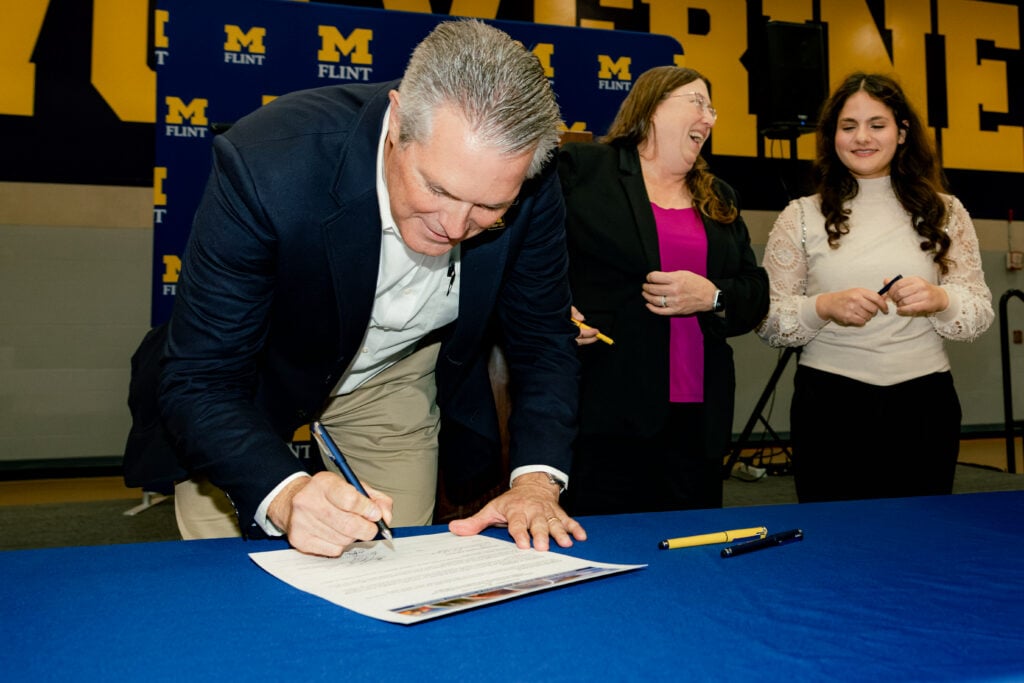
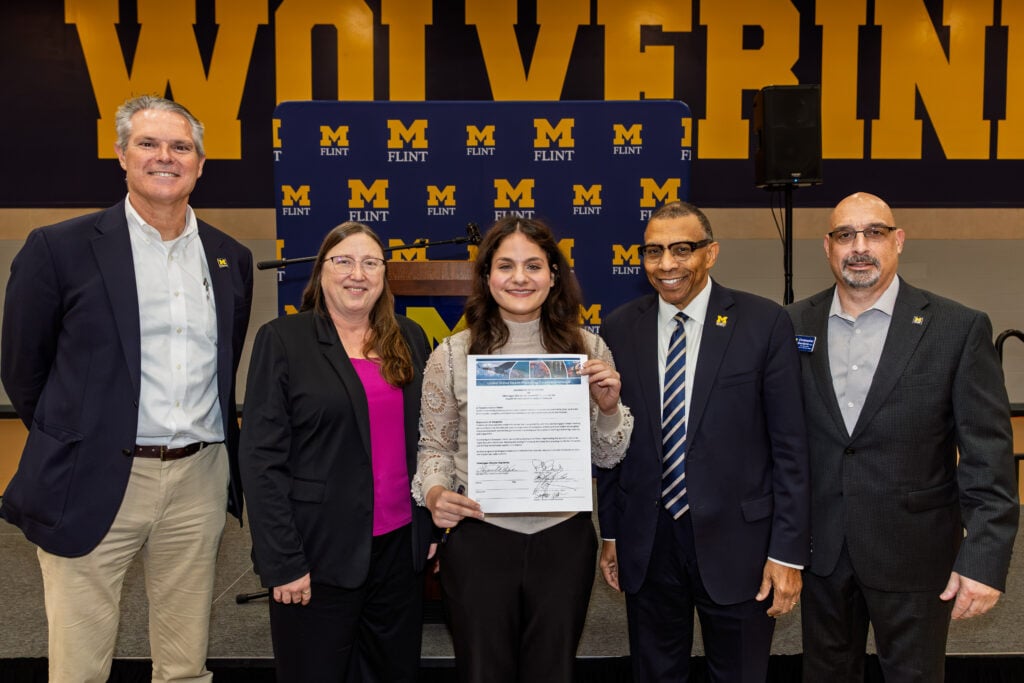
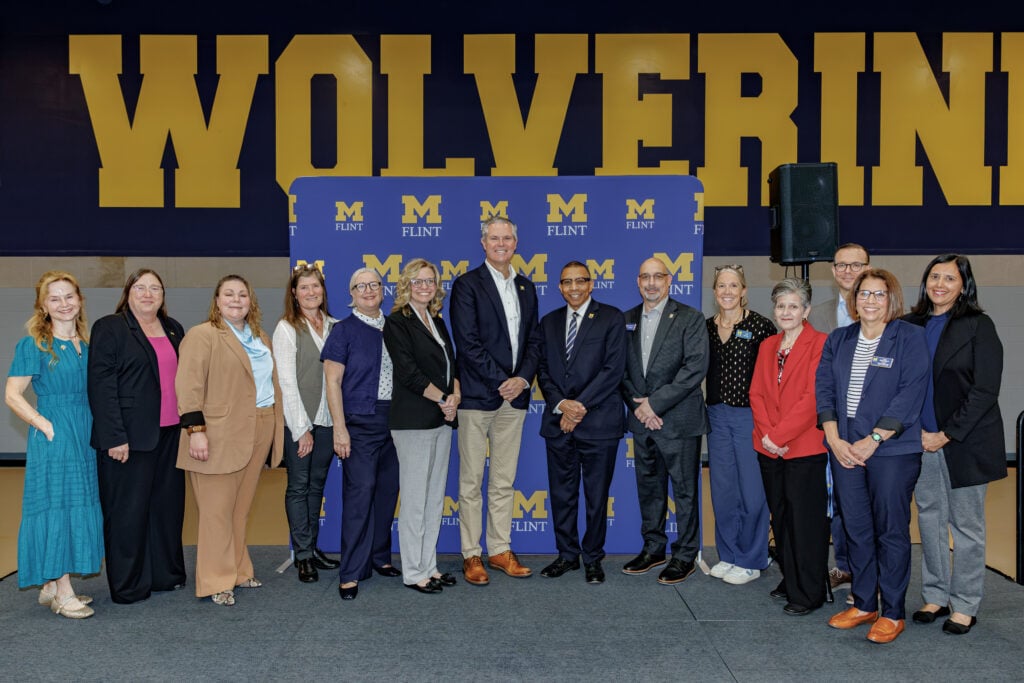
Chancellor Laurence B. Alexander and University of Michigan Chief Health Officer Rob Ernst participated in an Oct. 28 ceremony at the UM-Flint Recreation Center, where university leaders formally adopted the Okanagan Charter. Representatives from all three U-M campuses attended the event, reflecting a shared commitment to supporting healthier university communities.
The charter’s adoption also marks an important milestone in the university’s broader approach to well-being, including the launch of “More Human Together,” a yearlong initiative that asks a deceptively simple question: What does it take for every member of a university community to feel seen, valued and needed?
Rather than treating wellness as a collection of individual programs or services, UM-Flint is pursuing an approach that considers how classrooms, workplaces, relationships and institutional decisions influence the experiences of students, faculty and staff.
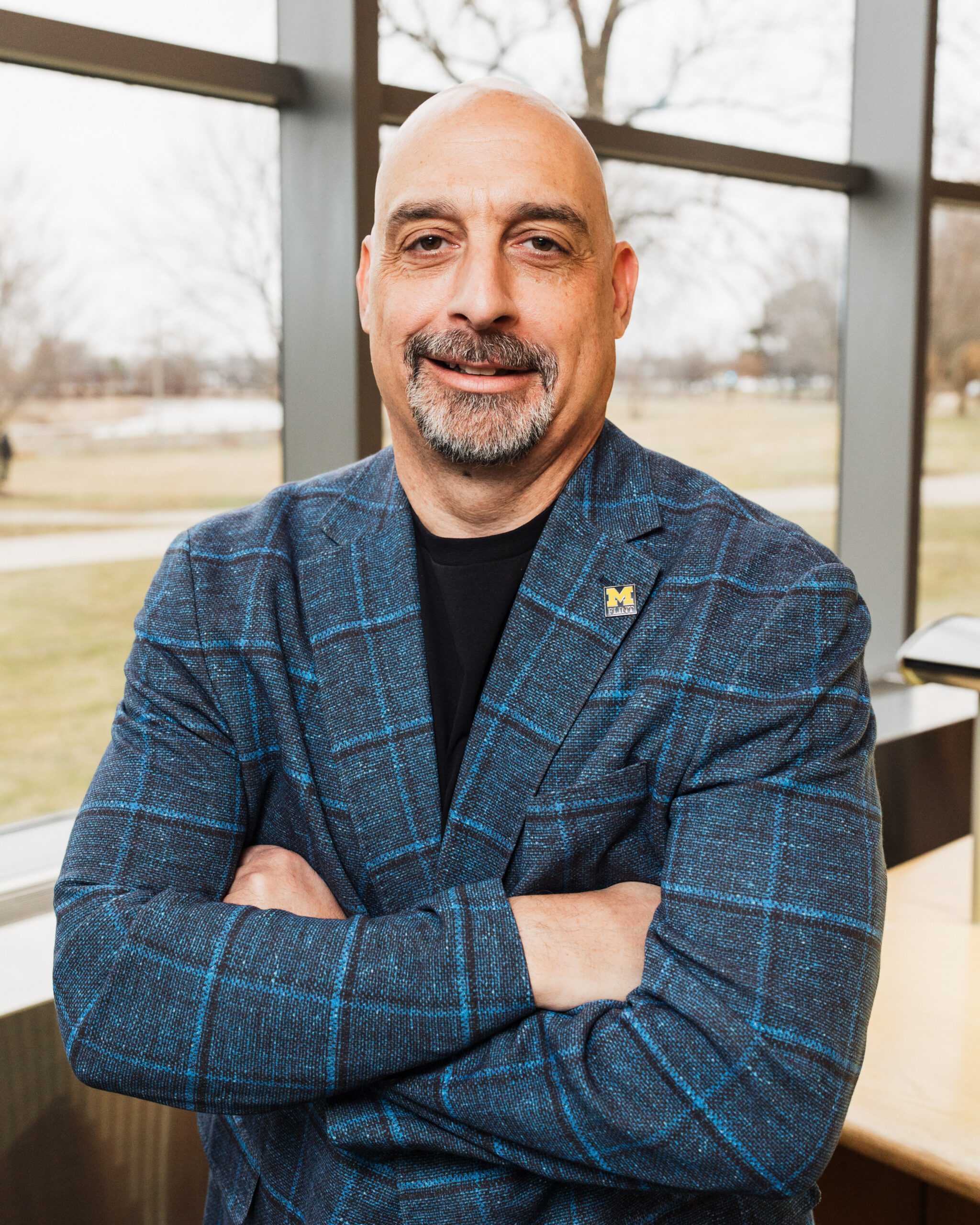
“Adopting the Okanagan Charter represents an important commitment to the health and well-being of our entire university community,” said Chris Giordano, vice chancellor for student affairs. “As an institution of higher education, we have a responsibility not only to support individual well-being, but also to cultivate a campus environment where our policies, practices, relationships, and learning spaces enable every member of our community to thrive. This commitment calls on all of us to work together to make health and well-being an integral part of who we are and how we learn, work, and engage with one another at UM-Flint.”
The charter, formally known as the International Charter for Health Promoting Universities and Colleges, encourages institutions to embed health and well-being into all aspects of campus operations. Its adoption represents a commitment to consider the human impact of university decisions, from the classroom to the workplace and beyond.
The work also builds on growing recognition of UM-Flint’s commitment to campus health. In August, the university’s Division of Student Affairs earned national recognition for its approach to multidimensional well-being, an honor reflecting efforts to make student health and support integral to the university experience.
With the charter’s adoption, UM-Flint is looking to carry that commitment further by examining how people experience belonging and connection in their daily interactions.
Making connections matter
At the heart of “More Human Together” is the concept of “mattering,” the belief that individuals thrive when they know their presence makes a difference to others.
The initiative will bring together students, faculty, staff and members of the Flint community through a series of conversations, workshops and collaborative activities designed to explore what it means to build a more human-centered university.
The effort also responds to a national conversation about trust and connection in higher education, including an April 2026 report from Yale University’s Committee on Trust in Higher Education that called on institutions to “be human.”
The first major phase of programming begins Nov. 4-5 with listening sessions involving representatives from across campus and the community. A student leadership dinner, Nov. 4, will provide a dedicated opportunity to hear directly from students about where they feel recognized, valued and connected, as well as where those experiences may be missing.
The sessions will be supported by Sarah Bennison, a New York University faculty member with three decades of experience in institutional change and service-learning.

“As an educational psychologist, I know that a transformative educational experience relies on a foundation of mattering or the realization that you are seen, valued and essential to your community,” said Sapna Thwaite, UM-Flint vice provost for engaged learning and teaching innovation. “When we actively listen to our students and honor their voices, we cultivate a deep sense of belonging. This belonging is what drives meaningful engagement and creates a supportive organizational culture.”
The initiative will unfold through four stages during the academic year: listening in November, identifying what matters in February, imagining possibilities together in March and determining how to carry the work forward in April.
Organizers also envision establishing small, cross-campus groups that will continue meeting between larger events. These groups, described as micro-communities, are intended to create opportunities for sustained relationships and shared problem-solving rather than allowing the conversations to end when individual programs conclude.
A Human-Centered Schools Leadership Group will help support the effort, bringing together representatives from different areas of campus and the community to explore how the initiative’s ideas can translate into everyday practices.
The work involves collaboration among academic affairs, student affairs and human resources, reflecting the university’s recognition that well-being extends beyond any single office or division.

“While the charter signing represents a formal commitment, the work ahead will focus on turning that commitment into meaningful experiences for the people who learn, work and engage with the university,” said Lisa Sancrant, assistant vice chancellor of health and well-being.
“Ultimately, the goal is not simply to encourage people to participate in another campus initiative. It is to consider how the university can create conditions in which students, faculty and staff consistently experience the connection, dignity and sense of purpose that contribute to a thriving campus community.”
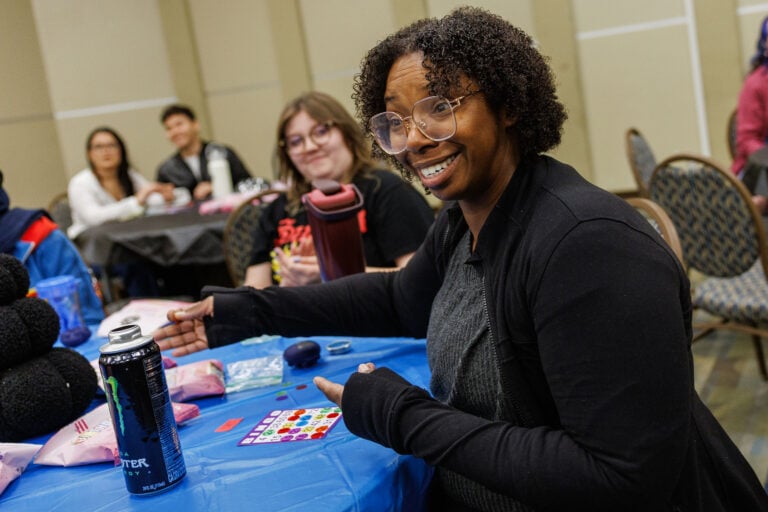
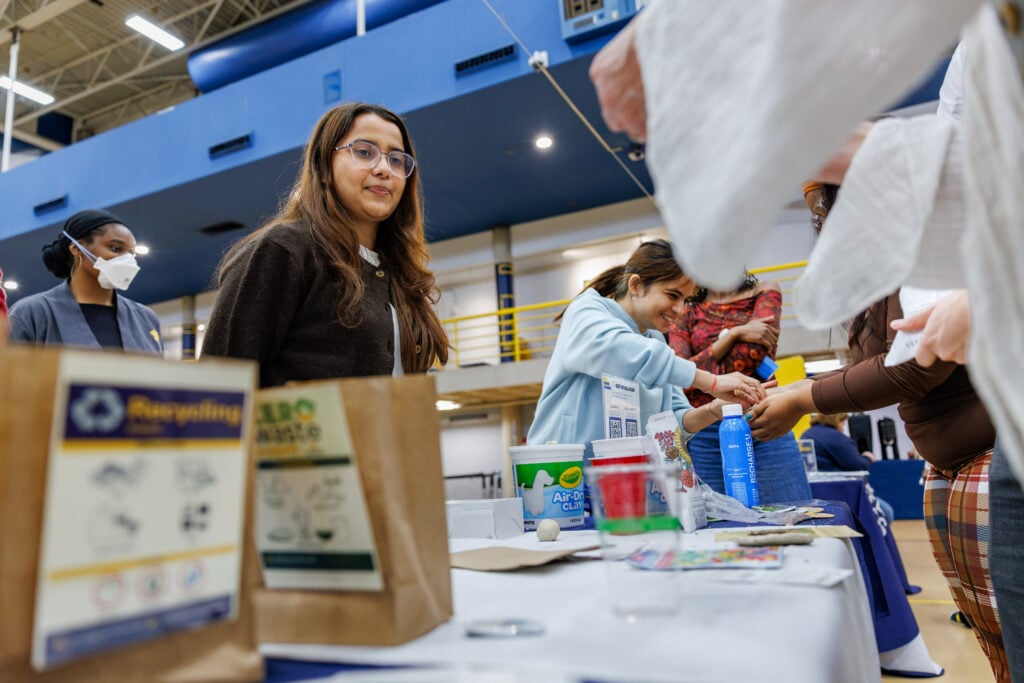
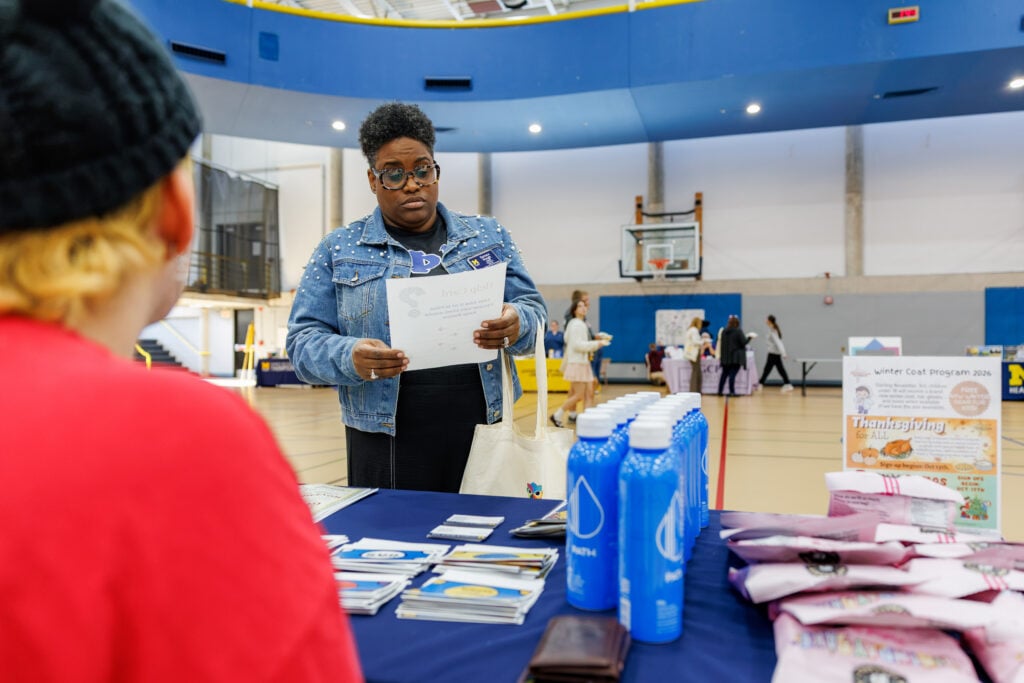
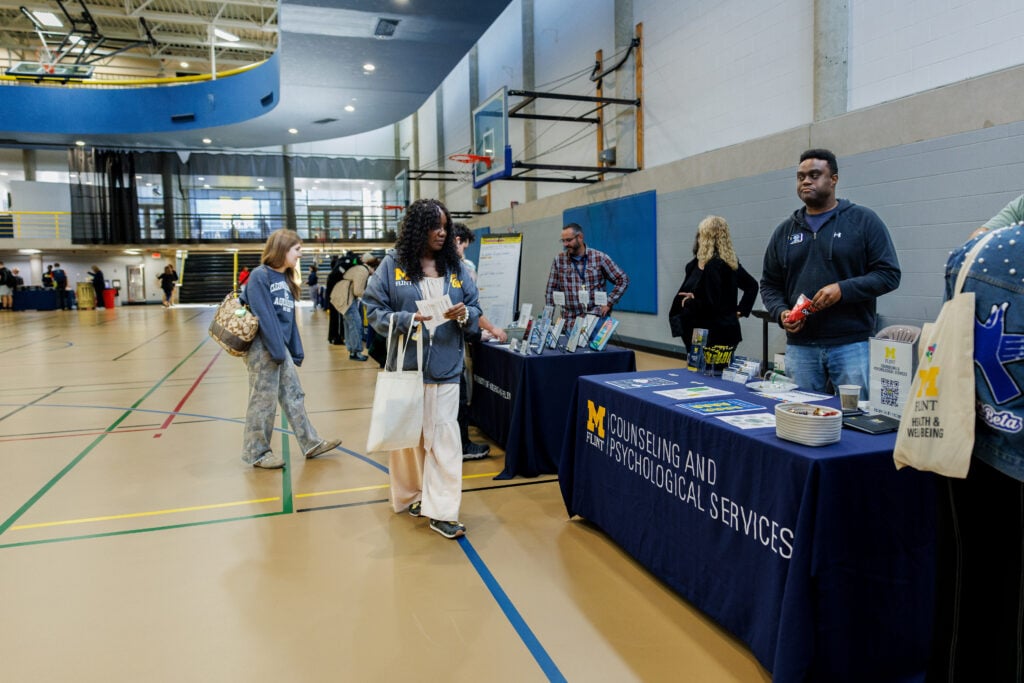
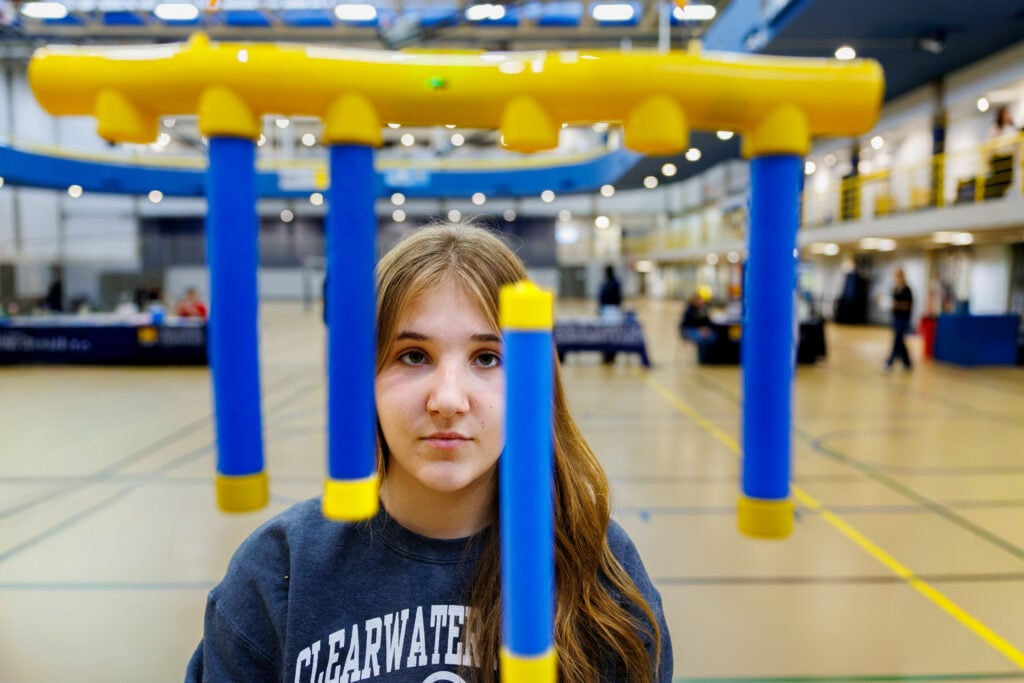
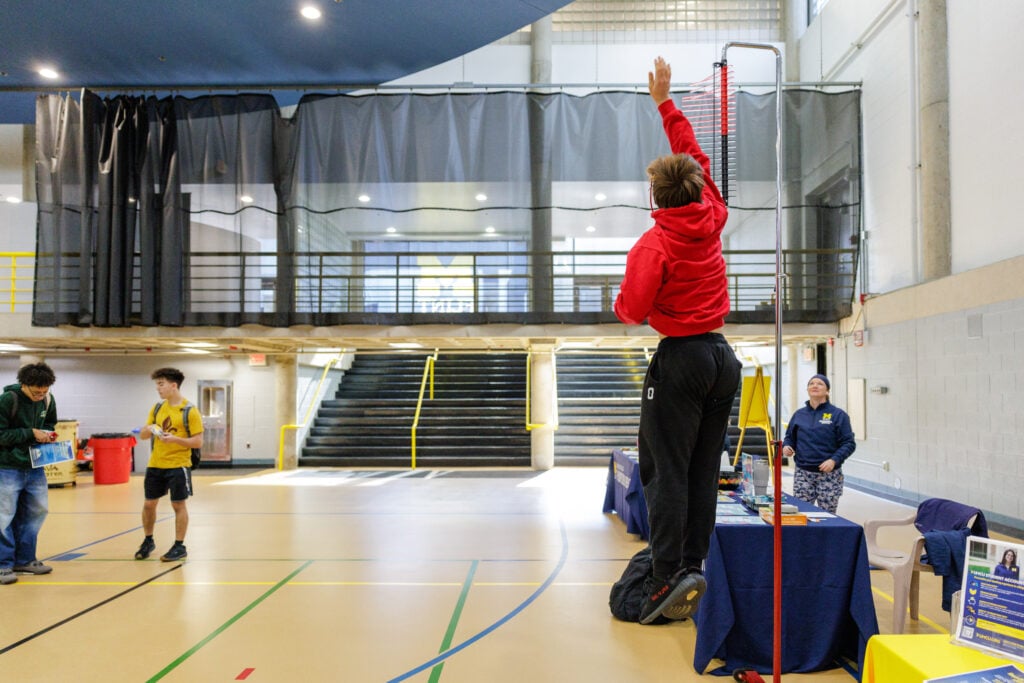
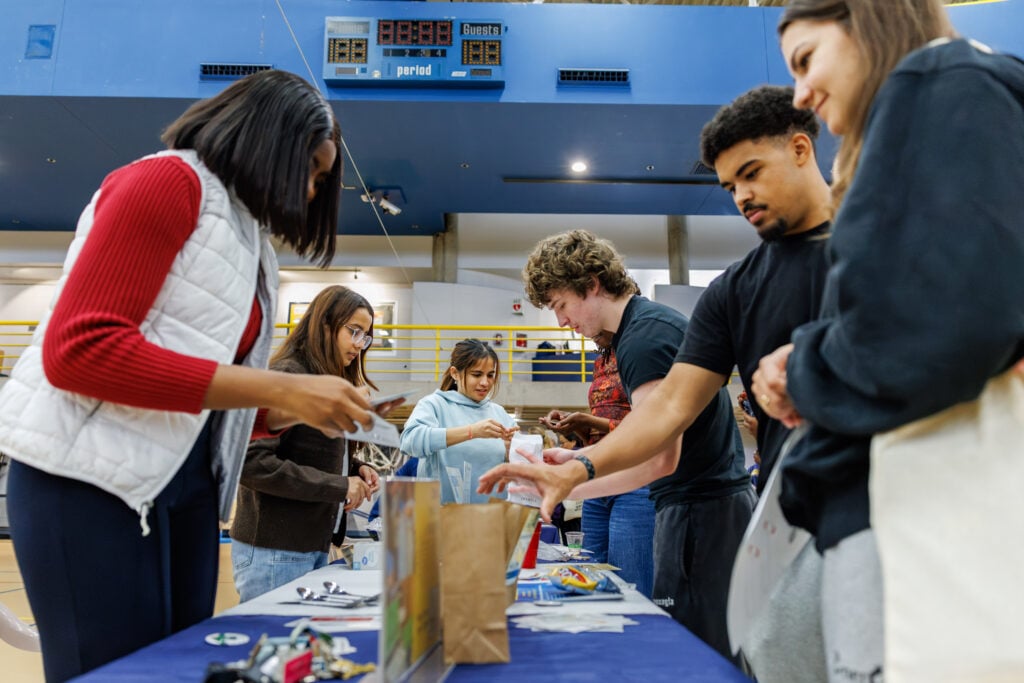
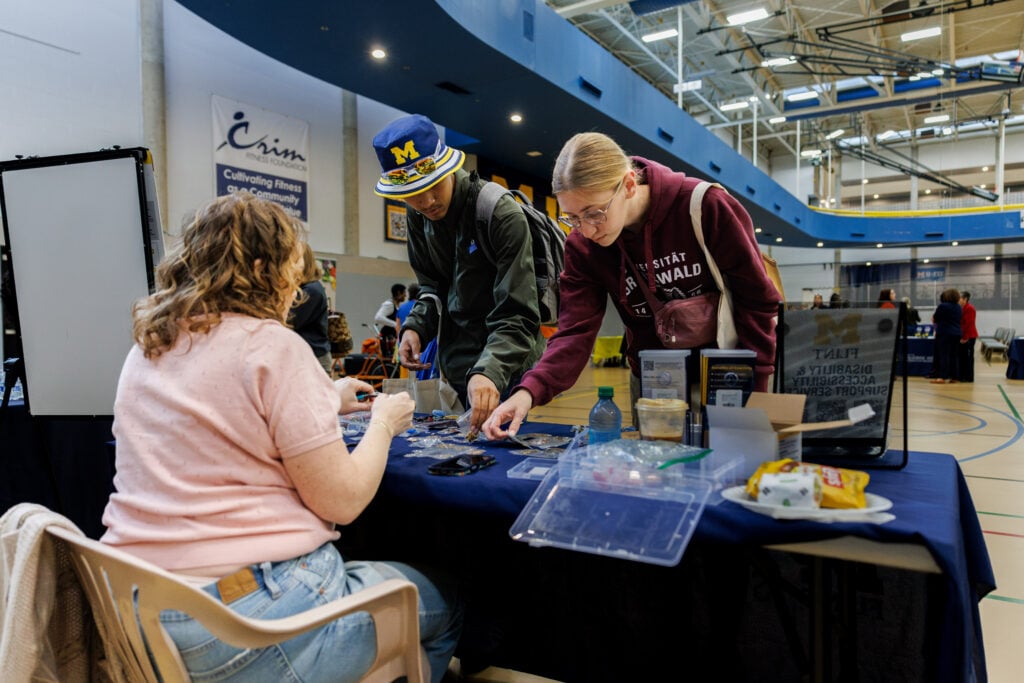
The adoption was followed by Wellness Fest, an afternoon of interactive activities highlighting the dimensions of well-being. Modeled after UM-Flint’s winter Wellness Week programming, the event brought together campus partners and Ann Arbor-based programs including MHealthy, Wolverine Wellness and the Well-being Collective. Activities included activities, games, challenges, giveaways, and hands-on experiences hosted by departments and campus partners.


Photos by Anthony Summers, Office of Marketing and Communications.